


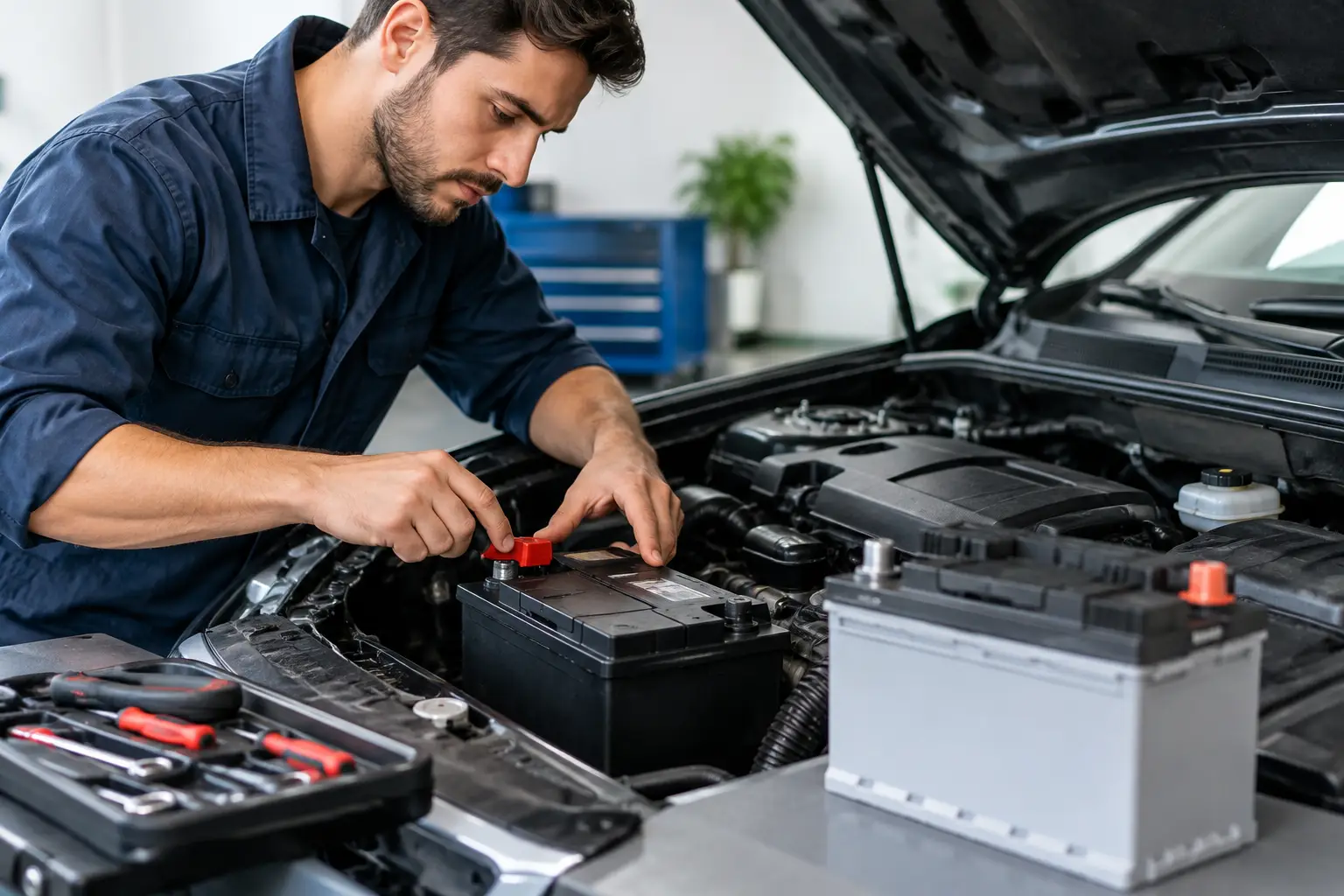
A car that will not start before work, school drop-off or a weekend trip is never convenient. Car batteries often give a few warning signs before they fail completely, but those signs are easy to overlook until the engine will not crank. Knowing what to watch for can save time, prevent a roadside headache and help you arrange the right repair before a small issue becomes a full breakdown.
What car batteries actually do
Your battery does more than start the engine. It supplies the initial power needed to crank the starter motor, then supports the vehicle’s electrical system when demand is high. Lights, central locking, infotainment, air conditioning controls and safety systems all rely on a healthy electrical supply.
Once the engine is running, the alternator should recharge the battery and power the car’s electrical components. That relationship matters because a flat battery is not always caused by an old battery. A charging fault, poor battery connection, parasitic power draw or an electrical issue can produce the same frustrating result.
Most conventional car batteries last around three to five years, although there is no fixed expiry date. Melbourne’s changing temperatures, frequent short trips, stop-start driving and long periods without use can all reduce battery life. A vehicle that starts every day may still have a battery close to failing.
Signs your car battery needs attention
A slow or laboured start is one of the clearest warning signs. If the engine takes longer to crank than usual, especially on a cold morning, the battery may not be holding enough charge. Clicking when you turn the key or press the start button can also point to low battery power, though the starter motor and connections should be checked before assuming the battery is the only problem.
Other signs can be less obvious. Your headlights may look dimmer while idling, the dashboard may show warning lights, or the clock and radio settings may reset unexpectedly. In some vehicles, you may notice electrical accessories acting erratically, such as slow power windows or intermittent central locking.
A visible inspection can help, provided it is done safely. Corrosion around the terminals, a loose clamp, damaged cables or a swollen battery case all need prompt attention. Never ignore a battery that looks bloated, is leaking fluid or has a strong sulphur-like smell. These can be signs of internal damage and should be assessed by a professional.
A flat battery is not always a dead battery
Leaving interior lights on, a boot light that does not switch off or an accessory plugged in overnight can flatten an otherwise healthy battery. In that situation, a jump-start or proper recharge may be enough to get you moving again.
However, repeatedly needing a jump-start is different. It may mean the battery cannot retain a charge, or it could indicate that the alternator is not charging properly while you drive. A battery test on its own is useful, but a proper diagnosis should also check charging voltage, cable condition and any unusual electrical drain.
This is where guessing can become expensive. Replacing a battery without finding the cause may get the car started temporarily, only for the same problem to return days later. A clear diagnosis helps ensure you pay for the repair that is actually needed.
Choosing the right replacement battery
Car batteries are not one-size-fits-all. The correct replacement depends on your vehicle’s make, model, engine, electrical requirements and the physical battery tray. A battery that fits loosely, has the wrong terminal layout or does not provide enough starting power can cause avoidable problems.
The key specifications include battery size, terminal position, cold cranking amps and reserve capacity. Cold cranking amps describe how much starting power the battery can provide in cold conditions. Reserve capacity relates to how long it can supply power if the charging system is not working as it should.
Vehicles with stop-start technology usually require a specific battery type, commonly AGM or EFB. Fitting a standard flooded battery to a vehicle designed for one of these systems can shorten battery life and affect how the stop-start function performs. Some newer vehicles also need the battery registration or management system reset after replacement so the charging system can adapt correctly.
The cheapest option is not always the best value. A lower-priced battery may be suitable for an older car with basic electrical needs, but a family vehicle with stop-start technology, frequent commuting and multiple accessories may need a higher-specification unit. The right choice comes down to how the vehicle is built and how you use it.
How to help your battery last longer
Regular driving helps, but short trips alone may not give the alternator enough time to fully recharge the battery after each start. If your car is mainly used for quick runs to the shops or school, a longer drive from time to time can help maintain its charge.
Keep the battery securely mounted and the terminals clean. Loose or corroded connections can restrict current flow and make a good battery appear weak. If you do not use the vehicle regularly, consider a quality maintenance charger designed for automotive batteries rather than allowing it to sit flat for weeks.
It also pays to switch off lights, accessories and chargers before leaving the car. Modern vehicles can continue using small amounts of power when parked, so an ageing battery may struggle after several days of inactivity. If you are going away for an extended period, ask a mechanic for advice based on your vehicle and parking setup.
Jump-starting safely
A jump-start can be useful in an urgent situation, but it needs to be done carefully. Incorrect connections can damage sensitive electronics, create sparks or cause injury. If the battery is cracked, leaking, swollen or hot, do not attempt to jump-start it.
Use suitable jumper leads or a jump pack, follow the vehicle manufacturer’s instructions and make sure both vehicles are in park or neutral with their parking brakes applied. Connect the positive terminals first, then use a suitable earth point for the final negative connection where recommended. Once the car starts, do not assume the problem is solved. It still needs enough driving time to recharge, and it may need testing to find out why it went flat.
For many drivers, particularly when parked at home or work, calling a mobile mechanic is the easier and safer option. The issue can be tested on-site, the correct battery can be fitted if needed, and related charging faults can be identified without arranging a tow or losing half a day at a workshop.
When to arrange a battery test
Arrange a test if your battery is more than three years old, the car is slow to start, you have needed a jump-start, or electrical features are behaving differently. It is also sensible to have it checked before a long road trip, especially if you are travelling with children, relying on the car for work or heading away from built-up areas.
Hazara Mobile Mechanic can assess battery and charging concerns at your home or workplace across Wallan and Melbourne’s northern suburbs. On-site testing makes it easier to confirm whether you need a replacement battery, an alternator repair, a connection clean-up or further auto electrical diagnosis.
Don’t wait for a no-start morning
Battery problems are often manageable when caught early, but they are far more disruptive when the car refuses to start at the exact moment you need it. If starting has become slower, warning lights have appeared or your battery is reaching the end of its expected life, arranging a professional check now can give you confidence for the next commute, errand or family trip.
Need a mobile mechanic?
Hazara Mobile Mechanic comes to you across Wallan and up to 70 km around. Open 7 days, 7am to 10pm, with emergency service 24/7. Call or text 0416 849 948, message us on WhatsApp or book online. See our services and the areas we cover.

Comments are closed