

A warning light appears on the dash, the car feels different, or you are about to hand over money for a used vehicle. In each case, the question is often the same: do you need a car diagnostic scan versus inspection? They are related services, but they do not do the same job. Choosing the right one can save time, avoid unnecessary repairs and give you a clearer answer before a small issue becomes an inconvenient breakdown.
What a car diagnostic scan actually checks
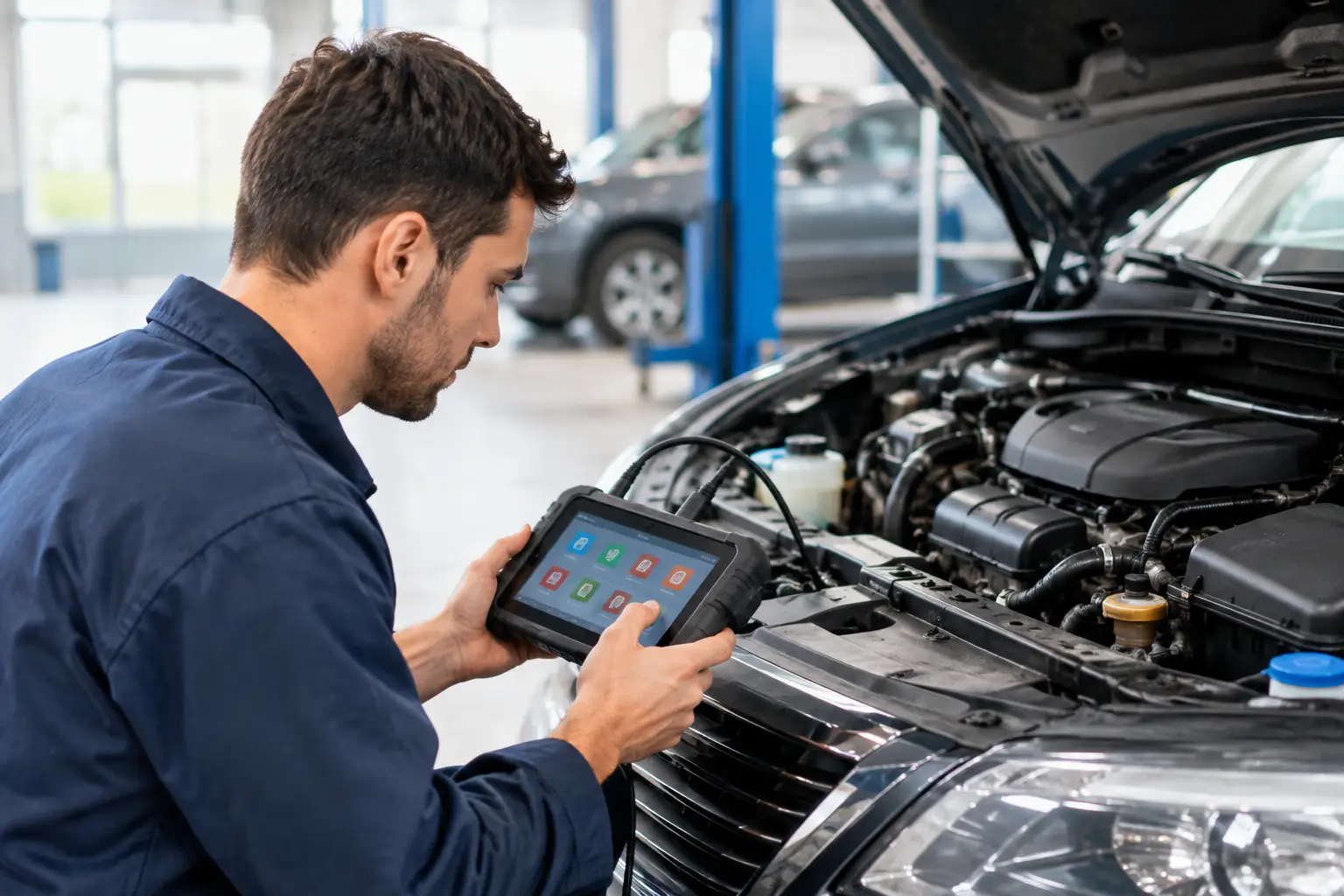
A diagnostic scan connects professional equipment to your vehicle’s onboard computer. Modern cars monitor a wide range of systems, including the engine, transmission, brakes, airbags, steering, emissions equipment and electrical components. When the system detects a fault outside its expected range, it may store a fault code and, in some cases, switch on a warning light.
The scan tool reads those codes, along with live information from sensors and control modules. This can help identify where the vehicle has detected a problem. For example, it may point to an engine misfire, a faulty wheel speed sensor, low voltage affecting multiple modules, or an issue within the airbag system.
That is useful information, but a code is not always a complete diagnosis. A code may identify a circuit or component behaving unexpectedly rather than confirm which part has failed. A low battery, damaged wiring, loose connector or vacuum leak can sometimes trigger a code that appears to blame something else. A professional mechanic uses the scan result as a starting point, then checks the vehicle properly before recommending repairs.
A scan is usually the sensible first step when a check engine light, ABS light, airbag light or transmission warning appears. It is also helpful when the car has poor fuel economy, rough running, hard starting, stalling, reduced power or an electrical fault that comes and goes.
What a vehicle inspection covers
An inspection is a hands-on assessment of the vehicle’s condition. Rather than relying on the car’s computer, a mechanic looks, listens and tests. The scope can vary depending on why you need it, but it may include the brakes, tyres, suspension, steering, fluid leaks, belts, hoses, battery condition, cooling system, lights, wipers and visible signs of wear or accident damage.
A road test may also be appropriate where it is safe and practical. This can reveal noises, vibrations, pulling under braking, clutch problems, wheel bearing noise or transmission concerns that a scan tool may not detect at all.
For a pre-purchase inspection, the focus is broader. You want to know whether the car has issues that could affect safety, reliability or repair costs after purchase. A clean dashboard and a recent wash do not tell you whether brake pads are low, tyres are ageing, the engine is leaking oil or the suspension has excessive wear.
An inspection can also find problems on older vehicles that do not have sophisticated electronic monitoring. Even on newer cars, plenty of parts can wear out without generating a warning light. A scan cannot measure tyre tread, inspect a cracked engine mount, spot a coolant seepage point or tell you the condition of a worn brake rotor.
Diagnostic scan versus inspection: the key difference
The simplest way to look at a car diagnostic scan versus inspection is this: a scan checks what the vehicle’s electronic systems are reporting, while an inspection checks the physical condition and operation of the vehicle.
Neither service replaces the other. A scan can quickly narrow down an electronic fault, but it cannot see every mechanical problem. An inspection can uncover physical wear and obvious damage, but it may not reveal a stored engine management fault or an intermittent sensor reading without diagnostic equipment.
If your engine light is on but the car drives normally, a diagnostic scan is usually the best starting point. If you hear a clunk over bumps, notice uneven tyre wear or feel a vibration through the steering wheel, an inspection is more likely to provide the answer. If you are buying a used car, or the vehicle has multiple symptoms, combining both checks gives a more complete picture.
When you may need both services
Some faults are straightforward. A flat battery, worn brake pads or a punctured tyre can often be confirmed through practical testing and inspection. Others need a combination of electronic data and physical checks.
Take an overheating concern. A scan may show whether the engine temperature sensor is reporting accurately and whether the cooling fan is being commanded on. The physical inspection then checks coolant level and condition, hoses, leaks, radiator flow, the thermostat and the water pump where accessible.
The same applies to a rough-running engine. The scan may identify misfire codes or fuel-trim readings. From there, a mechanic may inspect ignition components, air intake hoses, connectors and other likely causes. Replacing a part solely because it appears in a fault code can be costly and may not fix the underlying issue.
Brake and ABS faults are another common example. An ABS warning light calls for a scan, but the repair decision should also consider wheel sensors, wiring, bearings, brake wear and the condition of the braking system. Good diagnosis is about joining the electronic clues with what is happening mechanically.
Why clearing a warning light is not a repair
Some drivers clear a fault code or disconnect the battery and assume the problem is gone because the warning light disappears. This can be misleading. Clearing codes removes the stored information, but it does not repair a failed sensor, wiring issue or mechanical fault.
The warning light may stay off briefly and return once the system runs its checks again. In some cases, clearing codes before a sale can also hide a fault long enough to make a vehicle appear healthier than it is. That is one reason a proper pre-purchase inspection should include a diagnostic scan where suitable, not just a look under the bonnet.
If a warning light is red, flashing, or accompanied by overheating, smoke, a burning smell, major power loss or unusual braking behaviour, stop driving when it is safe to do so. Continuing to drive can turn a manageable repair into more serious damage. Roadside assistance or a mobile mechanic can help assess the next step at your home, workplace or roadside location.
What to expect from a professional assessment
A worthwhile assessment should give you more than a list of codes or a vague statement that something is wrong. Your mechanic should explain the findings in plain language, outline any safety concerns and separate urgent repairs from items that can be monitored or planned for later.
It also helps to share the full story. Mention when the issue occurs, whether it happens only when cold or after a longer drive, any warning lights, recent repairs and changes in the way the vehicle drives. Details such as a noise when turning left, a hesitation under acceleration or a battery that goes flat overnight can make diagnosis faster and more accurate.
Mobile servicing is particularly useful when the car is still driveable but you do not have time to sit at a workshop, or when you are unsure whether it should be driven. Hazara Mobile Mechanic can assess many faults at your location across Wallan and Melbourne’s northern suburbs, helping you understand the issue before committing to repairs. Some complex faults may still require specialised workshop equipment or further testing, and a reliable mechanic will be upfront about that.
Make the check match the problem
There is no benefit in paying for a broad inspection when a quick scan is clearly needed, and there is no value in relying on a scan when the issue is visibly mechanical. Match the service to the symptom, then allow for further testing if the first check points to a deeper problem.
If you are unsure, describe what the car is doing rather than trying to name the fault. A good mechanic can recommend whether to start with a diagnostic scan, a physical inspection or both. The right check is the one that gives you a confident, practical path forward and keeps your car safe for the next trip.
Need a mobile mechanic?
Hazara Mobile Mechanic comes to you across Wallan and up to 70 km around. Open 7 days, 7am to 10pm, with emergency service 24/7. Call or text 0416 849 948, message us on WhatsApp or book online. See our services and the areas we cover.
