

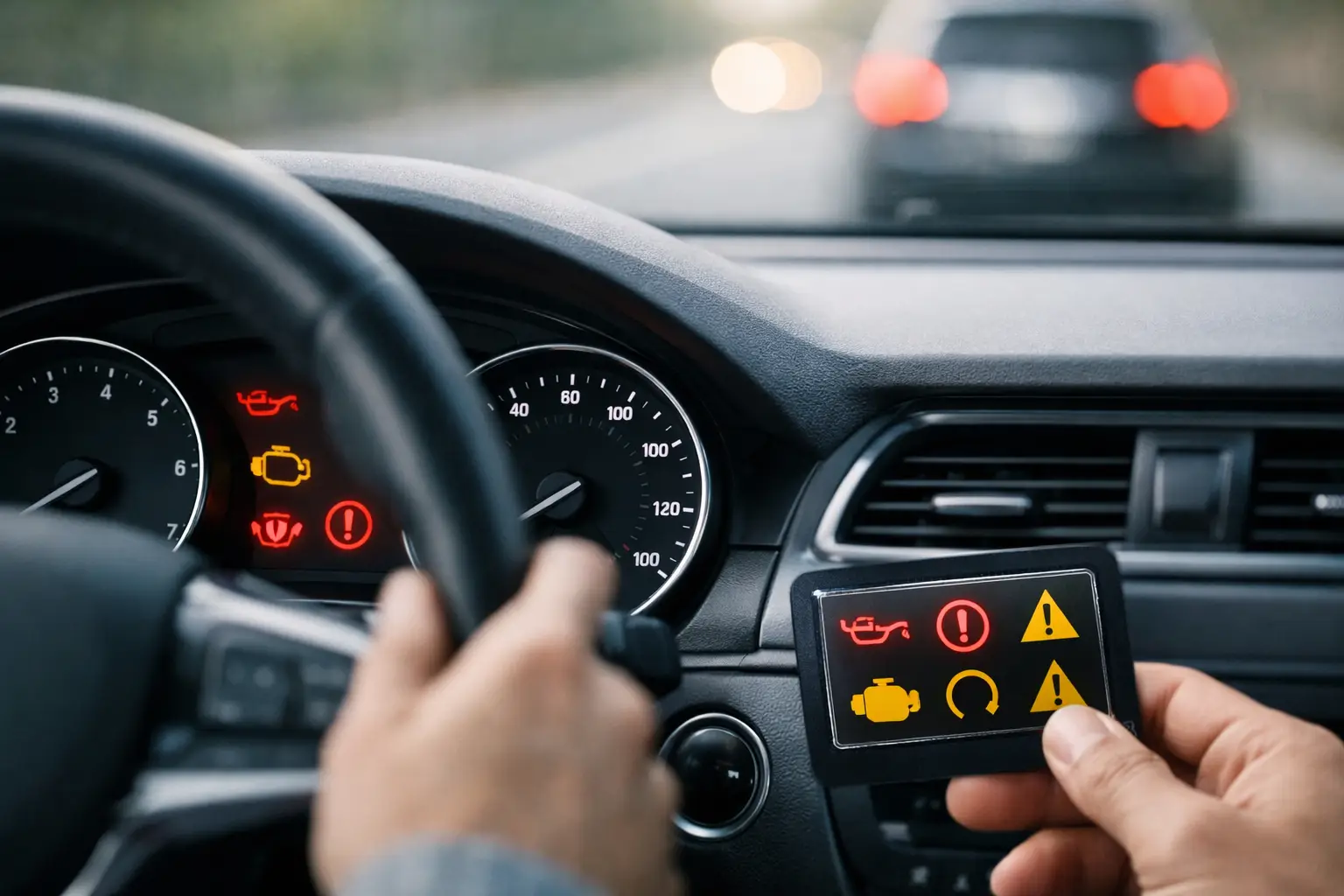
A warning light appearing on the dash during the school run, commute or drive home from work can quickly put a stop to your plans. This car warning lights guide helps you understand what the common symbols mean, how urgently you need to act, and when it is safer to pull over and arrange professional help.
Dashboard lights are there to give you an early warning, not just to cause concern. Some are simple reminders, such as low fuel or an open door. Others can point to faults that may cause expensive damage or make the vehicle unsafe to drive if ignored.
Start with the colour of the warning light
The colour is usually your first clue about the level of urgency. Vehicle makes and models vary, so always check your owner’s manual for the exact symbol, but these general rules apply to most cars.
- Red lights usually mean stop as soon as it is safe. They can relate to oil pressure, overheating, braking or a serious charging-system problem.
- Amber or yellow lights mean attention is needed soon. The car may still be drivable for a short distance, but it should be checked before a small issue becomes a breakdown.
- Green or blue lights are generally information lights, such as headlights, indicators or high beam. They do not normally signal a fault.
- Flashing lights are more urgent than a steady light, particularly a flashing engine warning light. Reduce load on the vehicle and arrange diagnosis promptly.
The key trade-off is convenience versus risk. It may be tempting to keep driving because the car feels normal, but warning lights often appear before you can hear or feel a problem. Stopping early can protect the engine, brakes and your budget.
Car warning lights guide: red lights to take seriously
Oil pressure warning light
This looks like a small oil can. It does not simply mean the engine oil level is low. It can indicate low oil pressure, which means vital engine parts may not be receiving enough lubrication.
Pull over safely and switch off the engine as soon as possible. Once the vehicle has had time to settle on level ground, check the oil level if you know how to do so safely. Do not continue driving just because the dipstick shows some oil. A blocked pickup, failing oil pump or internal engine issue can also cause low pressure. Continuing to drive can cause major engine damage within a short time.
Engine temperature warning light
Usually shown as a thermometer over wavy lines, this light means the engine is overheating. Turn off the air conditioner, pull over safely and stop the engine. Do not remove the radiator cap while the engine is hot, as pressurised coolant can cause serious burns.
Overheating can be caused by low coolant, a leak, a failed thermostat, cooling fan trouble or a water pump fault. If you notice steam, a sweet coolant smell or coolant on the ground, leave the vehicle off and arrange assistance. Topping up coolant without finding the reason it was lost may only delay the problem.
Brake system warning light
A red brake warning light may mean the handbrake is still on, so check that first. If the handbrake is fully released and the light stays on, it may indicate low brake fluid, worn brake components or a fault in the braking system.
If the brake pedal feels soft, travels further than usual, pulls to one side or makes unusual noises, do not keep driving. Brakes are not a repair to put off until the next service. A mobile mechanic can inspect the system at your home or workplace, which can be far safer than attempting to drive a questionable vehicle to a workshop.
Battery or charging warning light
The battery-shaped symbol normally relates to the charging system, not the battery alone. A failing alternator, loose belt, damaged wiring or poor battery connection can cause it to appear.
The vehicle may continue running temporarily using the battery’s stored power, but it can stop once that charge is depleted. Avoid unnecessary electrical loads such as the stereo and mobile charging, and head somewhere safe if you are already close. If the light appears with dim headlights, electrical faults or a burning smell, stop and seek help.
Amber lights that need a booking soon
Check engine warning light
The engine warning light can be frustrating because it covers a wide range of faults. It may be something minor, such as a loose fuel cap or sensor issue, but it can also relate to ignition, emissions, fuel delivery or engine performance.
If the light is steady and the car is driving normally, check that the fuel cap is fitted correctly and arrange a diagnostic inspection soon. If the light is flashing, the engine is misfiring or the car is shaking, losing power or smelling strongly of fuel, stop driving where safe. A severe misfire can damage the catalytic converter and leave you with a much larger repair bill.
ABS and traction control lights
The ABS light means the anti-lock braking system has detected a fault. In many cars, normal braking still works, but the wheels may lock more easily during hard braking. The traction control or stability control light may also come on because these systems often share sensors.
You may be able to drive carefully to get home or to a booked inspection, depending on how the car feels and road conditions. However, allow extra stopping distance and avoid wet roads, gravel and heavy braking where possible. If a red brake light is on as well, treat it as urgent.
Tyre pressure monitoring light
This symbol resembles a tyre with an exclamation mark. It can mean one or more tyres are underinflated, although some systems also trigger after a tyre change or pressure adjustment.
Check all tyres when they are cold, including looking for nails, sidewall damage and visibly low tyres. Inflate them to the pressure shown on the vehicle placard, usually found inside the driver’s door opening or fuel flap. Do not drive on a tyre that is very low or flat, as the tyre can be damaged internally even if it appears to hold air again later.
Airbag warning light
An airbag light means the supplementary restraint system may not work correctly in a crash. It could be related to a seat sensor, clock spring, wiring connector or airbag module. The car may still drive normally, but its safety protection may be reduced.
Book an inspection rather than ignoring it. Avoid tampering with airbag wiring or connectors yourself, especially under seats, as these systems require careful diagnosis.
What to do when a dashboard light appears
First, stay calm and notice what else the vehicle is doing. Is there a loss of power, vibration, smoke, steam, strange noise, burning smell or change in steering and braking? These symptoms matter as much as the symbol itself.
If the warning is red, flashing, or accompanied by a clear change in how the car drives, pull over somewhere safe and switch off if appropriate. Put the hazard lights on if needed, stay clear of traffic and do not open a hot cooling system. A photo of the dashboard can also help a mechanic understand what happened, especially if the light disappears after restarting.
For an amber light with no obvious driving issue, avoid assuming it will fix itself. Make a note of when it appeared, whether it comes and goes, and any recent work on the vehicle. These details can make diagnosis quicker and more accurate.
Why a scan alone is not always the answer
Many newer cars store fault codes when a warning light comes on. Scanning those codes is useful, but a code is a starting point, not always the failed part. For example, a sensor-related code may be caused by damaged wiring, a vacuum leak or a mechanical issue rather than the sensor itself.
A proper diagnosis combines the scan result with testing, visual checks and the vehicle’s symptoms. This approach helps avoid replacing parts unnecessarily. Hazara Mobile Mechanic can diagnose many warning-light concerns on site across Wallan and Melbourne’s northern suburbs, helping you get clear advice without the disruption of a workshop visit.
Keep warning lights from becoming roadside problems
Regular servicing gives a mechanic the chance to check fluid levels, battery condition, brakes, tyres, belts, hoses and cooling components before they trigger a warning light. It will not prevent every electrical or sensor fault, but it greatly reduces the chance of preventable problems.
Pay attention to small changes between services too. A slow crank at startup, a new squeal, a coolant top-up becoming frequent or a brake pedal that feels different are all worth checking early. Your dash is designed to speak up when something needs attention. Listening to it early is one of the simplest ways to keep your car safe, reliable and ready for the next trip.
Need a mobile mechanic?
Hazara Mobile Mechanic comes to you across Wallan and up to 70 km around. Open 7 days, 7am to 10pm, with emergency service 24/7. Call or text 0466 666 945, message us on WhatsApp or book online. See our services and the areas we cover.

Comments are closed