


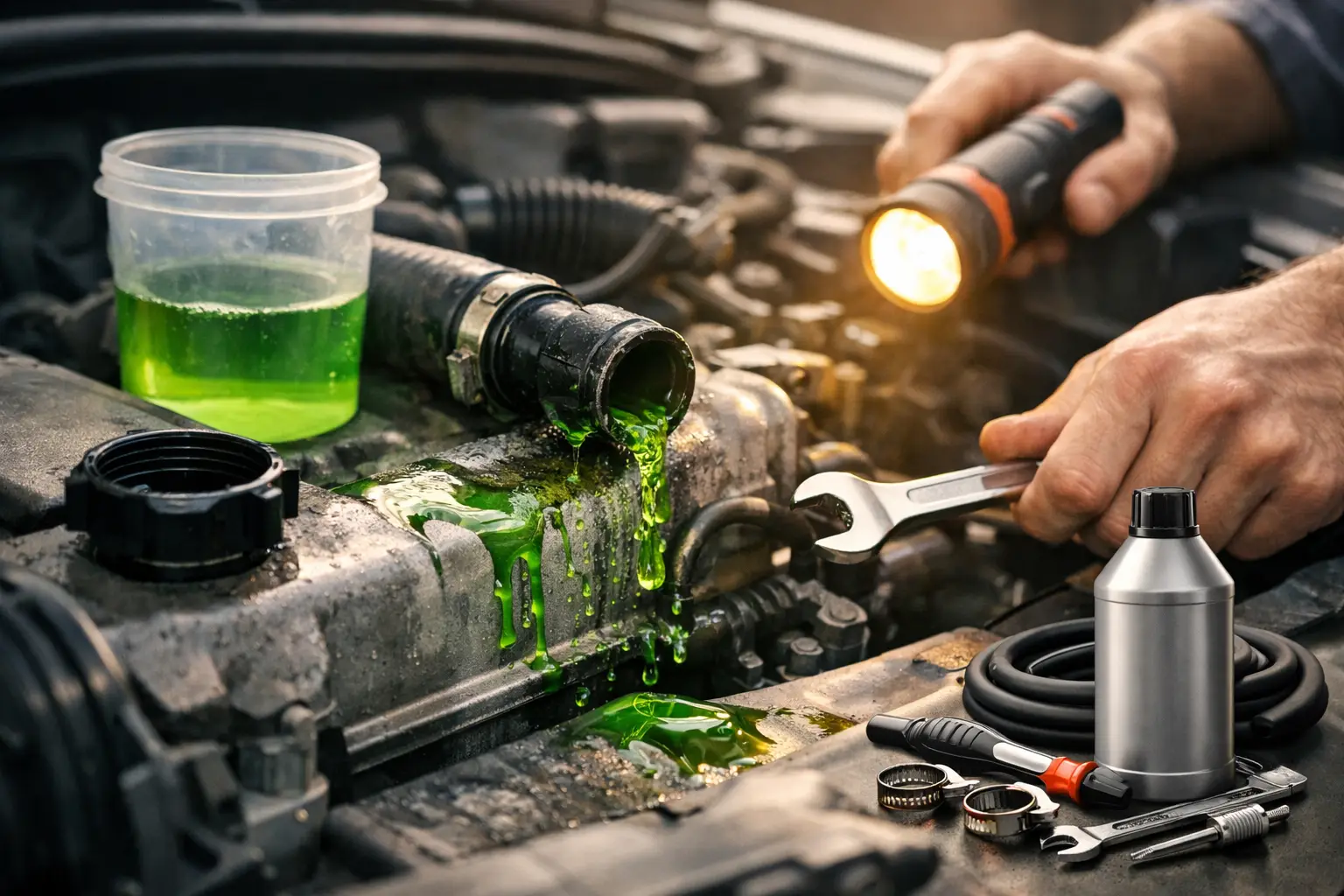
You usually notice a coolant leak at the worst possible time – on the driveway before work, in the car park after school drop-off, or halfway through a busy week when you cannot afford car trouble. If you are weighing up coolant leak repair options, the main thing to know is that not every leak needs the same fix, and the cheapest option is not always the one that saves you money.
Coolant leaks can start small and still turn into major engine trouble if they are ignored. Modern cooling systems rely on the right pressure, the right coolant level, and components that seal properly. Once that system is compromised, your engine can run hot very quickly. That is why the first step is not guessing – it is identifying exactly where the leak is coming from and how serious it is.
Why coolant leaks need the right repair
A cooling system leak is not just about topping up the overflow bottle and hoping for the best. Coolant circulates through the radiator, hoses, water pump, thermostat housing, heater core and engine passages. A leak in any one of those areas can affect pressure, temperature control and engine reliability.
Some leaks are obvious, like a split hose dripping onto the ground. Others are harder to spot. You might notice a sweet smell, dried coolant residue around the engine bay, steam from under the bonnet, or the temperature gauge creeping higher than normal. In more serious cases, white smoke from the exhaust or milky oil can point to an internal leak.
The repair that makes sense depends on where the coolant is escaping, how badly the part has failed, and whether the vehicle has already overheated. That is where proper diagnosis matters. Replacing the wrong part wastes time and money, and the leak usually comes straight back.
Common coolant leak repair options
When people ask about coolant leak repair options, they are usually thinking about whether the issue can be patched, repaired properly, or needs a full component replacement. The answer depends on the fault.
Hose repair or replacement
Radiator and heater hoses are one of the most common leak points. Over time, rubber hardens, cracks, swells or weakens near the clamps. If a hose is leaking, replacement is usually the right move rather than trying to patch it. A temporary tape-style fix might help in an emergency, but it is not something to trust for daily driving.
If the issue is only a loose or worn clamp, the repair may be simpler. Even then, it is worth checking the hose condition at the same time. A fresh clamp on a brittle hose only delays the next problem.
Radiator repair or replacement
Radiators can leak from the core, plastic end tanks, seams or drain points. In some cases, a radiator can be repaired, especially if the damage is minor and the unit is otherwise in good condition. In many modern vehicles, though, replacement is often the more practical and reliable option.
Plastic tank failures and widespread corrosion usually mean the radiator is at the end of its life. A patch may hold briefly, but not always under operating pressure and heat. If you rely on your car every day, a proper replacement is often the less stressful option.
Water pump replacement
A leaking water pump is not something to put off. If coolant is escaping from the pump seal or weep hole, the pump itself is failing and needs replacement. There is no real patch repair for this. Waiting too long can lead to poor coolant circulation, overheating, and in some vehicles, further damage if the pump is tied into the timing system.
This is a good example of why diagnosis matters. Coolant around the front of the engine is not always a hose issue. It may be the water pump, and treating it like a minor leak can become expensive very quickly.
Thermostat housing and gasket replacement
Thermostat housings, gaskets and seals are another regular source of leaks. Some are metal, some are plastic, and plastic housings are especially prone to cracking with age and heat. If the housing is warped or cracked, replacement is usually straightforward and far more reliable than trying to seal it externally.
Gasket leaks can also happen where components bolt to the engine. If caught early, replacing the gasket or seal can restore the system without needing major parts. If ignored, though, coolant loss can trigger overheating and create a much bigger job.
Expansion tank or reservoir replacement
Coolant reservoirs can crack, and caps can fail to hold the correct pressure. These faults are easy to overlook because the leak may only show when the system is hot. Replacing a cracked tank or faulty cap is often one of the simpler coolant leak repairs, but it still matters because cooling system pressure is critical to proper operation.
Heater core and cabin-related repairs
If you notice a sweet smell inside the cabin, fogging on the windscreen, or damp carpet, the heater core could be leaking. This repair can be more involved because access is often difficult. It is not the most common leak, but when it happens, it should be dealt with properly. Leaving it can affect visibility, cabin comfort and coolant level.
Temporary fixes versus proper repairs
There is a reason stop-leak products and quick patches are popular – they are cheap, easy to find and promise a fast answer. Sometimes they can buy you a bit of time, especially if you are stranded and need to move the vehicle safely. But they are not a substitute for correct repairs.
Sealant products can sometimes reduce a small seep, but they can also create other issues by clogging narrow passages in the cooling system. That is not ideal for radiators, heater cores or thermostats. A temporary fix is exactly that – temporary.
If the leak is minor and you are trying to get through the day, topping up with the correct coolant may help you avoid immediate overheating. But if the coolant level keeps dropping, the car is running hot, or steam is visible, it is best not to keep driving. Saving a tow or postponing a booking can end up costing far more if the engine overheats.
When a coolant leak is more serious than it looks
Not all leaks drip onto the ground. Internal leaks are a different category and often more urgent. If coolant is entering the engine through a failed head gasket, cracked head or other internal fault, the repair is more involved than swapping a hose or radiator.
Signs can include unexplained coolant loss, overheating, white exhaust smoke, rough running on start-up, or contamination in the oil. At that point, the focus shifts from an external cooling system repair to engine diagnosis. It depends on the vehicle, the extent of the damage and whether it has been driven hot.
This is one reason not to ignore early warning signs. A simple external leak is usually cheaper and faster to sort out than an engine problem caused by repeated overheating.
Choosing the best coolant leak repair option
The best repair is the one that matches the real cause of the leak and restores reliability, not just the one with the lowest upfront price. For a worn hose, replacement is sensible. For a cracked radiator, replacement may be the most dependable fix. For a failed clamp or cap, a small repair may be all that is needed.
What matters most is a clear diagnosis, honest advice and repairing the system properly the first time. That is especially important if you use your vehicle for commuting, school runs or work across Wallan and Melbourne’s northern suburbs. Losing your car for half a day at a workshop is frustrating enough. Breaking down again because the leak was only half-fixed is worse.
A mobile mechanic can make this much easier by inspecting the vehicle at your home or workplace, pinpointing the source, and carrying out the repair where practical. That means less disruption and a faster path from problem to solution. For many everyday drivers, that convenience matters just as much as the repair itself.
What to do if you suspect a leak
If you think your car has a coolant leak, check for puddles, warning lights, temperature changes and visible residue around hoses, the radiator and under the bonnet. Do not remove the radiator cap when the engine is hot. If the temperature gauge is rising, pull over safely and switch the engine off as soon as you can.
From there, the smartest next step is to have it inspected before the problem escalates. Some coolant leak repair options are quick and affordable when caught early. Leave them too long, and the repair list gets longer in a hurry.
If your car is losing coolant, the goal is not just to keep it moving for one more trip. It is to fix the fault properly so you can get back on the road with confidence and without rearranging your whole day around a workshop visit.
Need a mobile mechanic?
Hazara Mobile Mechanic comes to you across Wallan and up to 70 km around. Open 7 days, 7am to 10pm, with emergency service 24/7. Call or text 0466 666 945, message us on WhatsApp or book online. See our services and the areas we cover.

Comments are closed