


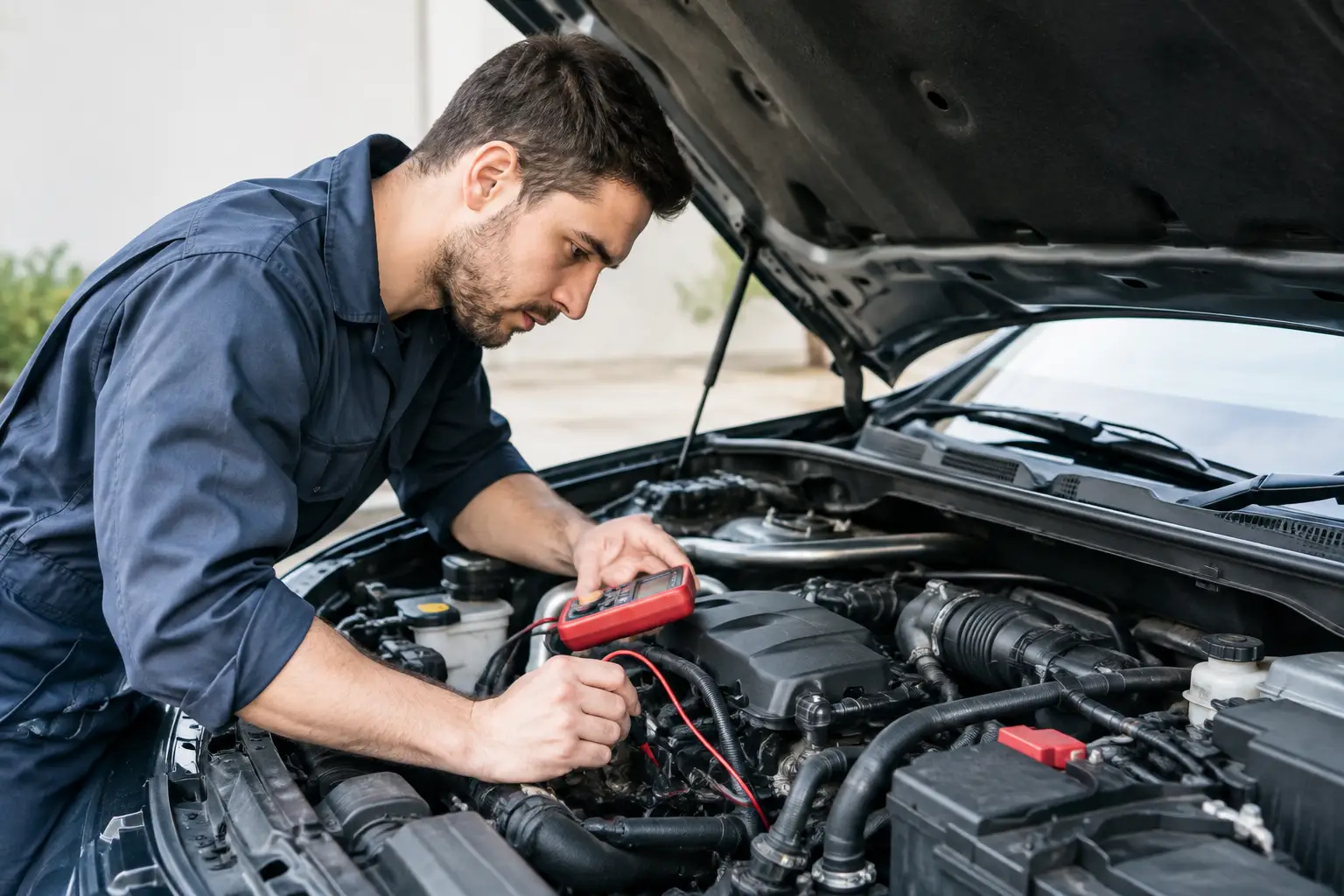
A car that will not start outside your home before work, a battery light appearing halfway through the school run, or headlights that suddenly look weak can throw the whole day off track. An auto electrical review helps identify what is actually causing the problem, rather than replacing parts on a guess and hoping the warning light stays off.
Modern vehicles rely on electrical systems for far more than starting the engine. The battery, alternator, starter motor, wiring, sensors, lights, air conditioning controls, power windows and dashboard systems all need to work together. When one part begins to fail, the symptoms can be confusing – and easy to mistake for a simple flat battery.
What an auto electrical review checks
An auto electrical review is a practical inspection and diagnostic process focused on your vehicle’s electrical components. The exact checks depend on the fault, the vehicle and what you have noticed while driving, but the aim is straightforward: find the cause before recommending a repair.
For a no-start issue, a mechanic may test the battery’s condition and charge, inspect terminals and earth connections, and check whether the starter motor and alternator are operating correctly. If the car starts but the battery warning light is on, charging-system testing becomes a priority. A healthy battery cannot stay charged if the alternator is not supplying the right voltage.
For warning lights, intermittent faults or problems with electronic accessories, diagnostics may include a scan of the vehicle’s fault codes alongside hands-on testing. Fault codes are useful clues, but they are not always the final answer. A code can point to a circuit or component that needs further investigation, which is why proper testing matters.
A good review should also include a clear explanation of the findings. You should know what has been tested, what is causing the concern, what repairs are recommended and whether the vehicle is safe to drive in the meantime.
Warning signs worth checking early
Electrical faults do not always stop a car immediately. Often, they begin with small changes that become more frequent over days or weeks. Acting early can help avoid a roadside breakdown, especially if you rely on your car for commuting, family transport or work.
The most common sign is slow or difficult starting. You may hear a clicking sound, notice the engine cranking more slowly than usual, or find the car starts after a jump-start but fails again soon after. This could be a worn battery, poor terminal connection, charging fault, starter motor issue or an electrical drain when the car is parked.
Dimming headlights, flickering interior lights and a dashboard that behaves strangely can also point to voltage problems. If lights brighten when you accelerate or become noticeably weak at idle, the charging system should be checked. Do not assume new globes will fix the issue if multiple lights are affected.
Other signs include power windows moving slowly, central locking working intermittently, blown fuses, a non-functioning radio or reversing camera, and warning lights that appear and disappear. These issues may seem minor, but an intermittent fault can become harder to trace once wiring, connectors or components deteriorate further.
A burning smell, hot battery, smoke, melted wiring or repeated fuse failures need more urgent attention. Pull over safely where possible and avoid continuing to drive if there is any concern about an electrical short. These symptoms require professional inspection, not a larger fuse or a temporary workaround.
Battery, alternator or starter motor?
These three components are often mentioned together, yet they do different jobs. The battery supplies stored power to start the vehicle and supports electrical systems when the engine is off. The alternator recharges the battery and powers the electrical system while the engine is running. The starter motor uses battery power to turn the engine over.
A flat battery does not automatically mean the battery is the root cause. Batteries naturally wear out, particularly after several years, but they can also go flat because the alternator is undercharging, a light was left on, a connection is loose, or an accessory is drawing power while the vehicle is parked.
Likewise, a clicking sound when turning the key may suggest a weak battery, but it can also be related to terminals, wiring or the starter motor. Testing the system as a whole is more reliable than replacing the most obvious part first.
Why mobile diagnostics make sense
Electrical problems have a habit of appearing at inconvenient times. A car may fail to start in the driveway, outside your workplace or at the supermarket, making a trip to a workshop difficult before you have even begun.
A mobile mechanic can inspect many common auto electrical concerns where the vehicle is located. This saves the time and cost of arranging a tow for faults that can be diagnosed and repaired on site. It also lets the mechanic see the vehicle in the conditions where the problem occurred, which can be helpful for battery drains, starting faults and intermittent issues.
Hazara Mobile Mechanic provides on-site auto electrical support across Wallan and Melbourne’s northern suburbs, with a focus on practical testing, straightforward advice and repairs that suit the condition of your vehicle. Not every electrical job can be completed at the kerbside, particularly if specialist equipment, extensive wiring repairs or dealership programming is required. In those cases, an honest diagnosis still gives you a clearer next step and helps prevent unnecessary work.
What to tell your mechanic before the review
The more detail you can provide, the faster an electrical fault can often be narrowed down. You do not need technical knowledge. Simple observations are valuable, such as whether the problem happens only in the morning, after rain, when using the air conditioning, or after the car has been parked for a few days.
Let the mechanic know if the battery has recently been replaced, if any accessories have been fitted, or if you have needed a jump-start. Mention changes such as a new dash warning light, a recent service, accident damage, rodent activity under the bonnet, or water entering the cabin. Wiring and connectors can be affected by moisture, heat, vibration and damage over time.
If possible, avoid clearing fault messages or disconnecting the battery before the inspection unless it is necessary for safety. Resetting a system can remove useful clues that help identify an intermittent problem.
Avoid the costly guesswork
Online advice can make electrical faults sound simple: replace the battery, change a fuse, clean a terminal. Sometimes those steps are enough. However, they can also mask the real fault and lead to money being spent on parts that were not needed.
For example, fitting a new battery to a car with a failing alternator may get it running briefly, only for the new battery to go flat again. Replacing a blown fuse without finding the cause can result in the replacement fuse blowing as well. Electrical systems are connected, so the visible symptom is not always the failed component.
There is also a safety consideration. Batteries can release gas, electrical circuits can short, and modern vehicles contain sensitive electronic modules. Basic checks such as ensuring battery terminals are secure are reasonable, but repairs involving damaged wiring, repeated fuse failure or charging faults are best left to a qualified mechanic.
When to book an inspection
Book an auto electrical inspection promptly if your car is slow to start, the battery warning light stays on, lights flicker, fuses keep failing or electrical accessories stop working. If the vehicle will not start at all, a mobile assessment can help determine whether a battery replacement, connection repair, starter repair or further diagnostics are needed.
Electrical faults are rarely convenient, but they do not need to turn into a week of missed work and disrupted plans. A timely check at your home or workplace can give you a clear answer, a sensible repair path and greater confidence before the next drive.
Need a mobile mechanic?
Hazara Mobile Mechanic comes to you across Wallan and up to 70 km around. Open 7 days, 7am to 10pm, with emergency service 24/7. Call or text 0416 849 948, message us on WhatsApp or book online. See our services and the areas we cover.
