

A low hum that rises with road speed can be easy to ignore, especially when the car is otherwise driving normally. But this wheel bearing noise guide is designed to help you separate an ordinary road sound from a warning that deserves attention. For drivers in Wallan and Melbourne’s northern suburbs, catching the issue early can prevent a noisy commute from turning into a bigger wheel, brake or suspension repair.
What a wheel bearing does
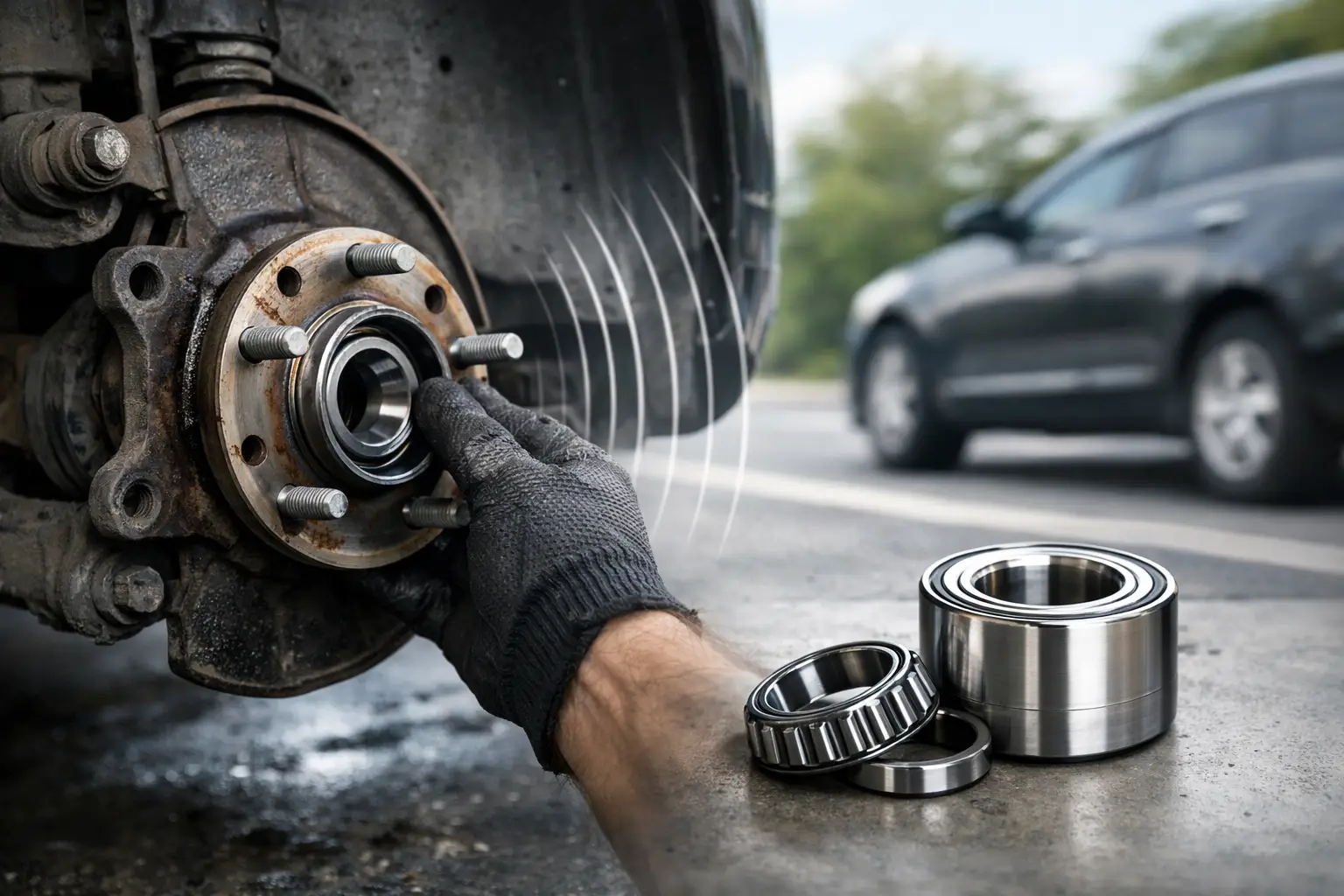
A wheel bearing is a set of precision metal components fitted inside the wheel hub. It allows the wheel to rotate smoothly while carrying the weight of the vehicle and coping with steering, braking and uneven road surfaces.
Because the bearing works hard every time the vehicle moves, it must stay properly sealed and lubricated. When the internal surfaces wear, the seal is damaged or moisture gets in, the bearing can begin to make noise. The sound may arrive gradually, so many drivers only notice it after a few weeks of driving with the radio on or the windows closed.
Wheel bearing problems are not limited to older cars. Potholes, rough roads, kerb strikes, worn suspension parts and poor-quality previous repairs can all shorten bearing life. A vehicle with higher kilometres is more likely to need attention, but age alone does not tell the whole story.
Wheel bearing noise guide: the sounds to recognise
The most common wheel bearing sound is a steady humming, droning, rumbling or growling noise that gets louder as the car goes faster. It may be quiet around suburban streets, then more obvious at 60 km/h and above. Unlike engine noise, it usually does not increase because you press the accelerator. It follows vehicle speed.
The noise can also change while cornering. If a worn bearing is loaded more heavily when the vehicle turns, the hum may become louder on one bend and quieter on the other. This is a useful clue, but it does not prove which side has failed. Road camber, tyre condition and the direction of the turn can affect what you hear from the driver’s seat.
A damaged bearing may also produce a rough grinding sound, particularly once the wear is advanced. Clicking is less typical of a wheel bearing and can point instead to a CV joint, especially if it happens during tight turns under acceleration. A metallic scrape may come from brakes, such as a worn pad, loose backing plate or a stone caught near the rotor.
Tyre noise causes plenty of confusion. Tyres with uneven wear can create a hum or roar that sounds very similar to a bearing fault. Feathered tread, scalloped tyre wear, incorrect pressures and wheel alignment issues are all worth checking. The difference is often that tyre noise changes noticeably with the road surface, whereas a failing bearing tends to create a more consistent drone. Still, a proper inspection is the reliable way to tell them apart.
Safe checks you can make before booking an inspection
You do not need to dismantle anything to collect helpful information. On a safe, familiar road, notice whether the noise begins at a certain speed, changes when you gently steer through broad bends, or varies across smooth and coarse bitumen. Make a note of whether it seems to come from the front, rear, left or right, while remembering that sound can travel through the vehicle body and be misleading.
Before a drive, check tyre pressures against the placard fitted to your vehicle. Look for visible tyre damage, uneven tread wear or a foreign object lodged in the tread. If you have recently hit a pothole or kerb, include that detail when speaking with your mechanic.
Avoid jacking up the car or trying to check wheel movement unless you have the correct equipment, secure support stands and experience. A wheel can feel loose for reasons other than the bearing, including suspension or steering wear. More importantly, working under or around an improperly supported vehicle is unsafe.
When wheel bearing noise becomes urgent
A mild hum should be inspected soon, but some symptoms mean the vehicle should not be treated as business as usual. Stop driving and arrange assistance if there is obvious wheel wobble, heavy vibration through the steering wheel, a severe grinding noise, burning smells near a wheel, smoke, or a wheel that feels unusually hot after a short drive.
You should also take the issue seriously if the vehicle pulls unexpectedly, braking feels abnormal, or the ABS or traction control warning light appears alongside a new wheel noise. These symptoms may not always be caused by the bearing, but they need a prompt professional assessment.
It is tempting to keep driving when the noise is only noticeable on the freeway. The trade-off is that a bearing can deteriorate without much warning once damage progresses. Continued driving may damage the hub, affect wheel speed sensor operation on some vehicles, or create extra labour and parts costs. Early diagnosis is usually the more affordable option.
Why wheel bearings fail
Normal wear is one cause, particularly on vehicles that have covered substantial kilometres. However, the most common contributing factors are impact damage from potholes or kerbs, water contamination, damaged seals, incorrect installation and excessive load.
For example, a hard kerb strike may not cause an immediate noise, but it can place stress on the hub assembly or alter wheel alignment. Likewise, driving through deep water can be a problem if a seal is already compromised. On utes and vehicles used for towing, extra load can add stress, although a correctly rated and installed bearing should still provide reliable service.
A bearing should not be replaced based on sound alone. Brake components, tyres, CV joints, differentials and some transmission faults can all create similar noises. Accurate diagnosis matters because replacing the wrong part wastes time and money.
What a professional wheel bearing inspection involves
A mechanic will begin with a road test where appropriate, listening for how the sound changes with speed and turning. The vehicle is then raised safely so the wheels, tyres, brakes and suspension can be checked closely. Depending on the vehicle, the inspection may include checking for roughness while rotating the wheel, excess play at the hub, tyre wear patterns and fault codes related to ABS wheel speed sensors.
The repair process depends on the vehicle design. Some cars use a complete bolt-on hub assembly, while others require the bearing to be pressed into the steering knuckle or rear hub. The latter can take more labour and specialised equipment. If a hub, sensor or related component has been damaged, the final repair may involve more than simply fitting a new bearing.
A clear quote should account for the correct parts, labour and any additional issue found during inspection. At Hazara Mobile Mechanic, the focus is on diagnosing the source of the noise properly and explaining the practical repair options at your home or workplace where the job is suitable for mobile service.
Can you prevent bearing wear?
You cannot prevent every bearing failure, but regular vehicle servicing gives a mechanic an opportunity to spot uneven tyre wear, damaged suspension components and brake issues before they add stress elsewhere. Keeping tyres inflated correctly and having wheel alignment checked after a significant pothole or kerb impact also helps protect the wider wheel and suspension system.
Try not to ignore new noises simply because they disappear for a day or two. Road surface, speed and weather can make a developing fault seem intermittent. A short note on when the sound occurs gives your mechanic a much better starting point.
A quiet, stable drive is what your car should deliver. If a hum, growl or rumble is becoming part of every trip, arranging an inspection now can keep the repair straightforward and help you get back to driving with confidence.
Need a mobile mechanic?
Hazara Mobile Mechanic comes to you across Wallan and up to 70 km around. Open 7 days, 7am to 10pm, with emergency service 24/7. Call or text 0466 666 945, message us on WhatsApp or book online. See our services and the areas we cover.

Comments are closed