

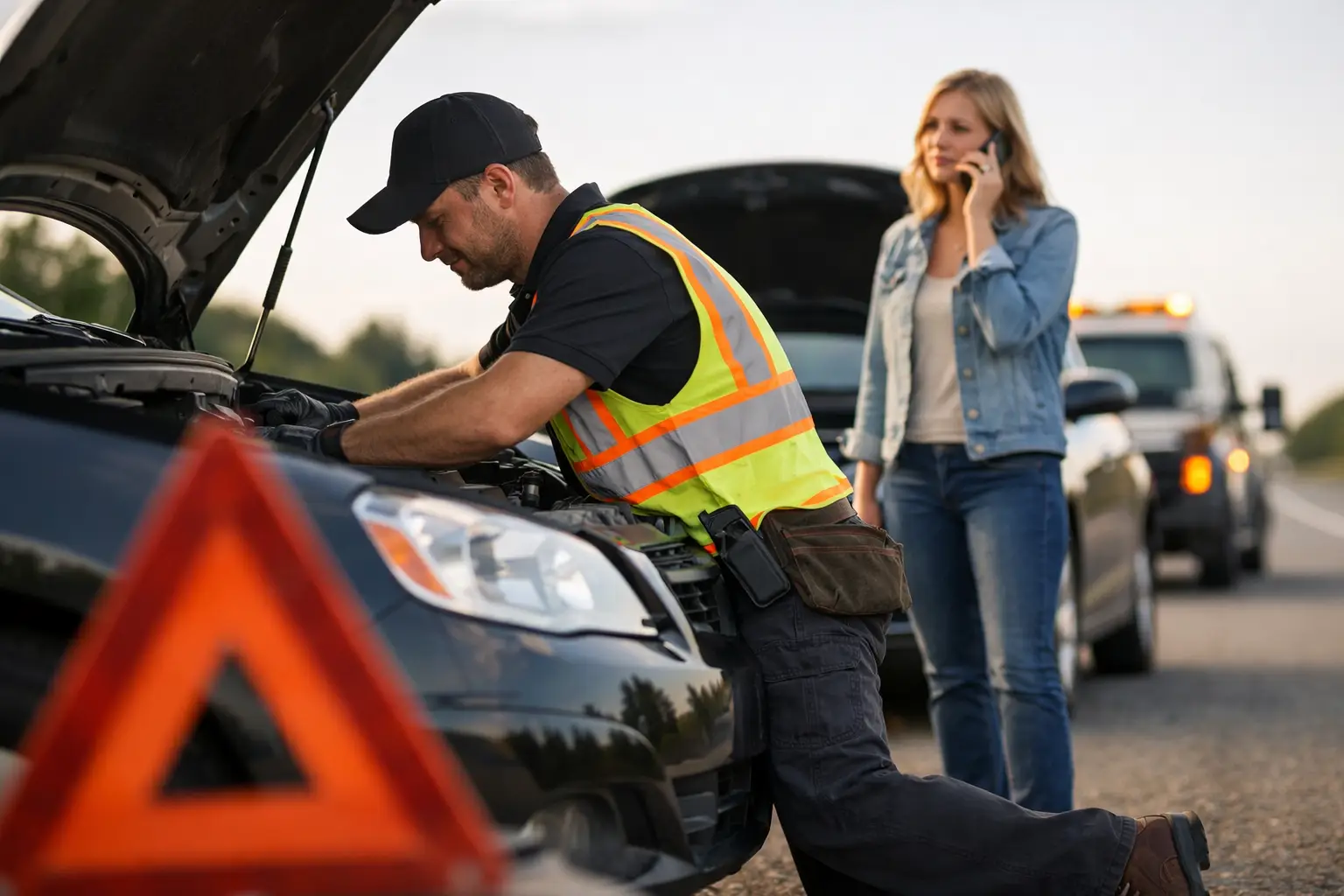
A flat battery before school drop-off, a car that will not start outside work, or a warning light that appears halfway through the day – these are the moments when a roadside assistance mechanic stops being a nice extra and becomes the fastest way to get your plans back on track. For drivers in Wallan and Melbourne’s northern suburbs, the real value is not just emergency help. It is getting qualified mechanical support where the car is, without the hassle of arranging a tow and losing half your day.
What a roadside assistance mechanic actually does
Many people hear roadside assistance and think it only means jump-starting a battery. That is part of it, but a mobile mechanic can often do far more than basic emergency support. The right service can diagnose faults, carry out on-site repairs, replace failed components and tell you clearly whether the vehicle is safe to drive.
That matters because not every breakdown needs a tow truck, and not every warning sign means the car has to go straight to a workshop. In many cases, the issue is something practical and repairable on site, such as a dead battery, worn brake components, a starter issue, a cooling problem, or an electrical fault that needs proper testing rather than guesswork.
A roadside call-out is often about speed, but it should also be about accuracy. A quick fix that ignores the real problem can leave you stranded again a day later. Good mobile support focuses on both getting you moving and understanding why the issue happened in the first place.
When to call a roadside assistance mechanic
There are some situations where calling straight away makes sense. If the car will not start and you are not sure whether it is the battery, starter motor, alternator or an electrical issue, mobile diagnosis is usually the most efficient first step. The same applies if the vehicle cuts out unexpectedly, overheats, shows serious warning lights, or develops braking or steering problems.
It is also worth calling when the car is technically still running, but clearly not running properly. Rough idling, poor acceleration, unusual noises, a strong burning smell, or visible fluid leaks can all point to faults that may worsen if you keep driving. In those cases, trying to push through to your destination can turn a manageable repair into a bigger and more expensive one.
Then there is the practical side. Even if a vehicle could be driven carefully to a workshop, many drivers simply do not have the time to sit around waiting, organise another ride home, and reshuffle work or family commitments. A mobile mechanic is often the simpler option because the repair comes to you.
Common problems that can often be fixed on site
A lot of roadside jobs involve faults that are frustrating rather than catastrophic. Batteries are a common example. Sometimes the car just needs a jump-start, but often the battery is at the end of its life and needs replacing then and there. That is a much better outcome than getting started once and then ending up stuck again later that afternoon.
Brake issues can also be handled on site in some cases, depending on the fault. If the problem is worn components or something that can be safely repaired at your location, it saves a major interruption. The same goes for certain cooling system faults, minor electrical problems, belt-related issues and diagnostic work when the engine light comes on.
Of course, there are limits. If the car has major internal engine damage, severe transmission failure, or crash-related issues, a workshop repair may still be necessary. A dependable mechanic will be upfront about that. Honest advice is part of the service, especially when safety is involved.
Why mobile roadside help suits everyday drivers
For most people, car trouble is not just a mechanical problem. It is a time problem, a stress problem and sometimes a safety problem. If you are juggling work, kids, appointments or a long commute, a breakdown can throw off the entire day.
That is why a mobile-first service suits so many local drivers. Instead of taking time off to sit in a workshop waiting room, you can have the car checked at home or at work. Instead of guessing whether it is safe to drive, you can get a professional assessment on the spot. Instead of paying for a tow and then waiting again for repairs, you may be able to sort the issue in one visit.
For drivers in Melbourne’s northern suburbs, that convenience is not about laziness. It is about making car care fit real life. Most people want the problem solved properly, with clear communication and no unnecessary runaround.
What to expect from a roadside assistance mechanic
A good roadside service should feel straightforward from the first phone call. You explain the symptoms, your location and the vehicle details. From there, the mechanic can give you a realistic idea of response time and what may be possible on site.
Once they arrive, the first step should be diagnosis, not assumptions. Cars can show similar symptoms for very different reasons. A no-start issue, for example, might be a flat battery, but it could also be the alternator, starter motor, a wiring fault or something else entirely. Proper testing avoids wasting your money on the wrong part.
You should also expect plain-English advice. Not everyone wants a technical breakdown of every component under the bonnet. Most customers simply want to know what has failed, whether it can be repaired now, what it will cost, and whether the car is safe to drive afterwards.
That transparent approach matters just as much as the repair itself. When you are already dealing with the inconvenience of a breakdown, clear communication makes the situation far easier to manage.
Roadside assistance mechanic or tow to a workshop?
Sometimes the answer is obvious. If the vehicle is unsafe, badly damaged, or needs equipment that cannot reasonably be brought on site, towing is the right move. There is no benefit in pretending every problem can be fixed in a driveway or car park.
But in many situations, calling a roadside assistance mechanic first is the smarter option. You may avoid a tow completely, which saves both time and money. Even if the vehicle does end up needing workshop repairs, getting an accurate diagnosis first gives you a clearer picture of the problem before the car goes anywhere.
There is also a trust factor. Drivers often feel more confident when they can speak directly with the mechanic at their location, see the issue being assessed, and ask questions in real time. That can be harder to get when the first step is simply sending the vehicle away.
Choosing the right mobile mechanic for roadside help
Not all roadside services offer the same level of mechanical support. Some are limited to very basic assistance. Others can carry out broader diagnostics and repairs on site. If you want more than a temporary patch-up, it is worth choosing a business with genuine mechanical capability, not just emergency attendance.
Look for a service that is responsive, local, and clear about what it can do. Fast arrival matters, but so does experience. You want someone who can identify faults properly, work efficiently, and tell you honestly if the problem needs further repair.
That local knowledge also helps. A mobile business that regularly services Wallan and Melbourne’s northern suburbs understands the area, the driving conditions and the need for practical support that works around busy schedules. Hazara Mobile Mechanic is built around exactly that kind of convenience – professional mechanical help delivered where customers need it most.
The real benefit is less disruption
Most drivers do not think about roadside support until they suddenly need it. When that moment comes, the biggest relief is often not just getting the car going again. It is avoiding the usual chain reaction of delays, towing, rescheduling and lost time.
A reliable roadside service gives you another option. It brings qualified help to your home, workplace or roadside location, offers a clear diagnosis, and in many cases completes the repair without sending you across town to a workshop. That is what makes mobile mechanical support so practical.
If your car refuses to cooperate at the worst possible time, the right help should not add more stress to the day. It should make the next step simple, clear and manageable.
Need a mobile mechanic?
Hazara Mobile Mechanic comes to you across Wallan and up to 70 km around. Open 7 days, 7am to 10pm, with emergency service 24/7. Call or text 0466 666 945, message us on WhatsApp or book online. See our services and the areas we cover.

Comments are closed