

That light squeal when you stop at the lights is easy to ignore – until it turns into grinding, longer stopping distances, or a repair bill that could have been avoided. If you have been wondering how to spot brake wear, the good news is that your car will usually give you a few clear warnings before the problem becomes serious.
Brakes tend to wear gradually, which is why many drivers put up with the signs for longer than they should. Around Wallan and Melbourne’s northern suburbs, that can mean extra strain from stop-start traffic, school runs, commuting, and weekend driving. Catching brake wear early helps you stay safer on the road and can also save money by preventing damage to rotors, calipers, and other parts.
How to spot brake wear in everyday driving
One of the first signs is noise. A high-pitched squeal when braking often means the brake pads are getting low. Many pads are designed with a small metal wear indicator that makes this sound on purpose. It is there to tell you the pads are nearing the end of their life.
A harsher grinding noise is more serious. That can mean the pad material has worn away so far that metal is contacting metal. At that point, you are not just replacing pads. You may also be up for rotor machining or replacement, and the car should be checked as soon as possible.
The feel of the brake pedal matters too. If the pedal feels softer than usual, sinks further toward the floor, or responds differently from one day to the next, something is not right. Worn brake components, fluid issues, or air in the system can all affect pedal feel. It does not always mean the same fault, but it does mean the brakes need attention.
Another common clue is longer stopping distance. This can creep up gradually, so people often adjust without realising it. If your car no longer pulls up as confidently as it used to, especially in normal traffic, worn pads or discs could be part of the problem.
Vibration is worth paying attention to as well. If the steering wheel shakes or the pedal pulses under braking, the issue may be warped rotors or uneven brake wear. Sometimes that happens after prolonged heat build-up, and sometimes it points to a more uneven wear pattern that should be inspected properly.
Visible signs you should not ignore
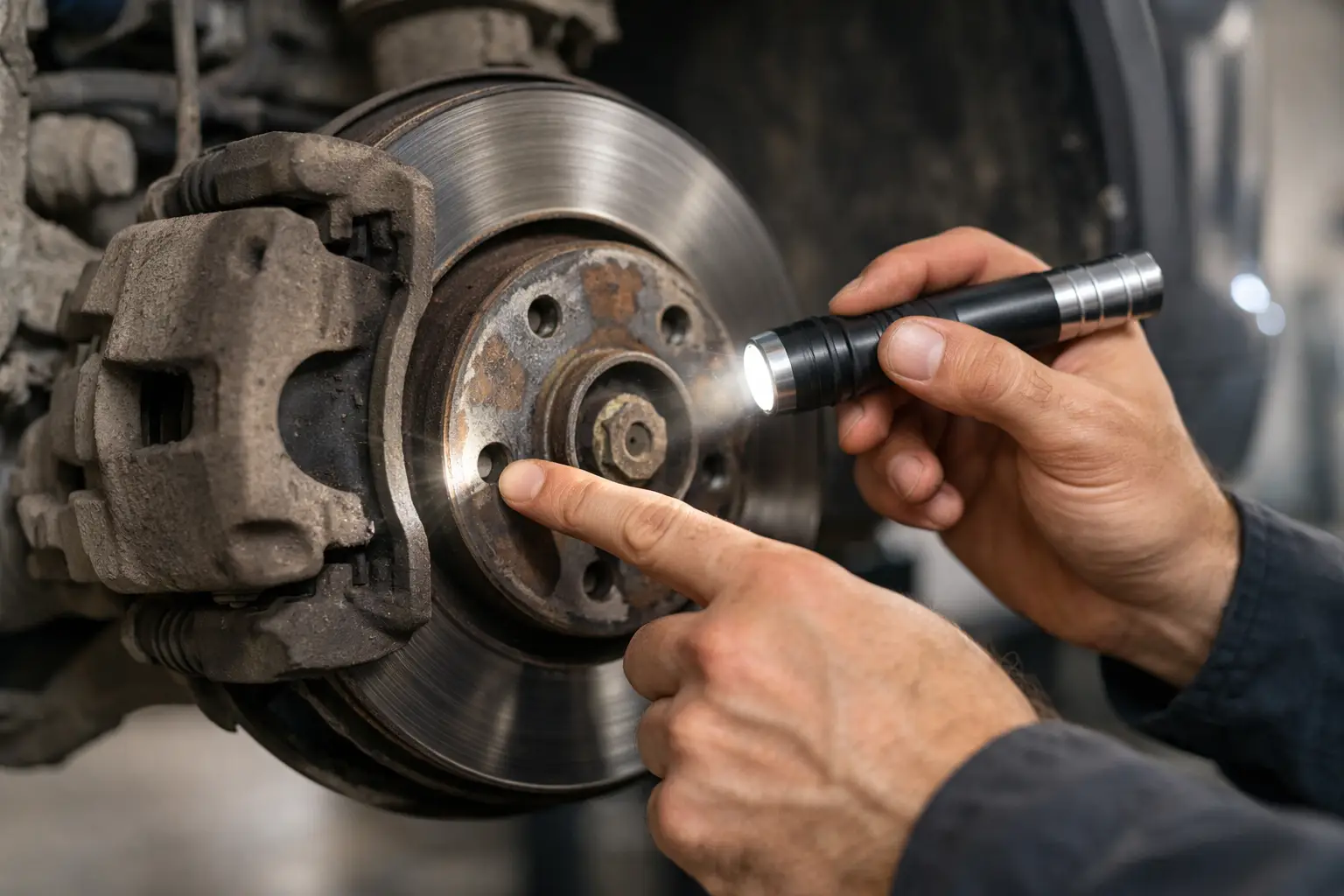
You do not need to be a mechanic to notice basic brake wear. A quick look through the wheel can sometimes tell you a lot. If the brake pad material looks very thin, it is time for a check. As a rough guide, if there is only a few millimetres left, replacement is usually not far off.
Brake rotors should also look relatively smooth. Light surface marks are normal, but deep grooves, heavy scoring, blue discolouration, or a pronounced lip around the edge can point to wear or overheating. Rotors do not always need replacing at the same time as pads, but if they are badly worn, fitting new pads alone may not solve the issue.
Brake dust can tell part of the story too. Some dust is normal, but if one wheel is producing far more than the others, it may suggest uneven wear or a sticking caliper. Likewise, if your car pulls to one side while braking, one side may be working harder than the other.
You should also keep an eye out for warning lights on the dash. Not every brake issue will trigger one, but if the brake warning light or ABS light comes on, it is best not to guess. A proper inspection can confirm whether it is pad wear, low fluid, an electronic fault, or something else.
Why brake wear is not always even
A lot of drivers assume all four brakes wear at the same rate, but that is rarely the case. Front brakes usually wear faster because they handle more of the stopping force. That said, driving style, road conditions, vehicle type, and component condition all play a part.
If you do a lot of urban driving, your brakes will typically wear faster than someone mostly driving open roads. Carrying heavier loads, towing, or driving on hilly roads can also shorten brake life. Even the type of pad fitted can change how quickly they wear and how much noise they make.
Uneven wear can also point to a fault rather than normal ageing. A seized caliper, worn slide pins, or poor previous installation can cause one pad to wear much faster than the other. That is why brake replacement should never be treated as just swapping parts and moving on. The full system needs to be checked.
How to spot brake wear before it becomes expensive
The cheapest time to deal with brake wear is usually when the pads are low but the rotors are still in good condition. Once worn pads are left too long, the repair can quickly grow. Metal-on-metal contact damages rotors. Overheating can affect calipers and fluid. In more severe cases, braking performance drops enough to become a real safety issue.
That is why early signs matter. A small squeal, minor vibration, or slight change in pedal feel might not stop the car from driving today, but it can be the difference between a straightforward service and a more involved repair later on.
If you are not sure what you are hearing or feeling, it is better to get the brakes checked than to keep testing them by driving. Brake problems do not usually improve on their own.
What you can check yourself and when to call a mechanic
There are a few things most drivers can safely notice without taking anything apart. Listen for squealing or grinding. Pay attention to whether the car stops smoothly and in a straight line. Check for vibrations through the pedal or steering wheel. If your wheels allow a clear view, look at the pad thickness and rotor surface.
What you should not do is rely on guesswork. Brake systems are safety-critical, and some faults can look similar from the driver’s seat. For example, a soft pedal could mean worn brakes, but it could also point to fluid loss or hydraulic issues. A noise could be simple pad wear, or it could be a problem with hardware, rotors, or caliper movement.
That is where a proper inspection helps. A mechanic can measure pad thickness, inspect rotor condition, check for leaks, confirm whether components are moving freely, and make sure the whole braking system is performing as it should. For busy drivers, having that done at home or work makes it much easier to deal with the issue before it becomes urgent.
Common mistakes drivers make with worn brakes
One common mistake is waiting for the brakes to become obviously bad before booking a repair. By then, the cost is often higher and the risk is greater. Another is replacing only the noisy part without checking the rest of the system. If the underlying cause is uneven wear or a sticking component, the problem can come back quickly.
Some drivers also assume brake wear is the same as tyre wear – gradual, predictable, and easy to push a little longer. Brakes are less forgiving. A worn tyre might still get you through the week with caution. Worn brakes can change stopping performance in ways that matter immediately.
It is also worth remembering that cheap parts are not always the best value. The right pads and properly matched components can make a difference to noise, braking feel, dust, and longevity. It depends on the vehicle and how you drive, which is why tailored advice matters.
When to book a brake inspection
If your car is squealing, grinding, pulling, vibrating, or taking longer to stop, book an inspection sooner rather than later. The same goes for a warning light, a soft pedal, or visible signs of heavy wear. Even if the problem turns out to be minor, you will have peace of mind that the brakes are safe.
If you are due for a service and have noticed anything unusual, mention it at the same time. Brake wear is often picked up during routine servicing before it turns into a roadside problem. For local drivers juggling work, family, and everything else, that sort of early check can save a lot of hassle.
At the end of the day, brakes are one of those parts you want sorted properly and without delay. If something feels off, trust that instinct, get it checked, and keep the small problem small.
Need a mobile mechanic?
Hazara Mobile Mechanic comes to you across Wallan and up to 70 km around. Open 7 days, 7am to 10pm, with emergency service 24/7. Call or text 0466 666 945, message us on WhatsApp or book online. See our services and the areas we cover.

Comments are closed