

That cheap used car can get expensive very quickly if the problems are hiding underneath. A pre-purchase car inspection gives you a clearer picture before you hand over your money, especially when a vehicle looks tidy on the surface but has faults that are easy to miss during a short test drive.
For most buyers, the risk is not just buying a bad car. It is buying a car that seems fine for the first few weeks, then starts showing signs of worn brakes, coolant leaks, suspension issues or electrical faults after the sale is done. At that point, the seller is gone, your budget is stretched, and what looked like a good deal no longer feels like one.
Why a pre-purchase car inspection matters
A used car can be clean, polished and recently detailed, but that does not tell you much about its true mechanical condition. A proper inspection is there to slow the process down and replace guesswork with facts.
That matters because most private buyers are making a decision based on appearance, service history, seller confidence and a quick drive around the block. Those things help, but they do not always reveal the condition of the brakes, cooling system, suspension, tyres, battery, engine mounts, fluid leaks or signs of previous accident repairs.
A pre-purchase car inspection can also help in less obvious ways. Sometimes the result is not, “do not buy this car”. Sometimes it is, “the car is decent, but it needs work soon”. That gives you room to negotiate the price properly and plan for repairs instead of being caught off guard.
What a mechanic looks for during a pre-purchase car inspection
A proper inspection is not just a quick once-over. It should look at the parts of the car that affect safety, reliability and value.
Mechanical condition
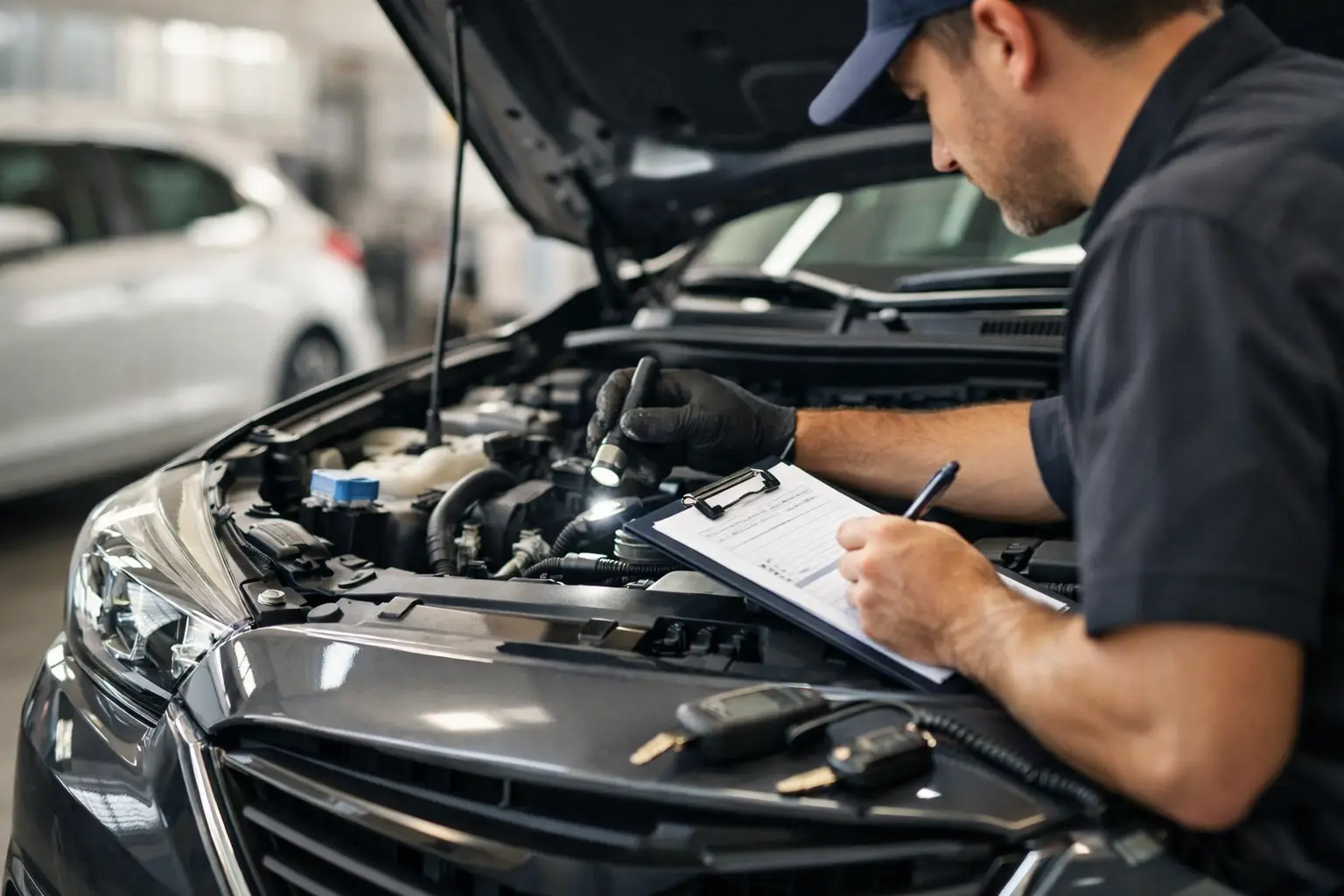
This usually starts with the engine bay and general running condition. A mechanic will look for fluid leaks, worn belts, signs of poor repairs, battery condition and anything unusual around hoses, wiring or cooling components. If the engine has been cleaned excessively, that can sometimes make leaks harder to spot, so experience matters here.
The inspection should also consider how the car starts, idles and responds. Rough idling, warning lights, smoke, overheating signs or unusual noises can point to problems that may not be obvious to a buyer.
Brakes, tyres and suspension
These are some of the most common areas where buyers end up spending money soon after purchase. Brake pad wear, rotor condition, tyre tread, uneven tyre wear, worn shocks, bushings and steering components all affect how the car drives and how safe it feels on the road.
Uneven tyre wear is a good example of why inspections matter. It might seem minor, but it can point to alignment issues, suspension wear or previous impact damage. A seller may only mention that the tyres will need replacing soon, while the real cost is bigger.
Underbody and leaks
What is underneath the car often tells the real story. Oil leaks, transmission seepage, damaged exhaust components, accident repairs, rust in key areas and impact damage from kerbs or road debris can all be easier to identify from below.
This is one reason buyers should be cautious about making a decision in a driveway with limited visibility. A vehicle can present well from the outside and still have expensive issues underneath.
Road test and drivability
A road test can reveal faults that do not show up when the vehicle is parked. Problems with transmission shifting, clutch operation, steering feel, brake performance, suspension noise, wheel bearing hum and overheating under load may only become apparent when the car is actually driven.
It also gives the mechanic a chance to see whether the vehicle behaves the way it should for its age and kilometres. Not every older car will feel like new, of course. The point is whether the wear is reasonable or whether there are warning signs of upcoming repair bills.
What a pre-purchase inspection can reveal that sellers may not mention
Most sellers are not necessarily trying to mislead anyone. Some genuinely do not know what is wrong with the car. Others know enough to keep the description vague.
A listing might say the car “drives well” or “has no issues”, but those phrases are not a diagnosis. A mechanic may find leaking rocker cover gaskets, cooling system pressure loss, worn engine mounts, poor quality previous repairs, mismatched tyres, CV boot damage or overdue servicing that has started to affect other components.
Service history also needs context. A stamped logbook is useful, but it does not automatically mean the vehicle is in great shape today. Cars can miss important repairs even with regular servicing, particularly if wear items were noted but delayed.
When an inspection is especially worth it
In truth, an inspection is worth considering for almost any used car purchase. But there are a few situations where it becomes even more important.
If you are buying privately, you usually have less protection than you would through a licensed dealer. If the car is older, has higher kilometres, has been modified, has patchy service history or is priced well below market value, the need for an inspection goes up.
The same applies if you are buying a second family car, a first car for a young driver, or a work vehicle that needs to be dependable from day one. Saving time at the buying stage can easily cost more later.
Interstate purchases and online-only deals carry extra risk as well. Photos do not show mechanical condition, and sellers are rarely objective about their own vehicles. If you cannot assess the car properly yourself, it makes sense to have someone independent do it for you.
Is every issue a reason to walk away?
Not always. This is where a good inspection becomes more useful than a simple pass or fail.
Some faults are manageable if the price reflects them. A car may need tyres, front brakes or a battery in the near future, and that does not automatically make it a bad buy. It may still be worthwhile if the overall condition is solid and you are budgeting for those items.
Other issues are more serious. Signs of overheating, major oil leaks, transmission slipping, structural accident damage, cooling system faults or a long list of neglected maintenance can turn a cheap car into a costly one. In those cases, walking away is often the smarter move.
The key is knowing the difference between normal wear and a vehicle that has been poorly maintained. That is hard to judge without experience.
How to get the most value from a pre-purchase car inspection
Timing matters. The best time to organise an inspection is before you commit, not after you have already agreed on the price and feel emotionally locked in. Buyers often rush because they are worried someone else will grab the car. That pressure is exactly how expensive mistakes happen.
It also helps to be clear about your expectations. If you are looking at a ten-year-old car with average kilometres, you should expect some wear. The goal is not perfection. The goal is to avoid hidden problems, understand upcoming costs and make a decision with open eyes.
A mobile inspection can make the process easier as well, particularly if the seller is at home or work and you want the vehicle checked on site. For buyers in Wallan and Melbourne’s northern suburbs, Hazara Mobile Mechanic can carry out pre-purchase inspections where the car is located, which saves time and helps keep the purchase process practical.
The real cost of skipping it
People usually skip inspections for one of three reasons. They want to save money, they are in a hurry, or the car looks too good to bother checking.
Those are understandable reasons, but they are also the usual setup for regret. One cooling system repair, one brake job, or one suspension overhaul can cost far more than the inspection you chose not to get. If a major engine or transmission issue shows up, the numbers get worse very quickly.
Buying a used car will always involve some level of judgement. There is no way to remove every risk. But there is a big difference between accepting normal used-car uncertainty and buying blind.
A pre-purchase car inspection gives you something more useful than reassurance. It gives you leverage, perspective and a better chance of ending up with a car that suits your budget instead of draining it. Before you commit to any used vehicle, give yourself the advantage of knowing what is really there.
Need a mobile mechanic?
Hazara Mobile Mechanic comes to you across Wallan and up to 70 km around. Open 7 days, 7am to 10pm, with emergency service 24/7. Call or text 0466 666 945, message us on WhatsApp or book online. See our services and the areas we cover.

Comments are closed