


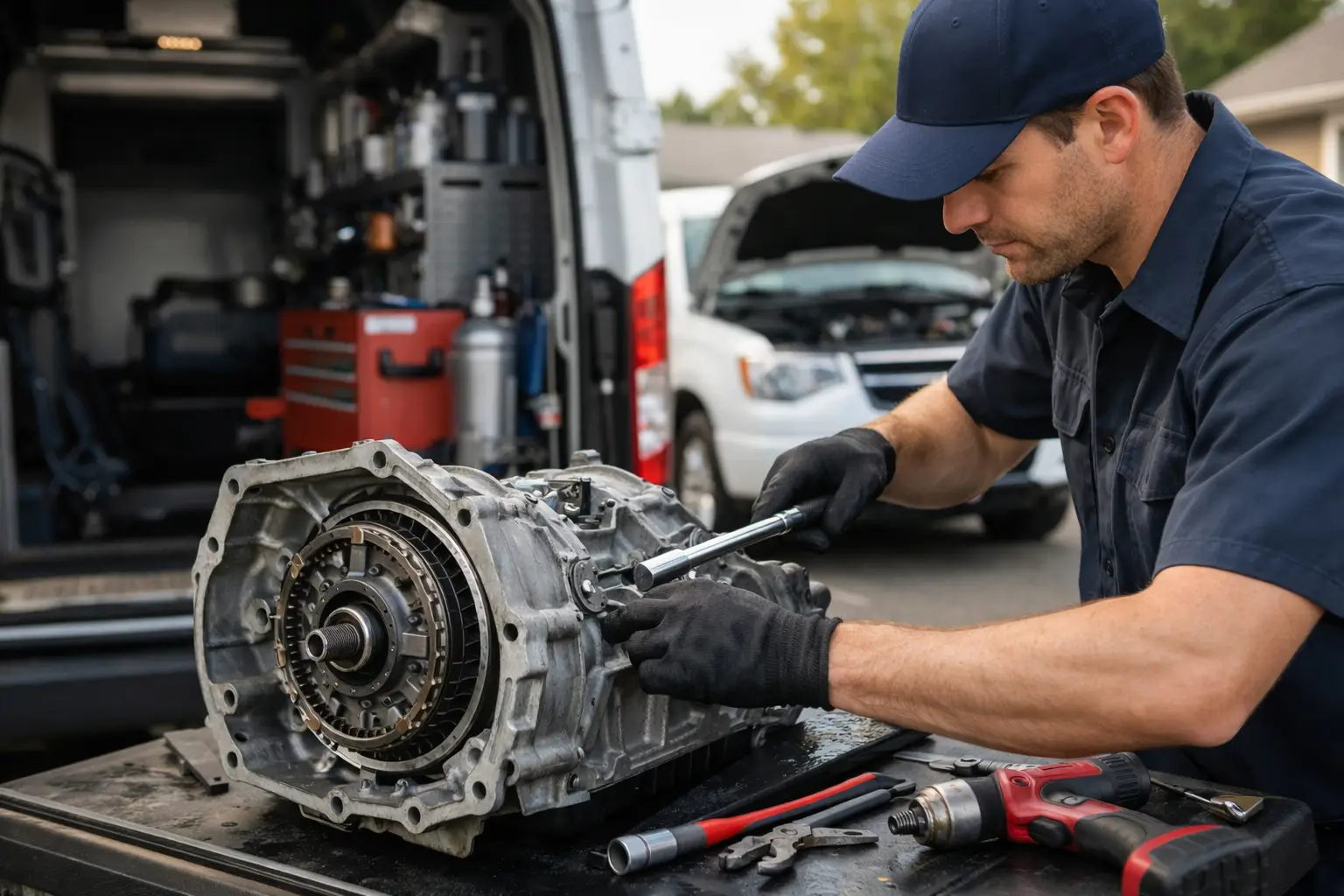
That shudder when you pull away from the lights, the delayed gear change on the way to work, or the sudden warning sign that something feels off – transmission trouble has a way of turning a normal day into a stressful one. Mobile transmission repair gives drivers a practical alternative to towing a vehicle to a workshop and rearranging the rest of the week around it.
For many everyday issues, a qualified mobile mechanic can inspect, diagnose and repair transmission-related faults right where the car is parked. That matters when you are at home with school drop-off coming up, at work with no time to spare, or stuck with a vehicle that is still drivable but clearly not right. The goal is simple: fix what can be fixed on-site, explain what cannot, and help you make the right call without wasting time or money.
What mobile transmission repair usually covers
Transmission problems are not all the same, and neither are the repairs. Some faults are relatively straightforward and can be handled on-site. Others require deeper internal work, specialist tooling, or removal of the transmission assembly. A good mobile service starts with honest diagnosis, not guesswork.
Mobile transmission repair commonly includes inspecting transmission fluid condition and level, checking for leaks, assessing mounts and linkages, scanning fault codes on electronically controlled systems, testing shift behaviour, and replacing accessible components. In some cases, the issue is not the gearbox itself but a related part such as a sensor, solenoid, wiring fault, clutch component, or cooling problem affecting transmission performance.
That distinction matters. A slipping or harsh-shifting vehicle does not automatically mean a full rebuild. Sometimes the fix is smaller, faster and far less expensive than drivers fear.
Signs your transmission needs attention
The earlier a transmission issue is checked, the better the chance of preventing a bigger repair. Small symptoms often become major faults if the vehicle keeps being driven without diagnosis.
Common warning signs
If your car hesitates before changing gears, jolts between gears, slips out of gear, leaks reddish or dark fluid, makes whining or clunking noises, or struggles to accelerate smoothly, it is worth booking an inspection. You may also notice a burning smell, dashboard warning lights, or the engine revving higher than normal without the expected increase in speed.
Manual vehicles can show different symptoms. Difficulty selecting gears, clutch slip, grinding, or a heavy clutch pedal can point to clutch or transmission-related problems. In practical terms, it is less important to name the issue yourself than to get it checked before extra damage sets in.
When not to keep driving
If the vehicle will not go into gear, loses drive completely, makes severe noises, or leaves a large fluid leak where it is parked, stop driving it. In those cases, trying to limp home can turn a repairable fault into a much more expensive one. A proper assessment will tell you whether the problem is safe for on-site repair, needs transport, or needs urgent roadside support.
Why mobile transmission repair suits busy drivers
For most people, car trouble is not just a mechanical issue. It is a time issue. Getting to a workshop, waiting for diagnosis, arranging lifts, and being without the car can be more disruptive than the repair itself.
That is where mobile transmission repair makes sense. The mechanic comes to your home or workplace, inspects the vehicle where it sits, and explains the fault in plain language. You know what is happening, what it is likely to cost, and whether the repair can be completed on-site. There is less downtime, less back-and-forth, and less pressure to make a rushed decision at a service desk.
For families, tradies, office workers and commuters across Wallan and Melbourne’s northern suburbs, convenience is not a luxury. It is the difference between solving a problem quickly and letting it drag on for another week.
What happens during an on-site transmission diagnosis
A proper diagnosis is the most valuable part of the visit. Transmission complaints can have overlapping symptoms, and replacing parts too early can cost more without fixing the actual fault.
The first checks
The inspection usually starts with the basics: fluid condition, fluid leaks, visible wear, warning lights, and scan data if the vehicle has electronic transmission controls. Road testing may also be part of the process, depending on the fault and whether it is safe to drive.
From there, the mechanic works through what the car is doing versus what the transmission system should be doing. Is the issue happening cold, hot, under load, or only in certain gears? Is it mechanical, hydraulic, electrical, or related to driveline components nearby? These details help narrow the cause before any repair is recommended.
Honest advice matters
Not every transmission fault should be repaired on the spot, and that is not a drawback – it is part of doing the job properly. If the transmission needs major internal work, removal, or specialist bench testing, you should be told that clearly. If the issue can be repaired on-site, you should know that too, along with the likely time involved and the parts required.
This is where experience shows. Good service is not about overpromising. It is about diagnosing accurately, fixing what is practical at your location, and being upfront when a workshop-based repair is the better option.
Mobile transmission repair vs workshop repair
There is no one-size-fits-all answer. It depends on the fault.
Mobile transmission repair is ideal when the issue involves leaks, external components, sensors, wiring, mount problems, fluid-related concerns, linkages, accessible solenoids, clutch-related diagnosis, or drivability concerns that need inspection at the vehicle’s location. It is also a smart first step when you are not yet sure how serious the problem is.
Workshop repair becomes necessary when the transmission must be removed, disassembled or rebuilt. Major internal damage, torque converter faults, extensive clutch pack wear in automatics, and certain complex CVT or dual-clutch problems often require workshop equipment and more time.
The real advantage of mobile service is that you do not have to guess which category your issue falls into. The vehicle gets checked first, and you get a practical recommendation based on the actual fault.
The cost question drivers always ask
Transmission repairs have a reputation for being expensive, and sometimes they are. But the price range is wide because the causes are wide.
A minor leak, sensor replacement, fluid issue or external component repair will usually cost far less than internal transmission damage. Delaying diagnosis is what often drives the bill up. Low or contaminated fluid, ignored slipping, or ongoing overheating can damage parts that might have been protected with earlier attention.
What most drivers want is not the cheapest quote. They want clarity. They want to know whether the repair is worth doing, whether it can be done on-site, and whether there are options. That is why transparent service matters just as much as technical skill.
Choosing the right mechanic for the job
Transmission systems are too important to leave to guesswork. Whether your vehicle is automatic or manual, you want someone who can diagnose properly, explain the issue clearly, and avoid replacing parts just to see what happens.
A dependable mobile mechanic should be willing to talk through symptoms, inspect the vehicle thoroughly, and be realistic about what can be repaired on-site. Fast response also matters, especially if the vehicle is stuck at home or beginning to show signs that it may not stay drivable for long.
For local drivers, this is exactly why businesses like Hazara Mobile Mechanic are valued – practical support, clear communication, and repairs carried out where it suits the customer best.
When to book mobile transmission repair
If your car has started shifting differently, leaking fluid, struggling to engage gears, or showing warning signs you cannot ignore, booking an inspection early is the smart move. Even if the vehicle is still driving, that does not mean the problem is harmless.
Most transmission faults do not fix themselves, and they rarely get cheaper with time. An on-site inspection gives you answers quickly and helps you decide on the next step without the usual hassle of workshop drop-offs and long waits.
If something feels off, trust that instinct and get it checked. A timely diagnosis at home or work can save you from a breakdown later and make the whole repair process a lot less disruptive.
Need a mobile mechanic?
Hazara Mobile Mechanic comes to you across Wallan and up to 70 km around. Open 7 days, 7am to 10pm, with emergency service 24/7. Call or text 0466 666 945, message us on WhatsApp or book online. See our services and the areas we cover.

Comments are closed