

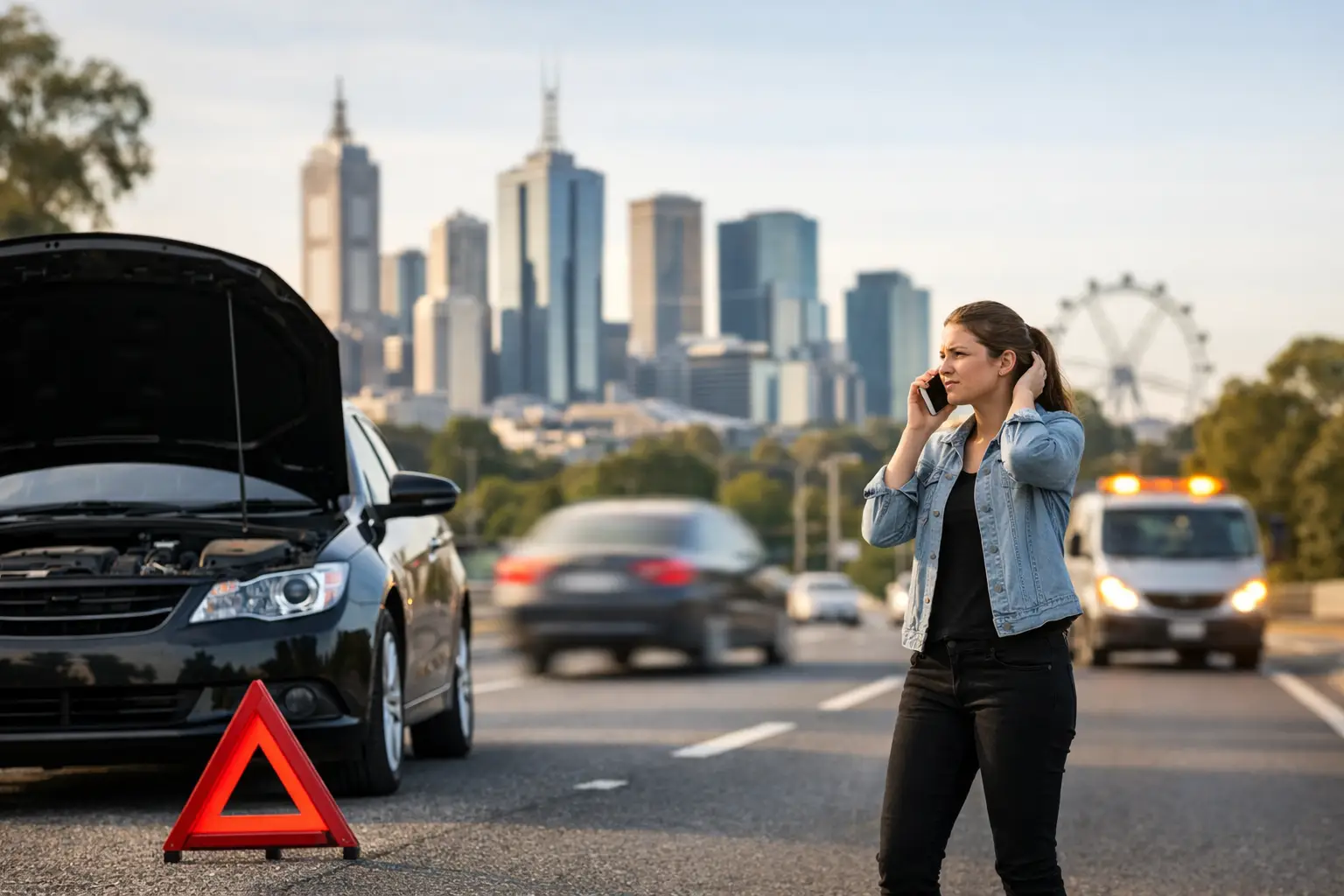
A warning light on the Hume, steam coming from the bonnet outside your workplace, or an engine that will not start in the school pick-up queue can quickly turn a normal day upside down. Knowing how to handle car breakdown safely gives you a clear plan when stress is high and traffic is moving around you.
The priority is not diagnosing the fault on the spot. Your first job is to protect yourself, your passengers and other road users. Once everyone is safe, you can arrange the right help and make a sensible decision about repair or towing.
How to Handle a Car Breakdown Safely
If your vehicle starts losing power, makes an unfamiliar noise or displays a serious warning light, stay calm and avoid sudden steering or braking. Indicate early and move towards the left side of the road, a service lane or a safe off-road area where possible. On a busy Melbourne road, stopping in the traffic lane is a last resort.
As soon as you are safely stopped, put the vehicle in park or neutral, apply the handbrake and turn on your hazard lights. At night, in rain or poor visibility, these small steps matter even more. They give approaching drivers the best chance to see you early.
There are a few situations where you should stop as soon as it is safe rather than trying to push on. Pull over if you notice:
- smoke, steam or a burning smell from the engine bay
- a red oil-pressure, temperature or battery warning light
- severe vibration, a flat tyre or steering that feels unsafe
- a loud knocking, grinding or metal-on-metal noise
Do not keep driving an overheating car in the hope it will get you home. Continuing can turn a cooling-system issue into major engine damage. Likewise, driving with an oil warning light or a serious brake concern can be dangerous and costly.
Get people out of danger, not into traffic
Whether passengers should leave the car depends on where you have stopped. If the vehicle is safely off the road, it can be sensible for everyone to wait away from traffic, behind a barrier or well clear of the road edge. Take care when opening doors and never stand between your car and passing vehicles.
If you are stopped in a live traffic lane, on a narrow shoulder or in a location where getting out would expose you to traffic, it may be safer to remain inside with seatbelts fastened and doors locked while you contact roadside assistance or emergency services. Use your judgement based on the road, traffic speed and available space.
On freeways and high-speed roads, avoid walking along the carriageway to find help. Call from your mobile instead. If there is an immediate danger, such as a vehicle stopped in a live lane after a collision, contact emergency services.
Check the Basics Only When It Is Safe
Once you are parked somewhere secure, a quick look can help explain what happened. Check whether you have left headlights or accessories on, look for an obvious flat tyre, and note any warning lights, leaks, smells or noises. This information helps a mechanic diagnose the fault faster.
Do not open the radiator cap or coolant reservoir when the engine is hot. Pressurised coolant can cause serious burns. If steam is coming from the bonnet, turn the engine off and allow it to cool completely. You can open the bonnet carefully once it is safe to do so, but keep hands, clothing and tools away from moving belts and fans.
A flat battery is one of the most common reasons a car will not start. You may hear a rapid clicking sound, see dim dashboard lights or find the engine does not crank at all. A jump-start may get the vehicle moving, but it does not always fix the cause. An ageing battery, loose terminal, alternator fault or electrical drain may still need attention.
It is also worth being realistic about roadside fixes. Replacing a wheel can be practical on level ground away from traffic if you have the correct spare and feel confident doing it. It is not a good idea on a narrow roadside, soft verge or freeway shoulder. In those circumstances, professional help is the safer choice.
Call for the Right Type of Help
When you call for assistance, give your exact location, vehicle make and model, registration, and a short description of what happened. Mention whether the car is blocking traffic, whether it is safe to drive, and whether you can see a leak, smoke or tyre damage. If you are using a navigation app, share the nearest cross street, landmark or direction of travel.
The type of breakdown affects whether you need roadside assistance, a mobile mechanic or a tow. A flat battery, starter issue, minor electrical fault, brake concern, cooling-system problem or no-start condition may be assessed and repaired on site, depending on the vehicle and fault. A serious collision, major fluid leak, transmission failure or engine damage may require towing to prevent further damage.
For drivers in Wallan and Melbourne’s northern suburbs, Hazara Mobile Mechanic can assess many common faults where your vehicle is parked, whether that is at home, work or by the roadside. On-site diagnosis can save the extra time and disruption of arranging a workshop visit when a repair is suitable to complete at your location.
Be cautious about accepting help from an unknown person if you are alone or feel unsafe. It is reasonable to keep doors locked, speak through a partially opened window and wait for the provider you contacted. If someone claims they are attending, ask for identifying details before allowing them to inspect the vehicle.
Avoid Making the Fault Worse
A breakdown often comes with the temptation to try one more restart or drive just a few kilometres. Sometimes that is harmless. Other times it creates a much larger repair bill.
If your temperature gauge is high, the engine is misfiring badly, the oil light is on, brakes feel soft, or steering is difficult, do not drive further. Switching off the engine and waiting for advice is usually the better call. It may be inconvenient, but it protects the vehicle and everyone in it.
If the issue appears minor and the car restarts normally, do not assume it has resolved itself. Make a note of the warning light, weather conditions and anything unusual you noticed. Intermittent faults can be harder to find later, and those details give a mechanic a useful starting point.
Take photos of warning messages, tyre damage or fluid on the ground if it is safe to do so. This can also be helpful if you need to explain the issue to roadside assistance, a mechanic or your insurer.
What to Keep in Your Car
A small breakdown kit does not need to take over the boot. Keep a charged phone, charging cable, torch, high-visibility vest, basic first-aid kit, drinking water and your roadside-assistance details available. If you travel outside built-up areas, a warm layer and a reflective warning triangle can also be useful, provided placing it does not put you in danger.
Regular servicing reduces the chance of an unexpected stop, although no car is completely immune. Battery testing, tyre checks, cooling-system inspections and attention to warning lights can catch common problems before they leave you stranded. If your car has been slow to start, running hot or making new noises, arrange an inspection before the next long commute or weekend trip.
A breakdown is frustrating, especially when work, family plans or appointments are waiting. But a calm response, a safe stopping place and prompt professional advice will usually turn a stressful roadside moment into a manageable repair.
Need a mobile mechanic?
Hazara Mobile Mechanic comes to you across Wallan and up to 70 km around. Open 7 days, 7am to 10pm, with emergency service 24/7. Call or text 0466 666 945, message us on WhatsApp or book online. See our services and the areas we cover.

Comments are closed