


A temperature gauge creeping above its normal position on the way to work is not a warning to ignore until the weekend. This car cooling system guide explains what keeps your engine at a safe temperature, the signs something is wrong, and the sensible next step before a minor fault turns into an expensive breakdown.
Your vehicle’s cooling system works hard every time you drive, especially in Melbourne’s stop-start traffic, on warm days, or while towing and carrying a full load. When it is working properly, most drivers never need to think about it. When it is not, an overheating engine can quickly cause serious damage.
What your car cooling system actually does
Despite the name, the cooling system is not only there to stop the engine getting too hot. It helps the engine reach and maintain its intended operating temperature. An engine that runs too hot can overheat, while one that consistently runs too cool may use more fuel, perform poorly and suffer increased wear over time.
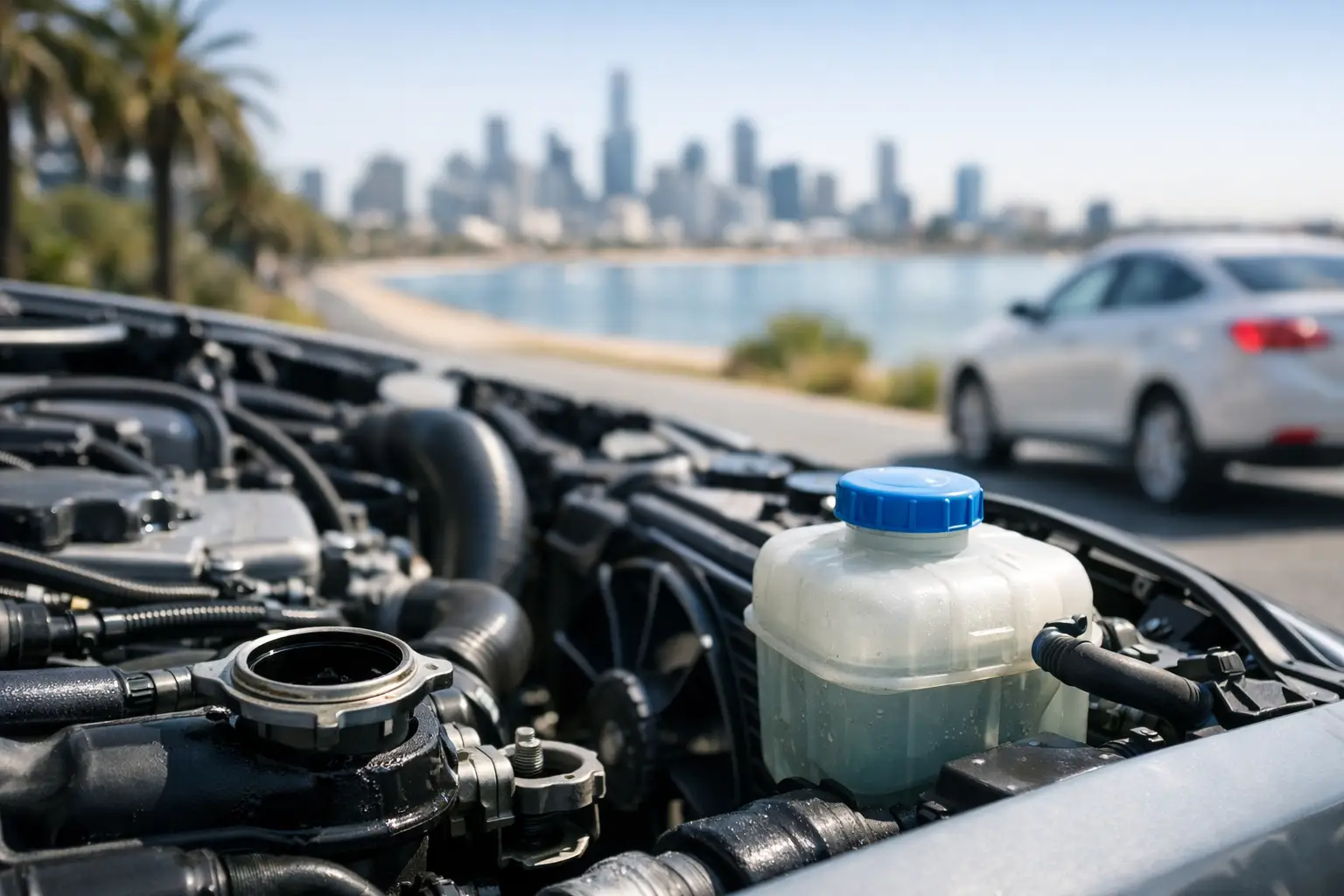
Coolant circulates through passages in the engine, absorbing heat before travelling to the radiator. Air passing through the radiator helps release that heat. The water pump keeps coolant moving, the thermostat controls its flow as the engine warms up, and cooling fans provide extra airflow when the car is stationary or travelling slowly.
The system also relies on hoses, clamps, the radiator cap, a coolant reservoir and sensors. A fault in any one of these parts can affect the whole system. That is why an accurate diagnosis matters more than simply topping up the reservoir and hoping for the best.
Car cooling system guide: warning signs to act on
The clearest warning is the temperature gauge moving into the hot range or a temperature warning light appearing on the dashboard. Pulling over safely and dealing with it early can protect your engine. Continuing to drive with an overheating engine can warp the cylinder head, damage the head gasket and leave you facing a much larger repair.
You may also notice a sweet smell around the vehicle, puddles beneath the engine bay, white or coloured residue around hoses or the radiator, or steam coming from under the bonnet. Coolant is commonly green, red, blue, orange or pink, depending on the vehicle and coolant type, so do not rely on colour alone to identify a leak.
Other signs can be less obvious. Your heater may blow cold air even when the engine is warm, the air conditioner may seem less effective when sitting in traffic, or you may need to add coolant more often than usual. A gurgling sound behind the dashboard can also point to low coolant or air trapped in the system.
A cooling fan that runs loudly for a long time after a short drive is worth checking too. It does not always mean there is a fault, particularly on a hot day, but it can indicate the engine is running hotter than it should.
What to do if your car begins to overheat
If the gauge rises quickly or a warning light comes on, reduce the load on the engine. Turn off the air conditioner, pull over as soon as it is safe, and switch the engine off. Do not keep driving simply because the nearest destination is only a few kilometres away.
Never remove the radiator cap or coolant reservoir cap while the engine is hot. The cooling system is pressurised, and hot coolant can cause serious burns. Let the vehicle cool fully before checking anything under the bonnet.
Once it is safe to inspect, look for visible leaks, split hoses, a loose cap or coolant around the radiator area. Do not pour cold water over a hot engine. If the coolant is low after the engine has cooled, a small top-up may help you identify the issue, but it is not a permanent repair. If there is steam, a major leak, repeated overheating or the warning returns, arrange roadside assistance or a mechanic rather than taking the risk of driving on.
Why coolant level is only part of the picture
Many people call all engine coolant “water”, but the correct coolant mixture is designed to do much more. It raises the boiling point, lowers the freezing point, helps prevent corrosion and lubricates certain cooling system components. Plain water may be useful in an emergency only, but it should not replace the correct coolant mixture for normal use.
Using the wrong coolant can cause problems as well. Different vehicles require specific coolant types and specifications, and mixing incompatible products may reduce corrosion protection or create deposits in the system. The owner’s manual is the best starting point, but a mechanic can confirm the correct product and mixture for your vehicle.
Low coolant also has a cause. It may be a slow radiator leak, a worn hose, a leaking water pump, a faulty reservoir cap or an internal engine issue. Topping it up without finding the source can leave you stranded later, often at the worst possible time.
Common cooling system faults
Radiators can develop leaks from corrosion, road debris damage or worn plastic tanks. Hoses may become soft, cracked or swollen with age, while clamps can loosen and allow coolant to escape under pressure. These issues are often straightforward to repair when found early.
A stuck thermostat is another common cause of overheating. If it fails closed, coolant cannot circulate properly through the radiator. If it fails open, the engine may take too long to warm up and operate below its ideal temperature. Either way, it needs proper testing rather than guesswork.
Water pumps can leak or lose their ability to circulate coolant effectively. In some vehicles, the pump is driven by the timing belt, so repair timing and cost depend on the engine design. Cooling fans, relays, fuses and temperature sensors can also be responsible, particularly if the car overheats mostly in traffic but settles down at highway speed.
There is also a more serious possibility: a head gasket fault. Signs may include ongoing coolant loss with no obvious external leak, white exhaust smoke, overheating, contaminated engine oil or bubbles in the coolant reservoir. These symptoms do not automatically confirm a head gasket problem, but they do call for a professional inspection promptly.
Simple checks you can make at home
Check the coolant level only when the engine is cold and the vehicle is parked on level ground. The coolant reservoir should show minimum and maximum marks. If the level is below minimum, inspect for signs of leakage before adding the correct coolant.
Take a quick look at visible hoses for cracking, bulging or wet spots. Check beneath the vehicle after it has been parked for fresh drips. It is also worth watching the temperature gauge during normal driving so you know where it usually sits. A change from normal behaviour is often more useful than waiting for a warning light.
Do not confuse coolant maintenance with a complete diagnosis. Modern vehicles can store fault codes without showing an obvious warning at first, and some leaks appear only once the system is hot and pressurised. A pressure test, cooling fan test and inspection of key components can identify faults that a visual check misses.
Preventing an overheating problem
Cooling system maintenance is usually incorporated into scheduled servicing, but the required intervals vary by vehicle. Coolant does not last forever. Over time, its protective additives wear down, which can allow internal corrosion and reduce performance. Following the manufacturer’s servicing requirements is the safest approach, particularly for late-model vehicles that use long-life coolant.
If your vehicle is older, regularly travels long distances, tows a trailer, or spends plenty of time in traffic, it may need closer attention. The same applies if you have noticed any coolant loss, a sweet smell or fluctuations on the temperature gauge. Early inspection is generally cheaper and far less disruptive than an overheated vehicle on the side of the road.
For drivers in Wallan and Melbourne’s northern suburbs, a mobile mechanic can inspect many cooling system issues at your home or workplace. Hazara Mobile Mechanic can assess leaks, hoses, radiators, thermostats, cooling fans and coolant condition without requiring you to set aside time for a workshop visit. If the repair is safe and practical to complete on site, it can often be handled where the car is parked.
When to book a mechanic straight away
Book an inspection if you are adding coolant repeatedly, the temperature gauge is inconsistent, coolant is leaking, or the heater has stopped working as expected. These are not faults to leave until the next service. The same applies if your car has already overheated, even if it now seems to drive normally.
A cooling system repair can range from a hose or cap replacement to more involved radiator, water pump or engine work. The cost depends on the fault, the vehicle and access to the failed component. Clear diagnosis first helps avoid replacing parts that are not causing the problem.
Treat a changing temperature gauge as your car asking for attention, not as a dashboard annoyance. A timely check can keep a small cooling fault from interrupting your commute, your family plans or your next drive out of town.
Need a mobile mechanic?
Hazara Mobile Mechanic comes to you across Wallan and up to 70 km around. Open 7 days, 7am to 10pm, with emergency service 24/7. Call or text 0466 666 945, message us on WhatsApp or book online. See our services and the areas we cover.

Comments are closed