


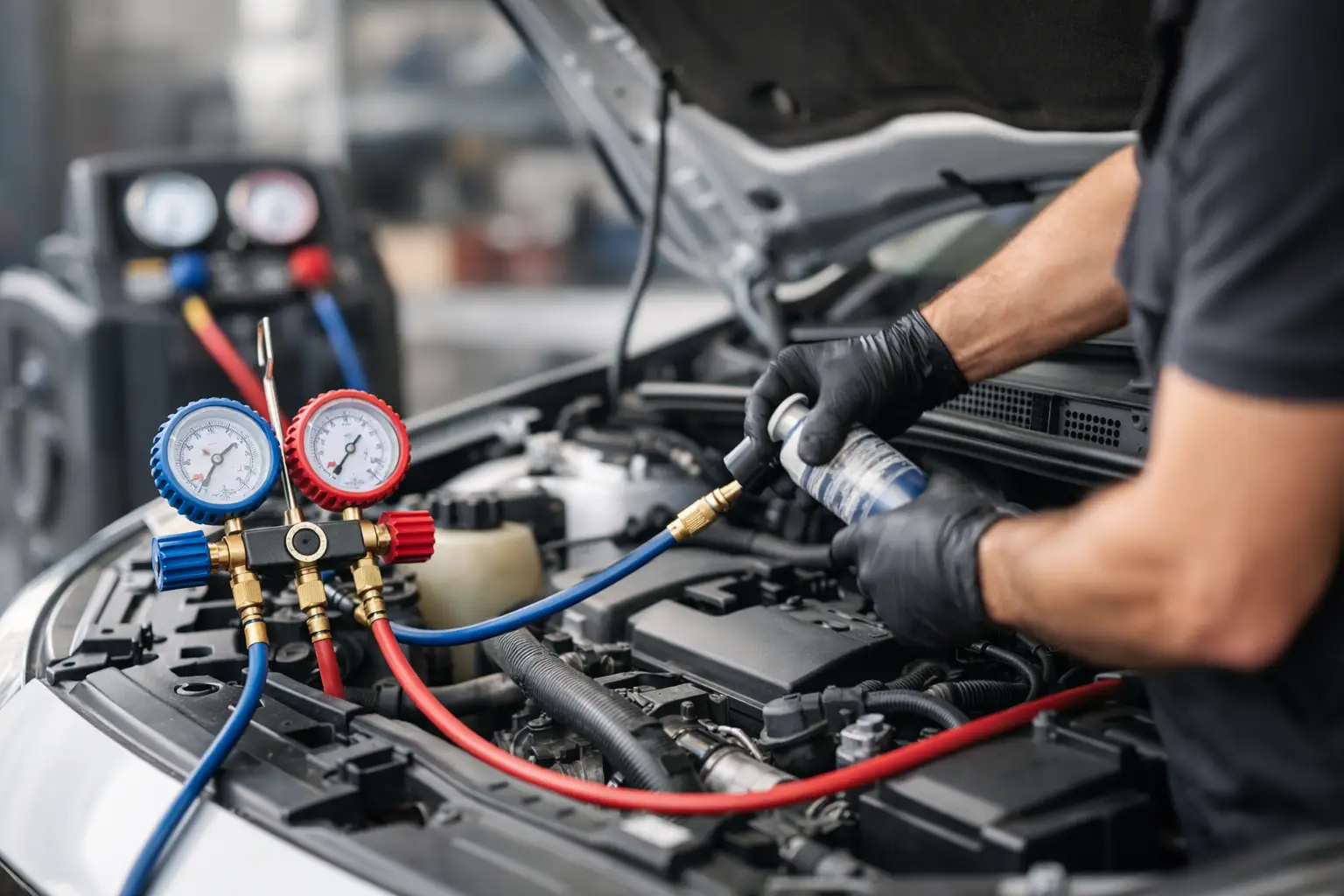
You usually notice air conditioning problems on the worst possible day – stuck in traffic, school pick-up running late, or parked at work with the cabin turning into an oven. That is exactly why car aircon regas explained properly matters. A regas can restore cooling, but it is not a magic fix for every air conditioning fault, and knowing the difference can save you time, money and frustration.
Car aircon regas explained – what a regas actually is
A car air conditioning system works by circulating refrigerant through components like the compressor, condenser, evaporator and expansion valve. That refrigerant absorbs heat from inside the cabin and releases it outside, which is what gives you cold air through the vents.
A regas is the process of removing any remaining refrigerant, checking the system condition, and recharging it with the correct type and amount of refrigerant. In many cases, the service also includes adding the right compressor oil and testing performance once the system is recharged.
What a regas is not is just a quick top-up done blindly. If refrigerant has dropped, there is usually a reason. Air conditioning systems are sealed, so while a very slow loss can happen over time, a system that has stopped cooling properly may also have a leak, a faulty compressor, blocked components or an electrical issue.
Why refrigerant levels matter
When refrigerant is low, the system cannot absorb and transfer heat as effectively. That means the air coming through the vents may feel only mildly cool, take too long to cool down, or stay warm altogether.
Low refrigerant can also make the compressor work harder than it should. Leave that problem too long and you may turn a relatively simple service into a more expensive repair. That is why air conditioning faults are worth checking early, especially before summer hits properly.
There is a practical point here too. If your vehicle is your daily transport for work, school runs or weekend travel, poor air conditioning is not just annoying. It affects comfort, concentration and how usable the car feels on hot days.
Signs your car may need an aircon regas
The most obvious sign is weak cooling. You switch the aircon on, the fan works, but the air never gets properly cold. Sometimes it starts cold for a few minutes and then fades. Other times it only feels cool when you are driving and warmer when idling.
You might also notice the compressor not engaging as it should, unusual cycling on and off, or a hissing sound that suggests pressure issues. In some vehicles, the demister performance also drops because the air conditioning system helps remove moisture from the cabin air.
That said, these signs do not always mean a regas is the answer. Weak airflow can be a blower issue or blocked cabin filter. Warm air can point to an electrical fault, pressure switch problem or compressor failure. That is why proper testing matters more than guessing.
How often does a car need regassing?
There is no one-size-fits-all schedule. Some cars go years without needing attention, while others develop leaks or lose efficiency sooner. Vehicle age, system condition, how often the aircon is used and whether previous repairs were done properly all play a part.
As a general rule, if your air conditioning is still cooling well, there may be no need to regas it just because time has passed. On the other hand, if performance has clearly dropped, it makes sense to have it checked rather than waiting for it to stop altogether.
A good habit is to run your aircon regularly, even in cooler months. It helps keep seals lubricated and the system operating properly. Many drivers only think about air conditioning when summer arrives, and by then the fault has often been there for a while.
What happens during an aircon regas service?
A proper service starts with identifying the refrigerant type your vehicle uses and checking the system condition. The old refrigerant is recovered using specialised equipment rather than being vented. The system is then evacuated to remove air and moisture, because moisture inside an AC system can reduce performance and cause damage over time.
From there, the system is recharged with the exact amount of refrigerant specified for that vehicle. That detail matters. Too little refrigerant affects cooling. Too much can also cause pressure and performance problems.
A technician should then test vent temperature, operating pressures and general system behaviour. If readings are off, or if the refrigerant charge drops again soon after, further diagnosis is needed. That is where experience matters, because the issue may sit with a leaking seal, condenser damage, compressor wear or another fault entirely.
Car aircon regas explained with one common myth
A common myth is that air conditioning simply “uses up” refrigerant like petrol in a tank. It does not work that way. Refrigerant circulates in a sealed system. If levels are low, the system has either lost some refrigerant very gradually over time or there is a more obvious leak.
That distinction matters because if a leak is present, a regas may only be a temporary improvement. You might get colder air for a short period, only to be back where you started weeks or months later. Proper diagnosis first is often the smarter and cheaper path.
Why mobile aircon service makes sense for busy drivers
For many people in Wallan and Melbourne’s northern suburbs, the biggest challenge is not deciding whether to fix the aircon. It is finding the time to get to a workshop, wait around, and rearrange the day.
That is where a mobile mechanic service is genuinely useful. Having your vehicle checked at home or work removes the usual disruption. You can keep moving with your day while the vehicle is inspected on site, and if a regas is suitable, it can often be handled without the workshop runaround.
That convenience matters most for working professionals, families and commuters who rely on the car every day. A practical service should fit around your schedule, not make it harder.
When a regas will not fix the problem
This is the part many articles skip. A regas helps when refrigerant level is the issue, but it will not repair damaged components. If the compressor has failed, the condenser is punctured, the system has a significant leak, or there is an electrical fault stopping operation, the gas charge alone will not solve it.
Some modern vehicles can also have sensor or control module faults that affect air conditioning performance. Others may have contaminated systems from previous poor-quality repairs. In those cases, the right outcome starts with diagnosis, not assumptions.
A trustworthy mechanic should tell you when a regas is appropriate and when it is not. That honesty is important, because nobody wants to pay for a service that only masks the real issue.
Is it worth doing before summer?
Usually, yes. Once the first run of very hot days hits, air conditioning bookings tend to ramp up fast. If your aircon is already underperforming in spring or early summer, getting it looked at sooner is usually easier than waiting until the system fails in peak heat.
There is also a comfort and safety angle. A cooler cabin helps on long drives, in stop-start traffic and when transporting kids or older passengers. If your demister function relies on the AC system working well, fixing it early also helps when weather turns damp.
What to expect from a proper service
You should expect clear advice, the correct refrigerant for your vehicle, and an explanation if further repairs are needed. You should also expect the job to be done with the right equipment rather than guesswork.
At Hazara Mobile Mechanic, the focus is on practical, honest service that fits around everyday life. If your aircon is not cooling the way it should, the best next step is to have it checked properly and find out whether a regas will solve it or whether the system needs more attention.
If your car’s air conditioning has gone from icy cold to barely trying, do not wait for the next scorcher to force the issue – a quick check now can make the whole season a lot more comfortable.
Need a mobile mechanic?
Hazara Mobile Mechanic comes to you across Wallan and up to 70 km around. Open 7 days, 7am to 10pm, with emergency service 24/7. Call or text 0466 666 945, message us on WhatsApp or book online. See our services and the areas we cover.

Comments are closed