


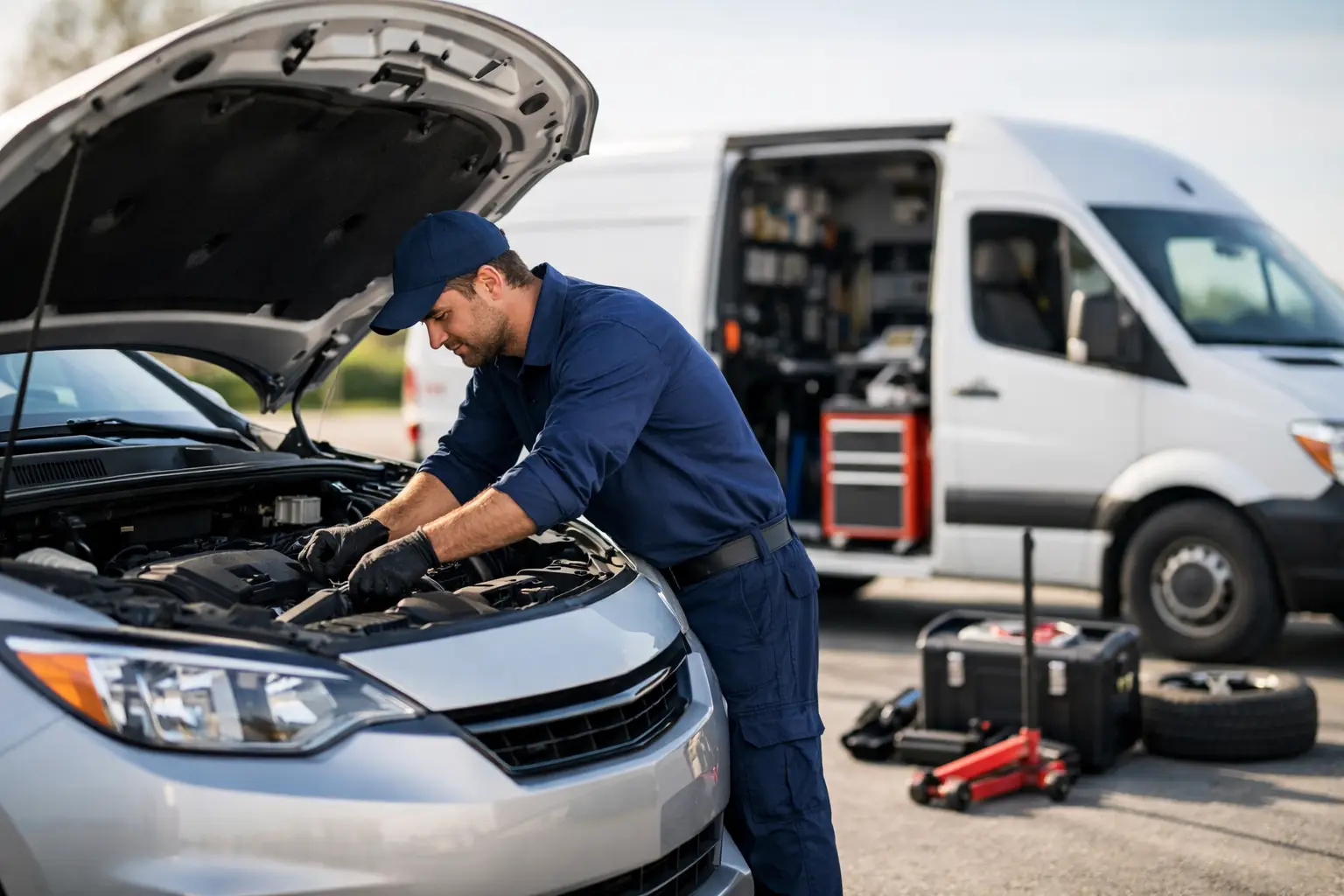
When your car needs attention, the biggest hassle is often not the repair itself – it’s finding time to get to a workshop, wait around, and reshuffle your whole day. That’s why so many drivers ask, can mechanics service cars onsite? In many cases, yes. A qualified mobile mechanic can carry out a wide range of servicing and repairs at your home, workplace or roadside, often with the same care and technical standard you’d expect from a traditional garage.
For busy families, tradies, commuters and anyone juggling work and life across Wallan and Melbourne’s northern suburbs, onsite servicing is not just convenient. It can be the difference between getting a job sorted promptly or putting it off for weeks.
Can mechanics service cars onsite for most jobs?
The short answer is yes, for a large share of routine maintenance and many common repairs. Modern mobile mechanics are set up to bring the tools, equipment and diagnostic capability needed for everyday vehicle work directly to the customer.
That includes things like logbook servicing, basic servicing, battery replacement, brake work, cooling system repairs, suspension and steering repairs, auto electrical diagnostics, pre-purchase inspections and even some more involved mechanical jobs. If your vehicle is parked safely with enough access around it, there is a good chance the work can be done onsite.
This suits a lot of drivers because the car stays where it already is. You don’t need to organise lifts, waste half a day in a waiting room, or deal with towing unless the issue genuinely requires it.
What can be done at home or at work?
A mobile mechanic can usually complete servicing and repairs wherever the vehicle is safely parked, whether that’s in your driveway, at your office car park or at the side of the road in a breakdown situation. Routine servicing is one of the most common onsite jobs because it doesn’t depend on a workshop hoist in every case.
Oil and filter changes, fluid top-ups, checks of brakes, tyres and belts, battery testing and replacement, and fault finding with diagnostic tools are all well suited to mobile service. Brake pad and rotor replacement can often be completed onsite too, along with starter motor and alternator work, minor cooling system repairs and a range of electrical issues.
For customers who are buying a used car, onsite inspections are also practical. A mechanic can attend where the vehicle is located, inspect its condition and help you make a clearer decision before you hand over your money.
Some mobile mechanics also handle clutch work, transmission or differential repairs, wheel repairs and air conditioning regas onsite, depending on the job and the vehicle. The key point is that mobile service is broader than many people realise.
When onsite servicing makes the most sense
Onsite servicing is especially useful when time matters. If your battery dies before school drop-off, if your brakes start making noise before a week of commuting, or if your car is overdue for a service and you keep delaying it because you cannot spare the time, mobile support makes life easier.
It also helps when the car is still drivable but inconvenient to move. Maybe you work long hours, maybe you have small kids, or maybe you simply don’t want to spend your Saturday sitting in a workshop. Having the mechanic come to you keeps your day moving.
For business owners and tradies, there is another advantage. If a work vehicle can be serviced onsite, there is less downtime and less disruption to the schedule.
Are there jobs that still need a workshop?
There are, and any honest mechanic should be upfront about that. While mobile servicing covers a lot, some repairs still require workshop equipment, specialised machinery or conditions that are not practical onsite.
Major engine rebuilds, jobs that need a vehicle hoist for extended underbody access, structural repairs, tyre fitting with specialised balancing equipment in some cases, and complex machining work are examples where a workshop may be the better option. Certain diagnostics can also reveal problems that need deeper workshop testing.
Safety matters too. If the vehicle is parked on a steep slope, in a tight underground car park, or in a location with poor access, the mechanic may recommend another arrangement. The right answer depends on the job, the vehicle and the site conditions.
That is not a weakness of mobile service. It is simply the reality of doing the job properly. Good mechanics do not force an onsite repair when a workshop solution would be safer or more effective.
Can mechanics service cars onsite without cutting corners?
This is one of the biggest concerns for customers, and it is a fair question. Convenience only matters if the work is still done properly. The good news is that professional mobile mechanics use quality tools, diagnostic equipment and proven service procedures to complete work to a high standard.
The difference is the location, not the level of care. A qualified mechanic can still inspect components, diagnose faults, replace parts, follow service schedules and explain what the car needs. For many routine and mid-level repairs, there is no compromise at all.
In some cases, the experience can even feel more transparent. You can speak directly with the mechanic at your home or workplace, see the vehicle where it sits, and ask questions without the rush that sometimes comes with a busy workshop counter.
What to expect from an onsite mechanic visit
A good mobile service should be straightforward from the start. You make a booking, explain the problem or the service due, and provide the vehicle details and location. From there, the mechanic arrives with the tools and parts needed for the agreed work, or with the diagnostic equipment to assess the issue first.
Once onsite, the mechanic will inspect the vehicle, confirm the job, and carry out the work if everything matches the booking. If something else turns up during inspection, it should be explained clearly so you can make an informed decision.
That matters because cars do not always read the script. A brake noise may turn out to be more than worn pads. A starting issue may be the battery, the alternator or a wiring fault. Clear communication is what turns a stressful repair into a manageable one.
How to know if your car is suitable for onsite service
If you are not sure whether your vehicle can be serviced at home or work, the easiest step is to ask. In general, your car is a good candidate for mobile service if it is parked in a safe, accessible spot and the work is routine, diagnostic or a common repair.
It helps to provide the make, model, year and a clear description of the issue. If warning lights are on, mention them. If the car will not start, say whether it cranks, clicks or does nothing at all. Small details can help the mechanic prepare properly before arriving.
Photos can help too, especially if there is visible damage, a dashboard warning or a concern about access. The more accurate the booking information, the smoother the visit tends to be.
Why more drivers are choosing mobile mechanics
The shift towards onsite car servicing is not hard to understand. People want practical service that fits real life. They want the car sorted without turning a simple repair into a full-day chore.
That is why mobile mechanics have become such a sensible option for everyday drivers. You still get professional attention, but without the extra running around. For many jobs, it is simply a smarter way to maintain your vehicle.
Hazara Mobile Mechanic sees this every day with local customers who want honest advice, reliable repairs and service that comes to them. When the work can be done onsite, it saves time, reduces stress and helps people get on with what they need to do.
If you have been wondering whether to book a mobile service, the answer often comes down to this: if the job can be done safely and properly where your car is parked, there is no reason to make vehicle care harder than it needs to be.
Need a mobile mechanic?
Hazara Mobile Mechanic comes to you across Wallan and up to 70 km around. Open 7 days, 7am to 10pm, with emergency service 24/7. Call or text 0466 666 945, message us on WhatsApp or book online. See our services and the areas we cover.

Comments are closed