


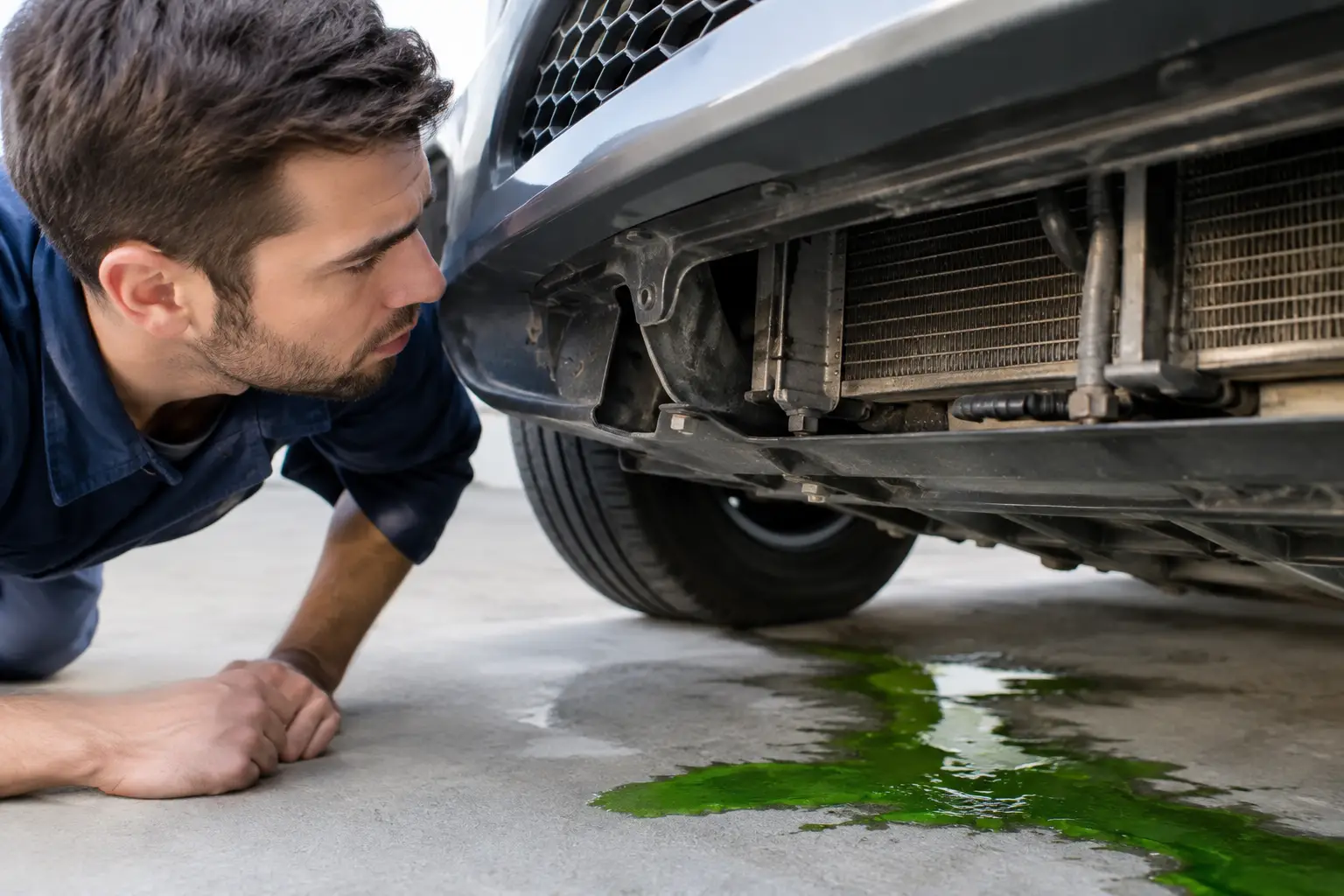
A small puddle under your car can turn into an overheated engine surprisingly quickly. Knowing the best signs of coolant leaks gives you a chance to act before your vehicle is stranded on the side of the road, or worse, suffers expensive engine damage. Whether you drive to work every day, run the kids around Wallan or commute across Melbourne’s northern suburbs, a cooling-system issue is one problem worth checking early.
Coolant, also called engine coolant or antifreeze, moves heat away from the engine and helps protect the cooling system from corrosion. When its level drops because of a leak, the engine may not be able to maintain a safe operating temperature. The leak may be obvious, but it can also be slow, internal or only appear once the engine is hot and under pressure.
The Best Signs of Coolant Leaks in Your Car
A coloured puddle beneath the engine bay
The most recognisable sign is a puddle or wet patch beneath the front of the vehicle after it has been parked. Coolant is often green, red, pink, blue or orange, depending on the type used in your vehicle. It can feel slightly slippery and may have a sweet smell.
Do not rely on colour alone. Old coolant can look brown or dirty after mixing with road grime, and water dripping from the air conditioner is usually clear and harmless. Air-conditioning condensation commonly appears around the passenger side after the AC has been running, particularly on a warm Melbourne day. Coolant is more likely to leave a coloured residue and come with other symptoms, such as a falling coolant level or rising temperature gauge.
The coolant reservoir keeps needing a top-up
Check the coolant overflow reservoir only when the engine is cold. Most reservoirs have low and full markings, making it easier to see whether the level has fallen. If you have recently topped it up and it is low again within days or weeks, coolant is going somewhere it should not.
A gradual loss does not always leave a visible puddle. Coolant can escape as vapour from a fine crack, drip onto hot engine parts and burn away, or leak only while the cooling system is pressurised during driving. Repeatedly adding water or coolant may keep the level looking acceptable for a short time, but it does not fix the fault or protect the engine properly.
A sweet smell inside or outside the car
Coolant has a distinct sweet chemical smell. You may notice it near the bonnet after a drive, through the cabin vents, or inside the car when the heater is running. A smell inside the cabin can point to a leaking heater core or heater hose, which circulates coolant through the dashboard to provide warm air.
If the windscreen fogs up more than usual and develops a greasy film, especially when using the heater, arrange an inspection. A heater-core leak can be difficult to spot without proper testing and may eventually lead to damp carpet in the front footwells.
The temperature gauge rises or a warning light appears
An overheating warning is never one to put off until the weekend. If the temperature gauge climbs above its usual position, a coolant warning light comes on, or you see a message about engine temperature, pull over safely as soon as practical and switch the engine off.
Do not remove the radiator cap or coolant reservoir cap while the engine is hot. The cooling system can be under pressure, and hot coolant can cause serious burns. Allow the vehicle to cool completely before checking anything. If steam is coming from under the bonnet, or the gauge reaches the red, it is generally safer to arrange roadside assistance or a mechanic rather than attempt to drive further.
Steam, hissing or visible residue under the bonnet
A larger leak may produce steam from the engine bay, especially after parking. You may also hear hissing as coolant escapes from a split hose, loose clamp or damaged radiator. Dried white, pink, green or orange crust around hose connections, the radiator, water pump or reservoir is another useful clue. It shows where coolant has evaporated and left deposits behind.
With the engine cold, you can look around the engine bay for obvious wet areas and damaged hoses. Avoid placing your hands near belts, fans or moving parts, and do not start dismantling components if you are unsure. A small leak can be caused by a simple hose clamp, but access and diagnosis vary widely between vehicles.
Where Coolant Leaks Commonly Start
Cooling systems have several parts that can wear, crack or fail over time. Age, heat cycles, vibration and neglected coolant changes all take their toll. Common leak points include:
- radiator hoses and clamps
- the radiator and plastic end tanks
- water pump seals and gasket areas
- thermostat housing, reservoir or radiator cap
- heater hoses and the heater core
The radiator cap is easy to overlook. It maintains the correct pressure in the system, raising coolant’s boiling point. A weak cap can allow coolant to escape or boil earlier than it should, even when no hose or radiator crack is visible. On the other hand, replacing a cap without finding the real cause can waste time and money, so a proper pressure test is often the sensible next step.
Some vehicles are prone to leaks from plastic thermostat housings or coolant flanges as they age. Others may develop radiator cracks, particularly around joins between metal and plastic sections. The best repair depends on the source, the vehicle’s condition and whether related parts are due for replacement at the same time.
Signs the Leak May Be Inside the Engine
Not every coolant loss comes from an external hose or radiator. In less common but more serious cases, coolant can enter the engine through a failed head gasket, cracked cylinder head or another internal fault.
Warning signs can include persistent white exhaust smoke after the engine has warmed up, unexplained coolant loss with no puddle, rough running on start-up, or oil that looks milky or creamy on the dipstick or under the oil filler cap. These symptoms do not automatically confirm a head-gasket problem. Short trips can create normal condensation under an oil cap, and white vapour on a cold morning may simply be condensation from the exhaust.
That is why testing matters. A mechanic can inspect the system, pressure-test it, check for combustion gases in the coolant and assess related symptoms before recommending major repairs. Getting an accurate diagnosis early may prevent a minor cooling-system repair from becoming a much larger engine job.
Can You Drive With a Coolant Leak?
It depends on how quickly coolant is being lost and whether the engine temperature remains stable, but there is always risk. A very slow seep with a normal temperature gauge may allow a short trip to a repair appointment after the coolant level has been checked. Still, the leak should be addressed soon.
If the level drops quickly, the gauge rises, the warning light comes on, steam appears or the heater suddenly blows cold air, do not continue driving. Cold air from the heater can mean there is not enough coolant circulating through the heater core. Continuing to drive an overheating engine can warp the cylinder head, damage gaskets and leave you facing repairs far beyond the original leak.
If you must stop, park in a safe location, switch the engine off and let it cool. Keep children and pets away from any spill, as coolant is toxic. Never pour cold water onto a hot engine, and never open a hot cooling system.
How a Mobile Mechanic Can Find the Fault
A good diagnosis is more than spotting the puddle. A mechanic may inspect hoses, clamps, radiator seams, the reservoir, water pump area and thermostat housing, then pressure-test the cooling system to reveal leaks that only occur under pressure. They can also check the coolant condition, radiator cap and signs of internal engine issues.
For many common problems, Hazara Mobile Mechanic can inspect and repair the cooling system at your home or workplace, saving you the trouble of organising a workshop visit while your car is already showing warning signs. Where a repair requires specialised equipment or major engine work, you can receive clear advice on the safest next step.
A coolant leak rarely fixes itself. If you have spotted a puddle, smelt coolant, topped up the reservoir more than once or noticed the temperature gauge changing, arrange an inspection while the problem is still manageable. A prompt check can protect your engine, your schedule and your peace of mind.
Need a mobile mechanic?
Hazara Mobile Mechanic comes to you across Wallan and up to 70 km around. Open 7 days, 7am to 10pm, with emergency service 24/7. Call or text 0466 666 945, message us on WhatsApp or book online. See our services and the areas we cover.

Comments are closed