

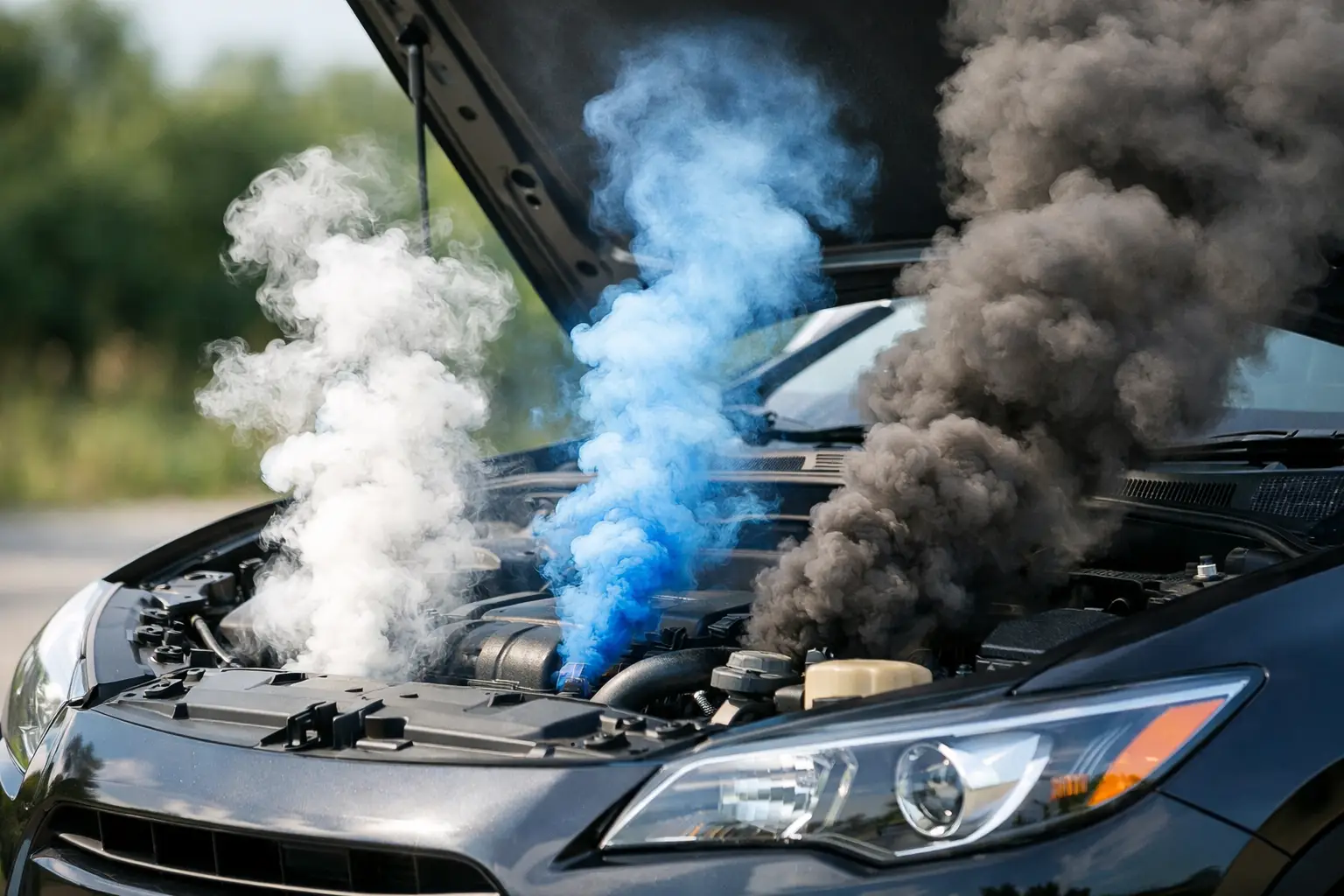
A plume of smoke at the lights, in the driveway or while heading to work is not something to ignore. Car smoke causes can range from oil dripping onto a hot engine part to a serious internal engine fault. The colour, smell, location and timing of the smoke all help point to the problem – and help you decide whether it is safe to keep driving.
First, work out where the smoke is coming from
Before focusing on colour, check whether the smoke is coming from the exhaust pipe or from under the bonnet. Smoke from the exhaust usually indicates that something is being burnt inside the engine. Smoke around the engine bay may be caused by a fluid leak, overheating component, wiring issue or debris resting on a hot exhaust part.
Do not put your face near the engine bay or remove the radiator cap when the engine is hot. If you see flames, smell strong fuel vapour, or the temperature gauge is climbing, pull over safely, switch off the engine and arrange assistance.
A small amount of thin white vapour from the exhaust on a cold Melbourne morning is often normal. It is simply condensation in the exhaust system burning off as the engine warms up. Persistent, thick smoke is different and needs attention.
Car smoke causes by colour
White exhaust smoke: condensation, coolant or a fuel issue
Light white vapour that disappears after a few minutes is generally nothing to worry about, particularly after the car has been parked overnight. It should not have a sweet smell, and it should reduce once the engine reaches operating temperature.
Thick white smoke that continues after warm-up can mean coolant is entering the combustion chamber. This may happen because of a failed head gasket, a cracked cylinder head or, less commonly, a crack in the engine block. Coolant burning in the engine can create a sweet smell, while the coolant level may keep dropping without an obvious leak on the ground.
On diesel vehicles, white or grey-white smoke can also relate to unburnt fuel. Faulty glow plugs, injector problems, poor compression or timing issues can all affect how fuel burns. The exact cause depends on the vehicle, its service history and whether the smoke appears only at start-up, under load or all the time.
If thick white smoke is accompanied by overheating, rough running, coolant loss or a warning light, stop driving as soon as it is safe. Continuing to drive can turn a repairable cooling-system fault into major engine damage.
Blue or blue-grey smoke: engine oil is burning
Blue smoke from the exhaust is one of the clearest signs that oil is being burnt inside the engine. It can appear when accelerating, after idling at traffic lights, on start-up or when coming down a hill. The pattern matters because it helps narrow down where the oil is getting through.
Worn valve stem seals may cause a puff of blue smoke after idling or when starting the car. Worn piston rings, damaged cylinder bores or a failed turbocharger can allow more oil into the combustion chamber, often causing ongoing smoke and higher oil consumption. A blocked crankcase ventilation system can also contribute.
Keep an eye on the oil level, but do not simply keep topping it up and hope for the best. Low oil can damage the engine, while burning oil can harm the catalytic converter and increase repair costs. A proper inspection is the sensible next step.
Black smoke: too much fuel or not enough air
Black exhaust smoke usually means the engine is running rich – there is more fuel entering the engine than it can burn efficiently. On a petrol car, possible causes include a faulty oxygen sensor, leaking injector, dirty air filter, fuel-pressure fault or an issue with the mass air flow sensor.
For diesel vehicles, black smoke can be more noticeable under hard acceleration, towing or climbing a hill. A clogged air filter, split intake hose, boost leak, injector fault, turbo problem or an issue with the exhaust gas recirculation system may be responsible. Excessive black smoke is not normal, even in an older diesel.
You may also notice poor fuel economy, reduced performance, an engine warning light or a strong fuel smell. These symptoms are worth booking in promptly. The longer an engine runs with the wrong air-fuel mixture, the greater the risk of damage to emissions components and other parts.
Grey smoke: a less specific but still useful warning
Grey smoke sits between blue and white, so it can be harder to identify from colour alone. It may indicate oil burning, unburnt fuel, a transmission fluid issue on some older automatic vehicles, or a problem with the positive crankcase ventilation system.
If the smoke is thick, has a burnt smell, or comes with rough gear changes, loss of power or warning lights, do not treat it as a minor issue. A technician will need to inspect the vehicle, check fluid levels and scan for fault codes where appropriate.
Smoke from under the bonnet is a different problem
Not all visible smoke comes through the exhaust. Under-bonnet smoke is often caused by fluids reaching a hot component. Oil leaking from a rocker cover gasket onto the exhaust manifold can produce a sharp burnt-oil smell. A coolant leak may create steam and a sweet smell, while power steering fluid, transmission fluid or brake fluid leaks can also smoke if they contact hot surfaces.
Sometimes the cause is simple: leaves, plastic bags or road debris can get caught near the exhaust or underbody and begin to melt or burn. Even then, it is best to have the area checked. Heat can damage nearby hoses, wiring and insulation.
Electrical smoke has its own warning signs. A burning-plastic smell, flickering lights, blown fuses or smoke near the battery, alternator or wiring should be treated seriously. Switch the vehicle off when safe and do not restart it until the fault has been assessed.
When should you stop driving?
Some smoke issues allow enough time to carefully drive to a safe place. Others require you to stop immediately. Pull over, turn off the engine and seek help if you notice:
- thick smoke that does not reduce after the engine warms up;
- an overheating warning, rising temperature gauge or coolant pouring out;
- a strong fuel smell, burning electrical smell or any sign of flame;
- loss of power, loud knocking, severe rough running or multiple warning lights.
If you are unsure, caution is cheaper than an engine replacement. Avoid opening the coolant reservoir or radiator cap while hot, and do not pour cold water over a hot engine. Let the vehicle cool naturally in a safe location.
What information helps a mechanic diagnose the issue?
A clear description can save time and make diagnosis more accurate. Take note of the smoke colour, whether it comes from the exhaust or engine bay, and when it occurs. For example, smoke only at start-up points to different possibilities than smoke under acceleration or after sitting in traffic.
Also mention recent work, any dashboard warnings, changes in coolant or oil level, poor fuel economy, strange smells and whether the vehicle has been overheating. A short video taken safely from outside the vehicle can be helpful, but never film while driving or stand near moving traffic.
A mobile inspection can be particularly practical when the car is not safe to take to a workshop. Hazara Mobile Mechanic can assess many smoke-related faults at your home or workplace across Wallan and Melbourne’s northern suburbs, then explain the findings and the most suitable repair options before work begins.
Preventing common smoke problems
Regular servicing will not prevent every failure, but it gives fluid leaks, worn hoses, contaminated filters and cooling-system issues a better chance of being found early. Check engine oil and coolant levels between services, using the manufacturer-recommended fluids. If either level is falling repeatedly, arrange an inspection rather than assuming it is normal.
Pay attention after a service, long drive, towing trip or hot day. A new smell, fresh drips on the driveway or a temperature gauge behaving differently can be the first warning before visible smoke appears. Addressing that early is usually simpler, less disruptive and more affordable than waiting for a roadside breakdown.
Smoke is your car asking for attention. Taking the safe option early gives you the best chance of protecting the engine, your schedule and your budget.
Need a mobile mechanic?
Hazara Mobile Mechanic comes to you across Wallan and up to 70 km around. Open 7 days, 7am to 10pm, with emergency service 24/7. Call or text 0466 666 945, message us on WhatsApp or book online. See our services and the areas we cover.

Comments are closed