


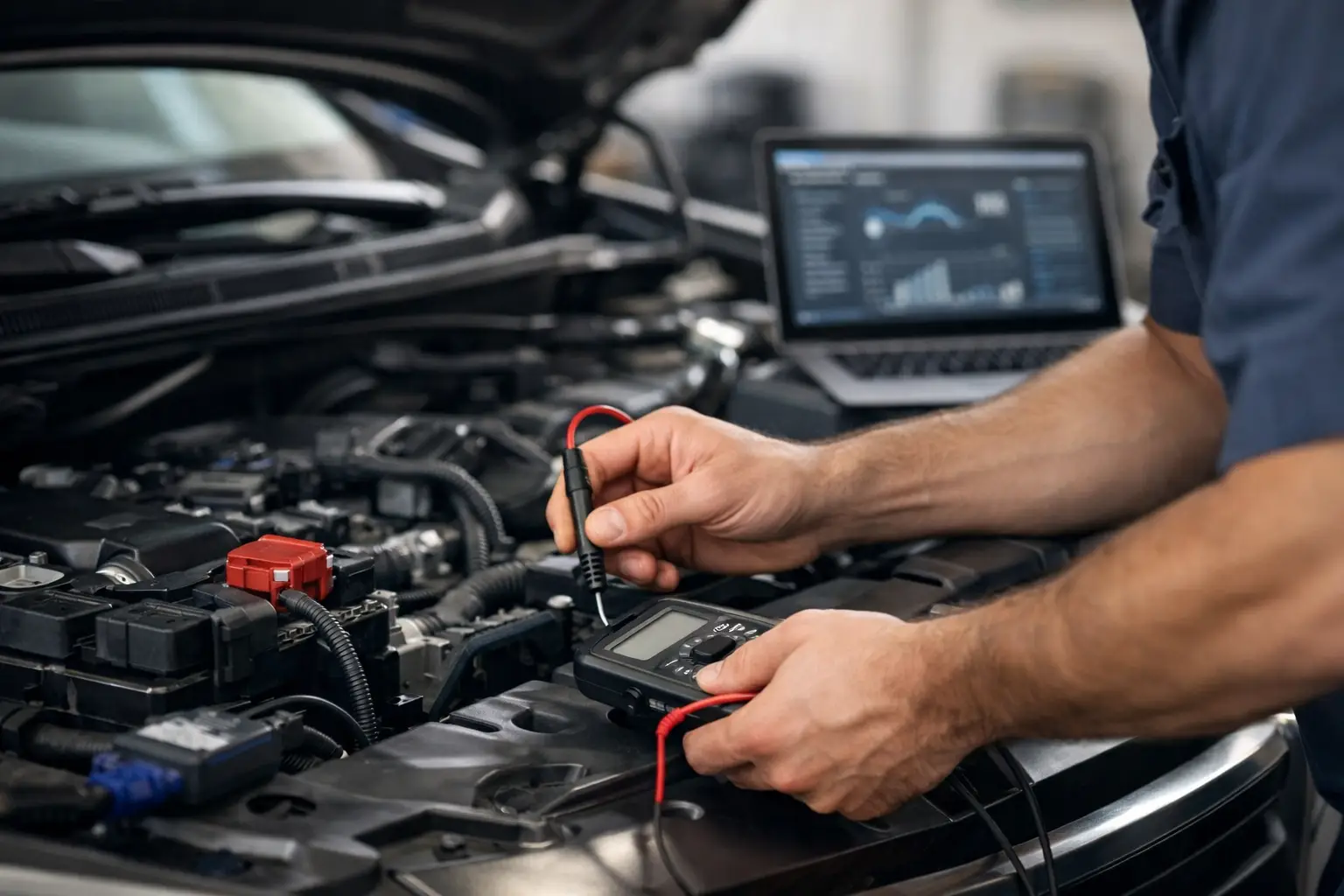
Your car was fine yesterday, and now it will not start, the dash is lit up like a Christmas tree, or one accessory works while another suddenly gives up. That is where proper car electrical fault diagnosis matters. Electrical problems can look random from the driver’s seat, but in most cases there is a clear cause – and the key is finding it quickly without replacing parts that were never faulty.
For most drivers, electrical faults are frustrating because they interrupt your day and often show up without much warning. You might be heading to work in Wallan, doing the school run, or trying to get home after a long day, and the last thing you need is a car that won’t crank or keeps cutting out. The good news is that a methodical diagnosis usually reveals whether the issue is with the battery, alternator, starter motor, wiring, fuses, switches, sensors or a charging fault somewhere in the system.
What car electrical fault diagnosis actually involves
A proper diagnosis is not just plugging in a scan tool and reading a code. Fault codes can point a mechanic in the right direction, but they do not always tell the full story. A voltage drop, damaged wiring, poor earth, weak battery, blown fuse or failing relay can create the same symptoms as a failed component.
That is why electrical diagnosis starts with the basics. A mechanic checks the complaint, looks at what the vehicle is doing, and tests the system step by step. This often includes battery condition, charging voltage, starter draw, fuse integrity, visible wiring condition and scan data from the vehicle’s computer. The aim is simple – confirm the fault before any repair is recommended.
This matters because electrical issues can be misleading. For example, a flat battery may not be the root problem at all. The real fault might be an alternator not charging properly, a parasitic drain when the car is parked, or a loose terminal that gives an intermittent connection.
Common signs you may need car electrical fault diagnosis
Some electrical faults are obvious, while others build slowly. If your car is showing any of the following signs, it is worth getting it checked before the problem leaves you stranded.
A slow or non-existent start is one of the most common warning signs. If the engine cranks weakly, clicks once, or does nothing at all, the fault may involve the battery, terminals, starter motor, ignition circuit or charging system.
Dashboard warning lights are another clue. A battery light, check engine light, ABS warning or airbag light may be triggered by a sensor fault, low voltage issue or a problem in the control circuit. Sometimes the warning is accurate. Sometimes it is the result of another electrical fault further upstream.
You may also notice lights flickering, power windows moving slowly, central locking misbehaving, the radio cutting out, or accessories working only some of the time. These faults often point to voltage instability, worn switches, poor connections or wiring issues.
Then there are the more frustrating intermittent faults. The car starts perfectly at home but not at work. The indicators fail only in wet weather. The battery keeps going flat overnight, yet tests fine during the day. These are exactly the sorts of problems that need patient testing rather than guesswork.
Why electrical faults are often misdiagnosed
Electrical systems are connected, and that is what makes diagnosis tricky. One fault can create symptoms in several places. A weak earth, for instance, can affect starting, charging, lighting and sensors at the same time.
Modern vehicles also rely on modules and sensors far more than older cars. That means what looks like a mechanical issue can actually be electrical. Rough idling, poor shifting, cooling fan problems or air conditioning faults may all involve wiring, relays, sensors or control units.
It also depends on the age and condition of the vehicle. In some cars, the issue is simply wear and tear – corroded terminals, brittle wiring, tired batteries or failed alternators. In others, previous repairs can be part of the problem, especially if aftermarket accessories, audio systems or lighting have been fitted poorly.
This is why replacing the most obvious part is not always the cheapest path. You can spend good money on a battery, starter or alternator and still have the same issue if the real fault was elsewhere.
How a mobile mechanic approaches electrical diagnosis
One of the biggest advantages of mobile diagnosis is that the vehicle can be tested where the problem actually happens. If your car struggles to start at home in the morning, goes flat in the work car park, or has an intermittent accessory fault while parked in your driveway, testing it on-site often gives a more accurate picture.
A mobile mechanic will usually begin by asking the right questions. When did the fault start? Does it happen all the time or only sometimes? Has any work been done recently? Are there warning lights? Has the battery been replaced lately? Those details matter because they help narrow down the likely causes before testing begins.
From there, the process is practical and systematic. Battery voltage may be checked at rest and under load. Charging output may be tested with the engine running. Fuses and relays may be inspected. Wiring and earth points may be checked for looseness, corrosion or heat damage. If needed, scan tools can be used to read stored codes and live data.
The benefit for the customer is straightforward. You get answers where the car is, without arranging a tow or giving up half your day sitting at a workshop.
The most common electrical faults we see
In everyday vehicle use, a few issues come up again and again. Flat or failing batteries are right at the top, particularly in colder weather or in cars that do lots of short trips. If the battery never gets a proper charge, performance drops off quickly.
Alternator faults are also common. A car may start after a jump-start and then fail again later because the battery was never being recharged properly. In that case, replacing the battery alone will not solve much.
Starter motor issues can present similarly, but the symptoms are slightly different. You may hear a click, get no crank, or find the problem gets worse when the engine is hot. The battery may still test fine.
We also see a lot of faults caused by wiring damage, blown fuses, bad earths and failed switches. These are often smaller components, but they can create major inconvenience. An electric window that will not close, brake lights that stop working, or a fuel pump circuit fault can take a car off the road just as effectively as a major mechanical issue.
When it is safe to wait – and when it is not
Not every electrical issue is an emergency, but some should be looked at quickly. If your interior light has stopped working, that is inconvenient. If your car is struggling to start, cutting out, overheating because the fan is not operating, or showing multiple warning lights after a voltage fault, waiting can make the situation worse.
There is also a safety side to electrical faults. Problems involving headlights, indicators, brake lights, wipers or the charging system should not be ignored. A car that barely starts today may not start at all tomorrow.
If there is a burning smell, visible smoke, repeated blown fuses or signs of melted wiring, stop using the vehicle until it is checked. Those faults can escalate quickly.
How to reduce the chance of electrical problems
You cannot prevent every electrical fault, but a few habits help. Regular servicing matters because battery condition, charging performance and visible wiring issues can often be picked up early. Keeping terminals clean and secure also helps, especially if corrosion is starting to build.
Be careful with aftermarket accessories as well. Dash cams, phone chargers, driving lights and audio systems are fine when fitted correctly, but poor installation can create battery drain and wiring faults. If your car starts developing issues after electrical accessories have been added, that is worth mentioning during diagnosis.
It is also wise to act early. A single strange symptom is easier and cheaper to deal with than a complete no-start situation on a busy morning.
When a car develops an electrical problem, most people want the same thing – a clear answer, a fair repair recommendation and as little disruption as possible. That is exactly why proper testing matters. If you are dealing with a starting issue, warning lights or an intermittent electrical fault around Wallan or Melbourne’s northern suburbs, Hazara Mobile Mechanic can assess the problem on-site and help you get back on the road with less hassle and less guesswork. A good diagnosis does more than find the fault – it gives you confidence in the repair.
Need a mobile mechanic?
Hazara Mobile Mechanic comes to you across Wallan and up to 70 km around. Open 7 days, 7am to 10pm, with emergency service 24/7. Call or text 0466 666 945, message us on WhatsApp or book online. See our services and the areas we cover.

Comments are closed