

A car that won’t start in your driveway is frustrating. A car that gives up on the side of the road when you are already late is something else entirely. Knowing your roadside breakdown help options before that moment happens can save time, money and a lot of stress.
For most drivers in Wallan and Melbourne’s northern suburbs, the best choice comes down to one simple question: do you need towing, or can the problem be fixed where the car is parked? That difference matters, because not every breakdown needs the same response.
The main roadside breakdown help options
When your vehicle stops, there are usually a few paths available. You might call a roadside assistance membership provider, contact a mobile mechanic directly, organise a tow truck, or in some cases rely on insurer support if breakdown cover is included. The right option depends on what has gone wrong, where the car is located, and how quickly you need to get moving again.
Traditional roadside assistance is often the first thing people think of. It can be useful for common issues such as a flat battery, a puncture, or lockouts. If you already have a membership and the problem is minor, this can be a straightforward solution.
A mobile mechanic is often the better fit when the issue needs proper diagnosis or an on-site repair rather than a basic rescue. That might include battery replacement, starter motor issues, alternator faults, cooling system problems, brake concerns, or electrical faults. Instead of towing the vehicle to a workshop and losing half the day, you may be able to have the issue assessed and repaired at home, at work or by the roadside if it is safe to do so.
Towing becomes necessary when the car is unsafe to drive, the fault is severe, or the repair cannot realistically be completed on site. Engine overheating with possible damage, transmission failure, accident damage, or a major fuel system problem can all fall into this category. In those cases, safety comes first.
When roadside assistance is enough
There is a place for basic roadside cover, and for some drivers it is worth having. If your main concern is occasional simple issues, such as a battery that has gone flat because the interior light was left on, roadside assistance can do the job.
The trade-off is that this kind of service is usually limited in scope. A jump-start may get the engine running, but it does not explain why the battery failed in the first place. If the alternator is not charging properly, or the battery itself is at the end of its life, the same problem can come straight back.
The same applies to other quick fixes. Changing a wheel helps if the spare is roadworthy and the puncture is the only issue. It does not help much if the tyre failure damaged the wheel, if there is no usable spare, or if suspension damage caused the problem.
That is where many drivers find the difference between temporary help and actual repair.
Why mobile mechanics are one of the most practical roadside breakdown help options
For everyday drivers, convenience matters just as much as technical skill. If your car breaks down outside your house before work, or in the office car park at the end of the day, you usually do not want a complicated chain of calls, towing delays and workshop booking gaps.
A mobile mechanic can often be the most practical option because the service comes to you. That means the vehicle can be inspected where it sits, the fault can be diagnosed properly, and if the repair is suitable for on-site work, it can often be completed then and there.
This approach is especially useful for battery replacement, brake issues, starter and charging faults, cooling problems, some electrical issues, and many no-start conditions. It also gives you a clearer picture of what is happening with the vehicle. Instead of hearing that it needs to be moved first and looked at later, you get a direct assessment from someone working on the car in front of you.
For drivers in local suburbs, this can be the difference between losing a full day and getting back on the road with minimal disruption. That is why businesses such as Hazara Mobile Mechanic focus on practical on-site support rather than making customers go through the usual workshop shuffle.
How to decide what kind of help to call
Start with safety. If the car has broken down in moving traffic, is leaking fluid, has smoke coming from the bonnet, or feels dangerous to remain near, move yourself to a safe place if possible and call emergency services if required. No repair is worth taking risks on the roadside.
If the vehicle is in a safe location, think about the symptoms. A flat battery after the car has been sitting is very different from dashboard warning lights, overheating or grinding noises from the brakes. A simple no-start could be a battery, but it could also be the starter motor, alternator, fuel delivery or an electrical fault.
If the issue seems minor and you have roadside cover, using it may make sense. If the car has an obvious fault that needs more than a temporary fix, calling a mobile mechanic directly is often the faster and more useful step. If the car is clearly not safe to drive or repair on site, arrange a tow.
The key is not to treat every breakdown the same. Doing that often creates more delay, not less.
Common breakdowns and the best response
Some faults lend themselves well to on-site repair. Battery failure is the obvious example. If testing shows the battery has failed, replacement on the spot is usually far more useful than a jump-start. Starter motor and alternator problems can also often be diagnosed quickly, and many vehicles can be repaired without workshop towing.
Cooling system issues are more variable. A loose clamp or failed hose may be manageable on site, but a severely overheated engine with possible internal damage is a different matter. Brake issues also depend on severity. Worn components may be serviceable where the car is parked, while a serious hydraulic fault may require towing.
Electrical faults sit somewhere in the middle. Some are straightforward once diagnosed. Others take more time and testing. The value of a good mobile mechanic is not only that they can repair many of these faults, but that they can tell you honestly when towing is the safer next step.
Cost, convenience and what people often overlook
Many drivers assume the cheapest call-out is automatically the best choice. It depends. A low-cost roadside attendance that only gives you a temporary restart can end up costing more if the same fault strands you again the next day.
On the other hand, paying for towing when the issue could have been repaired at home or at work is often unnecessary expense and hassle. You may also need to factor in workshop wait times, extra transport, and time off work.
Convenience is not just a nice extra. For families, tradies, shift workers and commuters, it has real value. Having someone come to your location can remove the need to rearrange the whole day around a breakdown. That matters when school pick-up, work commitments or local travel are already on the line.
What to do while waiting for help
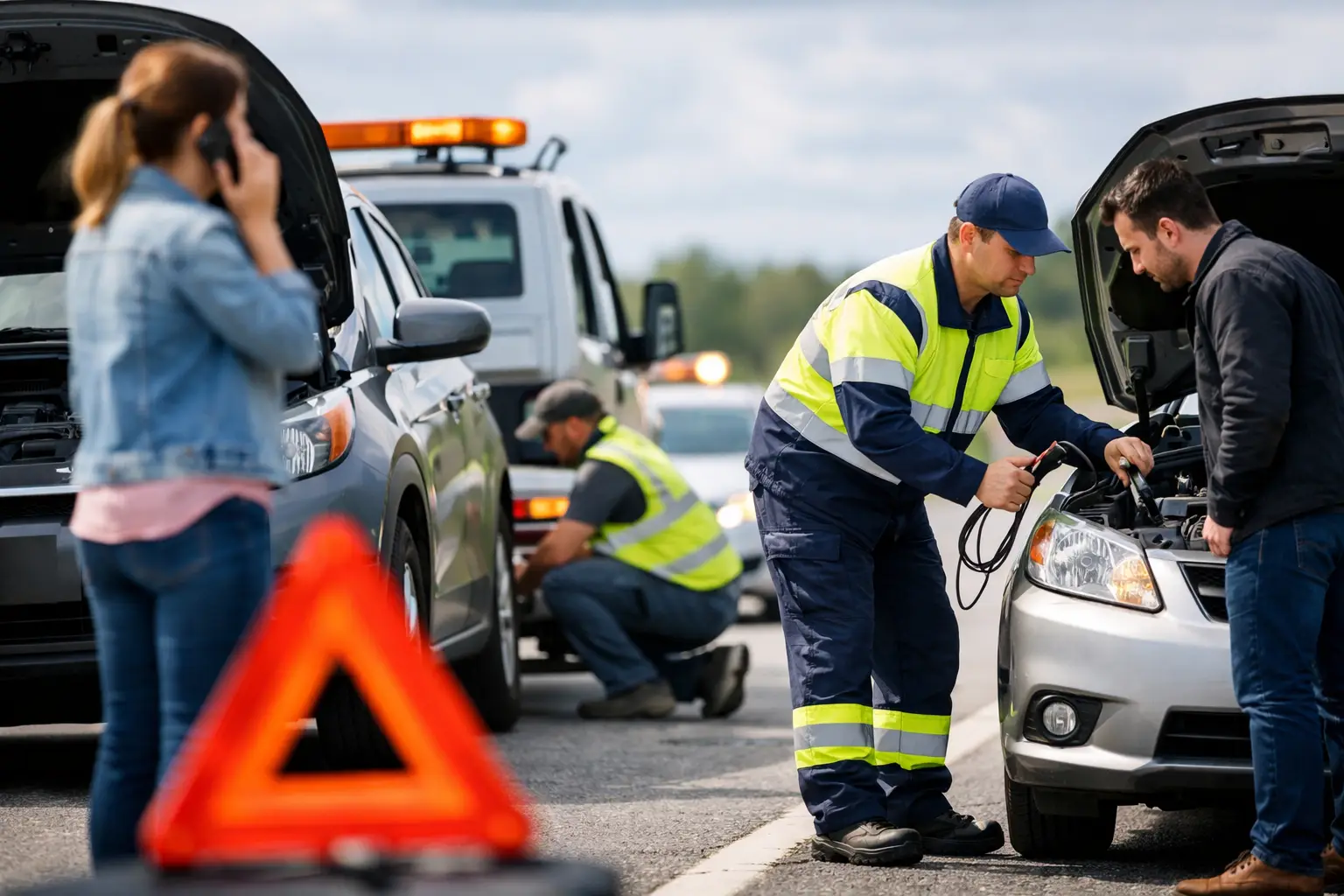
If you are safely off the road, turn on your hazard lights and stay visible. If you have a warning triangle and it is safe to place it, do so. Keep clear of traffic and avoid standing near the vehicle if you are on a busy roadside.
When you call for assistance, be ready to explain the symptoms clearly. Mention whether the engine cranks, whether any warning lights appeared, if there are unusual noises, smells or leaks, and exactly where the car is parked. Good information helps the right help arrive the first time.
It also helps to avoid trying random fixes if you are unsure. Repeated attempts to start an overheated engine or driving a car with brake trouble can turn a manageable repair into a much bigger one.
Choosing better roadside breakdown help options before you need them
The best time to think about breakdown support is before your car leaves you stranded. Check what your current cover actually includes, not what you assume it includes. Some policies are basic and focused on getting the car moving just enough to clear the immediate problem. Others may not cover the situations you are most likely to face.
It is also worth having the contact details of a trusted mobile mechanic saved in your phone. If your car breaks down at home, at work or locally, being able to call someone who can diagnose and repair on site can be far more practical than starting with a generic call centre.
No driver plans for a breakdown, but being prepared changes the experience. The right support can turn a bad interruption into a manageable delay. When you know your options and choose based on the actual fault, you give yourself the best chance of getting safely back on the road without more disruption than necessary.
Need a mobile mechanic?
Hazara Mobile Mechanic comes to you across Wallan and up to 70 km around. Open 7 days, 7am to 10pm, with emergency service 24/7. Call or text 0466 666 945, message us on WhatsApp or book online. See our services and the areas we cover.

Comments are closed