


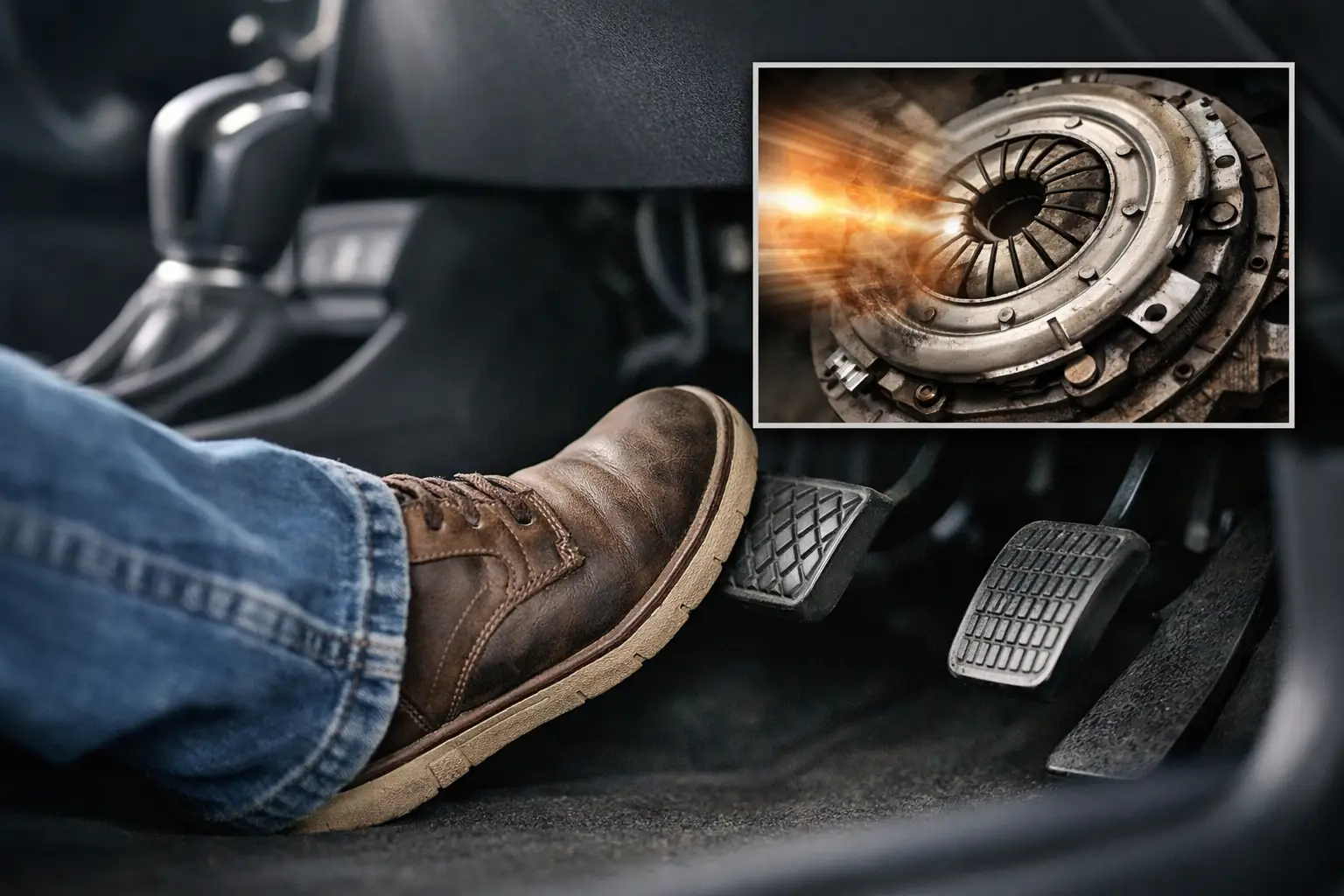
You put your foot down to merge into traffic, the revs climb, but the car doesn’t pull the way it should. That mismatch is often where clutch slipping symptoms explained becomes more than just a search term – it becomes a problem that can leave you stranded or facing a bigger repair bill if you ignore it.
A slipping clutch usually starts subtly. Many drivers notice something feels off before they can describe it properly. The car may still move, and you might still get through the week, but the warning signs tend to build. If you commute around Wallan or Melbourne’s northern suburbs, stop-start traffic, hills and daily driving can make those symptoms show up faster.
What clutch slipping actually means
Your clutch connects the engine to the gearbox so power can be transferred to the wheels. When the clutch is working properly, it grips firmly. When it starts slipping, that grip weakens. Instead of transferring engine power cleanly, the clutch lets some of that power escape.
That is why the engine can sound busy while the car feels slow to respond. The revs rise, but the road speed does not increase in proportion. In practical terms, your car is working harder and going nowhere as efficiently as it should.
Clutch slip is not always constant at first. It may happen only under load, such as when accelerating hard, driving uphill, carrying passengers, or towing. Over time, though, it usually becomes more noticeable and more frequent.
Clutch slipping symptoms explained in plain terms
The most common sign is rising RPM without matching acceleration. If you press the accelerator and the tachometer jumps quickly while the car seems sluggish, that is a classic clue.
Another common symptom is a burning smell, especially after driving in traffic or on an incline. A worn clutch can generate excess heat as it slips, and that heat often produces a sharp, unpleasant smell. Some drivers notice it after trying to move off quickly from the lights or reverse up a driveway.
You might also feel the clutch engagement point change. If the clutch bites very high off the floor compared with how it used to feel, that can suggest wear. A high bite point does not always mean immediate failure, but paired with slipping, it deserves attention.
Poor performance in higher gears is another giveaway. A vehicle with a slipping clutch may seem mostly normal in lower gears but struggle when you accelerate in fourth, fifth or sixth. That is because the clutch is under more demand and has less capacity to hold firm.
Some cars also feel hesitant during overtaking or merging. That can become a safety issue, not just a mechanical one. If the vehicle does not respond when you need quick acceleration, it is worth getting checked sooner rather than later.
Why these symptoms happen
The most common cause is simple wear. Clutch friction material wears down over time, just like brake pads do. Eventually, there is not enough material left to grip properly.
Heat is another factor. Repeated stop-start driving, riding the clutch, heavy towing, or frequent hill starts can accelerate wear. In some cases, oil contamination from a leak can get onto the clutch surface and reduce grip. A faulty pressure plate or release mechanism can also contribute.
It depends on the vehicle and how it is driven. A clutch in a small runabout used mostly on open roads may last much longer than one in a work ute that spends its life in traffic or hauling loads. Driver habits matter as well. Resting your foot on the clutch pedal or holding the car on a hill with the clutch instead of the brake can shorten its life.
Signs people often mistake for other problems
Not every loss of performance is a slipping clutch. Engine issues, turbo faults, transmission problems and even brake drag can create similar complaints. That is why proper diagnosis matters.
For example, if the engine revs flare but the car does not pick up speed, many drivers assume it is an engine power issue. In reality, the engine may be producing power just fine, but the clutch is failing to pass it through. On the other hand, if the car feels flat and the revs do not rise much either, the issue may sit elsewhere.
A hard or noisy clutch pedal can point to related clutch system wear, but it is not the same as slipping. Likewise, difficulty selecting gears may suggest clutch hydraulic problems or gearbox concerns rather than friction slip alone. The symptoms can overlap, which is why guesswork often leads to wasted time and money.
A simple way to notice clutch slip
One of the easiest real-world checks happens during normal driving. If you are on a clear road and accelerate in a higher gear at moderate speed, watch what the revs do. If the RPM rises sharply before the car gathers speed, the clutch may be slipping.
You do not need to thrash the vehicle to notice it. In fact, harsh testing can make things worse if the clutch is already badly worn. The goal is not to prove the clutch is finished by forcing it – it is to recognise the pattern early and arrange an inspection.
If there is also a burning smell, a high bite point and weaker acceleration under load, the signs become harder to dismiss.
Can you keep driving with a slipping clutch?
Sometimes, yes – for a little while. That does not mean you should. A mildly slipping clutch can deteriorate quickly, especially if the vehicle is used for commuting, carrying loads or driving in traffic every day.
The risk is not only inconvenience. Continued slipping creates more heat, which can damage related components such as the flywheel or pressure plate. What might begin as a clutch replacement can become a more involved and more expensive repair if it is left too long.
There is also the practical issue of reliability. A clutch that slips today may still get you home. A clutch that fails completely tomorrow may leave you unable to move the car at all. If your vehicle is essential for school runs, work or day-to-day errands, that is a headache most people would rather avoid.
What a mechanic will usually check
A proper inspection looks at more than the clutch disc alone. A mechanic will assess how the clutch engages, whether the slip is repeatable, and whether any leaks or hydraulic faults are contributing to the problem.
The condition of the pedal, master and slave cylinder, pressure plate and flywheel may all be relevant depending on the vehicle. In some cases, the issue is straightforward wear. In others, there is an underlying cause that needs to be fixed so the new clutch does not suffer the same fate.
This is where an experienced mobile mechanic can make things easier. If the car is still drivable but clearly not right, having it checked at home or work saves the hassle of rearranging your day just to sit around a workshop.
How to reduce clutch wear from here
Good driving habits can help your next clutch last longer. Avoid resting your foot on the pedal, even lightly. Use the handbrake or foot brake on hills rather than balancing the car on the clutch. Try to move off smoothly instead of feeding in excessive revs.
If you tow, carry tools for work, or regularly drive in heavy traffic, keep in mind that your clutch is under more strain than average. That does not mean failure is unavoidable, but it does mean earlier attention to small symptoms can save trouble later.
It is also worth acting on changes in pedal feel, smell or acceleration sooner rather than waiting for a complete breakdown. Early diagnosis is usually the cheaper option.
When to book an inspection
If your car is revving higher than normal without pulling properly, if you can smell something burning after driving, or if the clutch bite point has noticeably changed, book an inspection. Those signs rarely improve on their own.
For local drivers, convenience matters just as much as the repair itself. Hazara Mobile Mechanic helps take the pressure off by checking and repairing vehicles on-site, so you do not have to juggle workshop visits around work, family or the rest of the week.
A clutch rarely fails without warning. The trick is noticing those warnings for what they are, and acting before a frustrating drivability issue turns into a car that will not go anywhere at all.
Need a mobile mechanic?
Hazara Mobile Mechanic comes to you across Wallan and up to 70 km around. Open 7 days, 7am to 10pm, with emergency service 24/7. Call or text 0466 666 945, message us on WhatsApp or book online. See our services and the areas we cover.

Comments are closed