

You are halfway to work, the temperature gauge starts climbing, and suddenly that simple question hits hard – why is my car overheating? It is the sort of problem that can turn an ordinary day into a breakdown, and if it is ignored for too long, it can lead to expensive engine damage. The good news is that overheating usually leaves clues, and acting early can save you a lot of money, time, and stress.
An overheating car does not always mean the engine is ruined, but it does mean something in the cooling system is not doing its job properly. Your engine creates a huge amount of heat every time it runs. The cooling system is there to control that heat using coolant, hoses, the radiator, the thermostat, the water pump, and cooling fans. If one part fails, the whole system can struggle.
Why is my car overheating? Common causes
In many cases, overheating starts with a coolant issue. If the coolant level is low, there may not be enough fluid moving through the system to carry heat away from the engine. Low coolant can happen because of a leak, poor maintenance, or a system that has not been topped up correctly. Sometimes the leak is obvious, with puddles under the car. Other times, it is slow and easy to miss.
A faulty thermostat is another common cause. The thermostat controls when coolant flows through the radiator. If it sticks closed, hot coolant stays trapped in the engine instead of circulating properly. That can cause the temperature to rise quickly, especially in traffic or on warmer days.
Radiator trouble is also high on the list. If the radiator is blocked internally, damaged externally, or not getting enough airflow, it cannot release heat effectively. Dirt, debris, and age can all reduce performance. In stop-start driving, a failed radiator fan can make things worse because there is less natural airflow than when driving at higher speed.
The water pump can also be the culprit. Its job is to move coolant through the engine and radiator. If it wears out, leaks, or the impeller fails, coolant flow drops and engine temperatures can climb fast. In some vehicles, a worn drive belt can create a similar problem by affecting how the pump runs.
Then there are hose and pressure issues. A split hose, loose clamp, damaged radiator cap, or failing expansion tank can stop the system from holding proper pressure. That matters because pressure helps raise the boiling point of coolant. Without it, coolant can boil sooner and the engine can overheat even when the rest of the system is mostly working.
In more serious cases, overheating can point to an internal engine problem such as a blown head gasket. If combustion gases are entering the cooling system, or coolant is leaking into places it should not, temperatures become harder to control. This is where early diagnosis matters, because driving further can make a bad problem much worse.
Signs your car is overheating before it stops
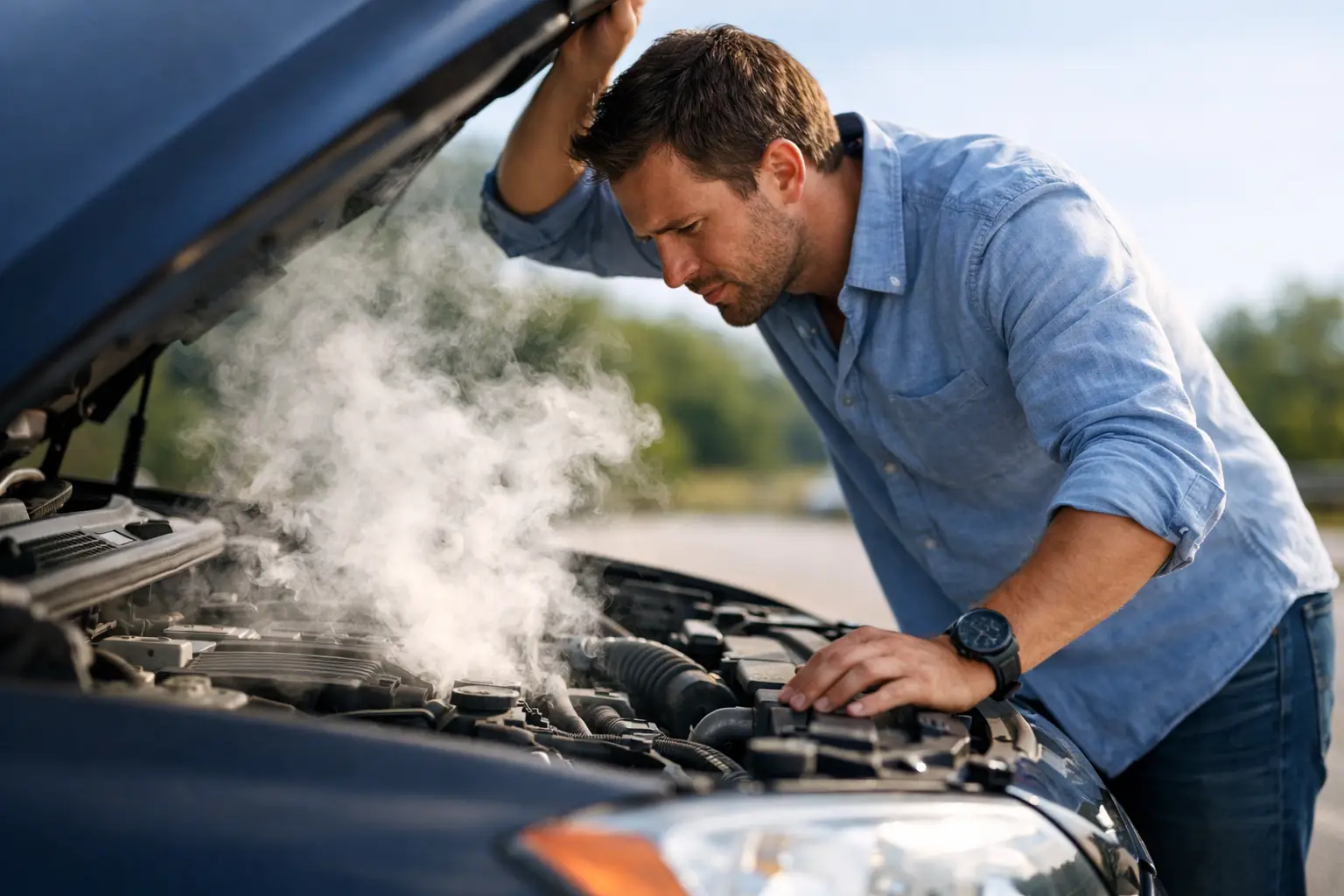
The temperature gauge is the most obvious warning, but it is not the only one. If the needle is creeping higher than normal, or a dashboard warning light comes on, pay attention straight away. Steam from under the bonnet is a late warning sign, not an early one.
You might also notice a sweet smell from leaking coolant, poor heater performance inside the cabin, or coolant pooling under the vehicle after parking. Sometimes the engine feels rough, loses power, or starts running hotter only in traffic. That pattern can point to a fan issue rather than a full cooling system failure.
One thing to keep in mind is that overheating is not always constant. Some cars overheat only uphill, only while idling, or only when towing. That is why proper diagnosis matters. The exact conditions can tell a mechanic a lot about what is failing.
What to do if your car is overheating
If you suspect overheating, the first step is to reduce the load on the engine and find a safe place to pull over. Turn the air conditioning off. If needed, turn the heater on full – it is not comfortable, but it can help pull some heat away from the engine. Then stop as soon as it is safe.
Do not keep driving just to get home or finish the trip. That short extra distance can be the difference between a manageable repair and a major engine rebuild. If the temperature gauge is in the red, or steam is coming out, switch the engine off and let it cool down.
Do not remove the radiator cap while the engine is hot. This is a genuine burn risk, not just a precaution. Hot coolant under pressure can spray out violently. Wait until everything has cooled properly before anyone checks the system.
If you know the coolant level is low and the engine has cooled, topping it up may help in the short term, but it does not solve the reason it dropped in the first place. A cooling system should not just lose coolant for no reason. If it has gone low, there is usually a leak or another fault behind it.
Why overheating can get expensive quickly
A lot of drivers hope overheating is minor because the car still starts and moves. The risk is that engines do not handle excessive heat well. Aluminium cylinder heads can warp. Head gaskets can fail. Seals, hoses, and plastic fittings can weaken further once they have been overheated.
That is why waiting to see if it happens again is rarely the cheapest option. If the issue is something straightforward like a thermostat, leaking hose, or faulty radiator cap, catching it early can keep the repair relatively simple. If it is ignored until the engine starts misfiring or losing compression, the repair bill changes completely.
For busy households and commuters, there is also the practical cost of downtime. A car that overheats without warning is not just inconvenient – it can disrupt school runs, work schedules, and everything else built around reliable transport.
Can I keep driving if my car overheats once?
Sometimes people ask this because the temperature went back to normal after they pulled over. The honest answer is that it depends on why it overheated, but it should never be brushed off. A one-off overheating event can still point to a failing thermostat, a small leak, trapped air in the system, or a fan that only works intermittently.
If the problem happened in extreme heat, heavy traffic, or while towing, those conditions may have exposed a weakness that is already there. The system might cope under light use and then fail again as soon as it is under pressure. That is why a proper inspection is the smart move.
When to call a mechanic
If your car has overheated, the safest approach is to have the cooling system checked before regular driving continues. That is especially true if you have seen steam, lost coolant, noticed repeated temperature spikes, or found milky residue, white exhaust smoke, or rough running.
A proper diagnosis usually involves checking coolant level and condition, pressure testing the system, inspecting for leaks, testing the radiator cap, confirming fan operation, and assessing components like the thermostat, radiator, hoses, and water pump. If needed, further checks can rule out head gasket trouble.
For many local drivers, convenience matters just as much as the repair itself. When your car is sitting at home or at work after an overheating problem, organising transport to a workshop is often the last thing you need. That is where a mobile mechanic can make the process far easier. Hazara Mobile Mechanic helps drivers in Wallan and Melbourne’s northern suburbs with on-site diagnosis and repairs, so you can get clear answers without adding another disruption to your day.
How to reduce the risk of overheating
Regular servicing goes a long way here. Coolant should be kept at the correct level and changed at the right intervals. Hoses, clamps, belts, and the radiator cap should be inspected before they fail, not after. Cooling fans should also be checked if the vehicle is running hotter in traffic.
It is also worth paying attention to small changes. If the heater stops working properly, if you smell coolant, or if the gauge sits slightly higher than usual, do not wait for a full breakdown. Cooling system problems often start small and become urgent later.
Older vehicles, high-kilometre cars, and vehicles used for towing or long commutes may need closer attention. The same goes for cars that have had recent cooling system work. If air is trapped in the system after a repair, overheating can follow even when new parts have been fitted.
Overheating is one of those problems that rewards quick action. If your car is running hotter than it should, trust the warning signs and get it checked before a minor fault turns into major engine damage.
Need a mobile mechanic?
Hazara Mobile Mechanic comes to you across Wallan and up to 70 km around. Open 7 days, 7am to 10pm, with emergency service 24/7. Call or text 0466 666 945, message us on WhatsApp or book online. See our services and the areas we cover.

Comments are closed