

A steering wheel that sits crooked on the drive to work, or a vibration that starts through the seat at 90 km/h, can make every trip feel less safe and less comfortable. Wheel alignment vs balancing is a common point of confusion because both services relate to tyres and wheels, but they correct very different problems. Knowing which one your car needs can help you avoid uneven tyre wear, poor handling and unnecessary replacement costs.
Wheel alignment vs balancing: the key difference
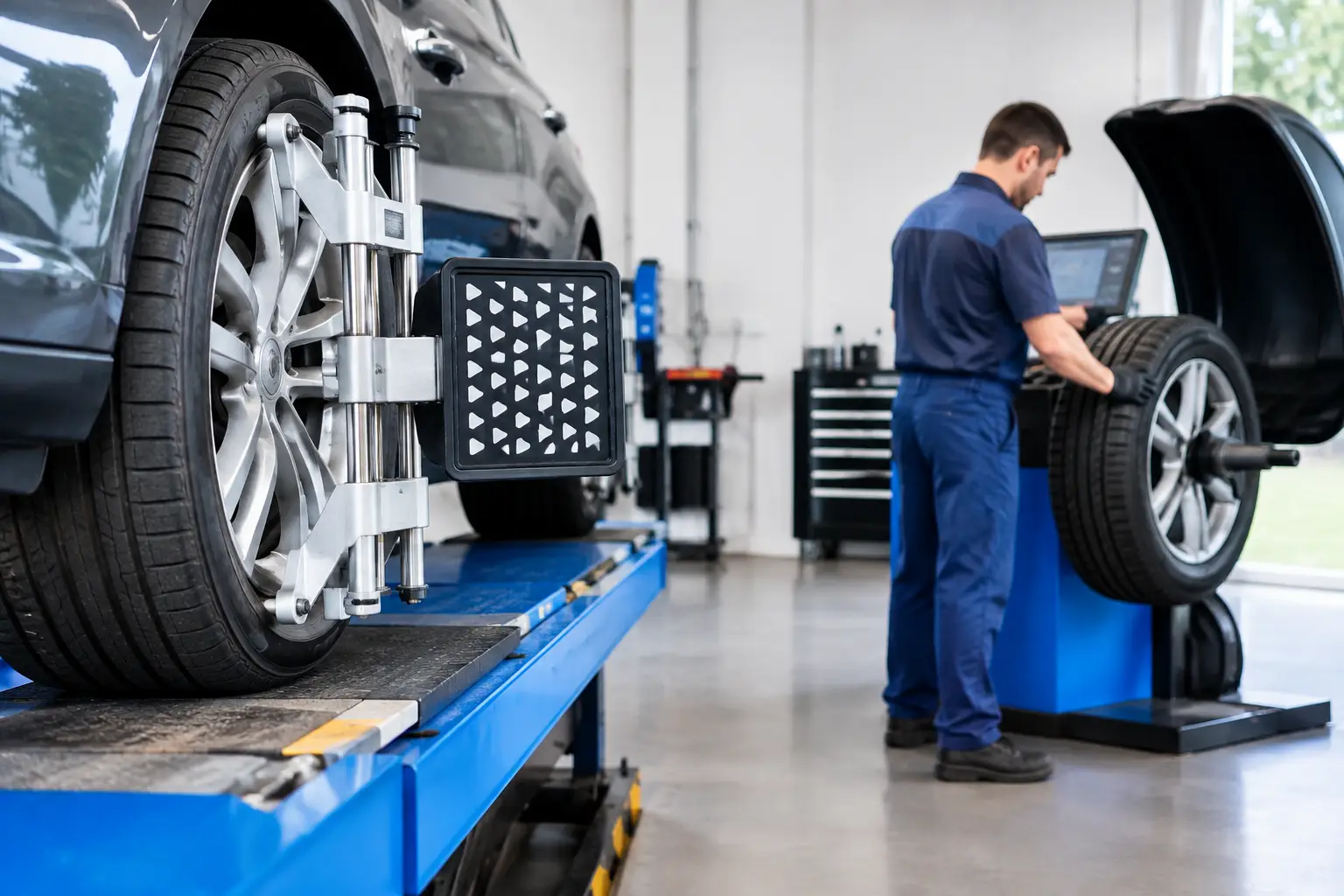
Wheel alignment is about the angles of the wheels and how they meet the road. A mechanic adjusts suspension and steering settings so the wheels point in the correct direction and sit at the manufacturer-specified angles. The goal is to help the vehicle track straight, steer predictably and wear its tyres evenly.
Wheel balancing is about weight distribution around each wheel and tyre assembly. Even a new tyre can have slightly uneven weight. Small balancing weights are fitted to the wheel to offset that imbalance, allowing the wheel to rotate smoothly at speed.
Put simply, alignment affects where your wheels point. Balancing affects how smoothly they spin. One service does not replace the other, and a vehicle can need either one or both.
What wheel alignment corrects
Your suspension is designed around precise measurements, commonly called toe, camber and caster. These settings influence how the tyres sit on the road, how the steering returns after a turn and how stable the car feels in a straight line. A proper alignment brings those settings back within specification where adjustment is available.
Alignment issues often develop after hitting a pothole, clipping a kerb, driving over rough roads or carrying out suspension or steering repairs. Worn components can also prevent an alignment from holding. In that case, replacing the faulty part comes first. Adjusting angles around worn ball joints, tie-rod ends or bushes will not provide a lasting fix.
A car with poor alignment may pull to one side on a level road, although road camber and tyre pressures need to be considered before assuming alignment is the cause. You might also notice a crooked steering wheel when driving straight, a vague steering feel, or tyres wearing more heavily along an inner or outer edge.
Uneven wear is where an alignment problem can become expensive. Tyres that should have delivered thousands more kilometres may need replacing early because one shoulder has worn down. That loss is easy to miss until a tyre inspection or roadworthy check brings it to light.
When alignment is worth booking
Arrange an inspection if your car has had a hard impact, if the steering wheel is off-centre, or if it consistently drifts left or right. It is also sensible after replacing steering or suspension components, fitting a lift or lowering kit, or noticing irregular tyre wear.
Not every pull means alignment. A sticking brake caliper, mismatched tyres, low tyre pressure or a damaged tyre can produce similar symptoms. A thorough diagnosis matters, particularly if the problem appeared suddenly.
What wheel balancing corrects
A wheel that is out of balance can feel perfectly normal around town. The issue usually becomes noticeable at higher road speeds, often within a particular speed range. The vibration may come through the steering wheel when a front wheel is affected, or through the seat and floor when the imbalance is at the rear.
Balancing involves mounting the wheel and tyre on specialised equipment that identifies where weight needs to be added. The mechanic then fits small weights to the rim and rechecks the assembly. This is precise work, so it requires the right balancing machine rather than a visual guess.
Balancing is commonly needed after new tyres are fitted, after a tyre repair, or when a wheel has lost a balancing weight. Damaged rims, mud packed inside a wheel, tyre defects and tyres that have not seated correctly can also contribute to vibration.
Do not ignore speed-related vibration just because the car still drives. Apart from being annoying, it can make longer trips tiring and may contribute to uneven tyre wear. It can also mask other faults, including worn suspension parts or a tyre with internal damage.
Signs your wheels may need balancing
The clearest sign is a repeated vibration that builds as speed increases and then may ease again at a higher or lower speed. Unlike an alignment concern, balancing problems do not usually make the car pull to one side or leave the steering wheel crooked.
If vibration begins immediately after having tyres fitted or repaired, return to the fitter or book an inspection promptly. If it starts after striking a pothole, the wheel itself may be bent or the tyre may be damaged, so balancing alone may not be the answer.
Why the symptoms can overlap
Tyres, wheels, steering and suspension all work together. That is why it is possible to have both an alignment issue and an imbalance at the same time. For example, a pothole can knock alignment out, damage a tyre and dislodge a wheel weight in one hit.
There is also a difference between a vibration and a general rough ride. A worn shock absorber, damaged engine mount, warped brake rotor or driveline fault may feel like a wheel problem but needs a different repair. If the steering shakes only while braking, brake components are more likely to be involved than wheel balancing.
The practical approach is to describe exactly when the problem occurs. Let the mechanic know whether it happens while cruising, braking, accelerating, turning or travelling over bumps. Mention the speed range and whether the vibration is felt in the steering wheel, seat or pedals. Those details make diagnosis faster and more accurate.
Can wheel alignment and balancing be done onsite?
A mobile mechanic can inspect tyre condition, pressures, steering and suspension components at your home or workplace, which is often the quickest way to identify whether it is safe to drive and what needs attention. This is particularly useful when your car is pulling badly, has obvious tyre wear or you are unsure whether a recent impact has caused damage.
However, final wheel alignment and dynamic wheel balancing normally require specialised workshop equipment and a level setup. This is not a compromise worth making. Accurate measurements and correctly calibrated machinery are essential for a result that protects your tyres and keeps the car handling as intended.
Hazara Mobile Mechanic can help assess related steering, suspension and tyre concerns across Wallan and Melbourne’s northern suburbs, then provide clear advice on the next practical step. If a workshop-based alignment or balancing service is required, knowing the likely cause beforehand can save time and avoid chasing the wrong repair.
Simple checks before you book
Before assuming the worst, check tyre pressures when the tyres are cold and compare them with the vehicle placard, usually found inside the driver’s door opening or fuel flap. Low pressure can cause pulling, poor fuel economy and uneven wear. Also look for visible bulges, cuts, exposed cords, missing chunks of tread or a noticeably damaged rim. Do not drive on a tyre with these signs.
Have a quick look across the tyre tread. Wear on both outer edges often points to underinflation, while wear concentrated on one inner or outer shoulder can indicate alignment or suspension concerns. Cupped or scalloped patches may suggest worn suspension, imbalance or both. The pattern offers clues, but it is not a final diagnosis on its own.
Looking after tyres after the repair
Once alignment and balancing concerns have been addressed, regular tyre checks make the benefits last. Keep pressures correct, rotate tyres at suitable intervals for your vehicle and inspect them after rough-road driving or a kerb strike. When replacing tyres, use the correct size, load rating and speed rating, and avoid mixing incompatible tyres across an axle.
If a tyre has worn unevenly for a long time, an alignment will stop the underlying cause but cannot restore the missing tread. Replacing the affected tyre may still be necessary. This is one reason early attention is usually cheaper than waiting for the vibration, pull or wear pattern to become severe.
A car should feel settled, steer straight and remain calm at freeway speed. If yours does not, do not put it down to normal wear and tear. A timely inspection gives you a clear answer and helps keep the next school run, commute or weekend trip comfortable and safe.
Need a mobile mechanic?
Hazara Mobile Mechanic comes to you across Wallan and up to 70 km around. Open 7 days, 7am to 10pm, with emergency service 24/7. Call or text 0466 666 945, message us on WhatsApp or book online. See our services and the areas we cover.

Comments are closed