


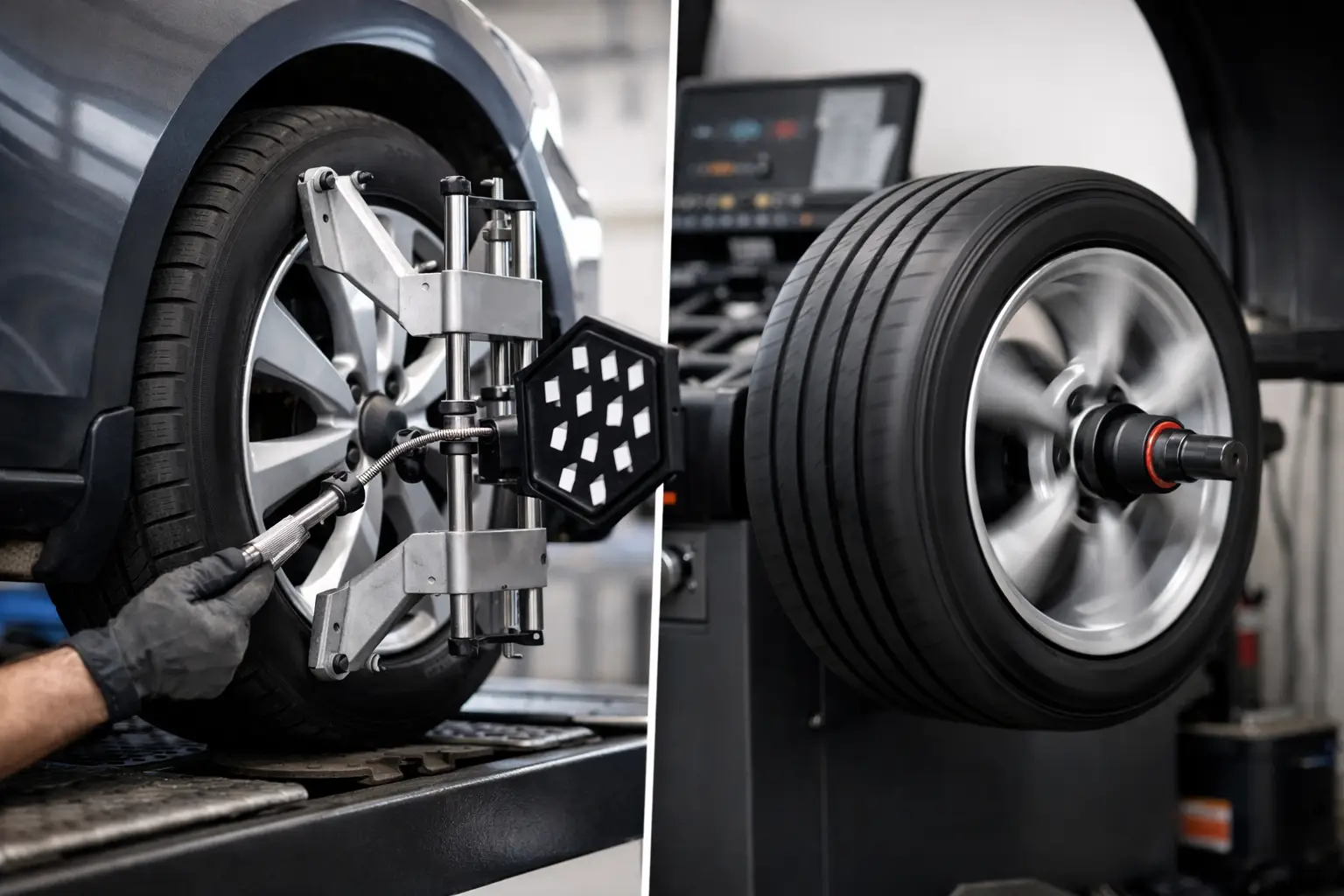
A steering wheel that sits crooked on the Hume, a car that drifts across its lane, or a vibration through the wheel at 100 km/h can make every drive feel wrong. Wheel alignment versus wheel balancing is a common point of confusion because both services involve your tyres and wheels, but they fix very different problems.
Knowing the difference can help you act early, protect your tyres and avoid paying for work that does not address the real cause. It also gives your mechanic clearer information when something feels off on the road.
Wheel Alignment Versus Wheel Balancing: The Key Difference
Wheel alignment is about the direction and angles of your wheels. A mechanic adjusts the suspension and steering geometry so the wheels point and sit as the vehicle manufacturer intended. The goal is for your car to track straight, steer predictably and wear its tyres evenly.
Wheel balancing is about weight distribution around each wheel and tyre assembly. Tiny weights are fitted to the wheel to counteract heavy spots in the tyre or rim. The goal is to stop vibration as the wheel spins.
Put simply, alignment affects where the wheels point. Balancing affects how smoothly they rotate. One service does not replace the other, and a vehicle can need one, both or neither depending on the symptoms and its recent history.
What Wheel Alignment Corrects
Your vehicle’s wheel angles are set using measurements commonly called toe, camber and caster. You do not need to memorise the terms, but each one affects how the tyre contacts the road and how the car behaves through the steering wheel.
A pothole, rough edge of a driveway, kerb strike or worn suspension component can knock those settings out. Melbourne’s changing road surfaces and the stop-start driving around the northern suburbs can be hard on steering and suspension parts over time. Even a seemingly minor impact can be enough to change an alignment setting.
The most common signs of poor alignment are a vehicle pulling or drifting left or right on a level road, a steering wheel that is off-centre when driving straight, and uneven tyre wear. You might see one shoulder of a tyre wearing faster than the rest of the tread, or feathering where the tread feels sharp in one direction and smooth in the other.
Poor alignment is not only an inconvenience. It can shorten tyre life considerably and make the vehicle less settled during braking or wet-weather driving. If you are constantly correcting the steering on your commute, it is worth having the cause checked rather than getting used to it.
Alignment may reveal another issue
An alignment adjustment only holds if the steering and suspension components are in sound condition. Worn tie-rod ends, ball joints, control arm bushes, wheel bearings or damaged suspension parts can allow the wheel position to move. In that case, the underlying repair should be completed before the final alignment.
This is why a proper assessment matters. Simply adjusting the angles without identifying excessive movement in the suspension may provide only a temporary improvement.
What Wheel Balancing Corrects
A tyre and wheel are rarely perfectly even in weight. At low speed, a small imbalance may not be noticeable. As speed rises, the imbalance creates a repeating force that can be felt as vibration through the steering wheel, floor or seat.
Front-wheel imbalance is often felt through the steering wheel. Rear-wheel imbalance may feel more like a shake through the seat or the body of the car. The speed at which it begins is useful information too. Many drivers notice it around freeway speeds, but it can occur at other speeds depending on the vehicle and the severity of the imbalance.
Balancing is usually needed after new tyres are fitted, after a tyre repair, or when a wheel has had a knock that may have displaced a weight. Wheel weights can also fall off over time. Mud, stones or packed debris inside a wheel can occasionally create a similar vibration, particularly after driving on unsealed roads.
A balance check involves spinning the wheel on specialised equipment to identify where weight needs to be added. The mechanic then fits small weights in the correct position and rechecks the result. It is a precise process, which is why wheel balancing is generally completed with dedicated workshop equipment.
Symptoms That Help Tell Them Apart
The symptoms can overlap, especially if tyre wear has already developed, but there are useful clues.
If the car pulls to one side, the steering wheel is not centred, or tyre wear is uneven across the tread, alignment is more likely to be involved. If the car drives straight but shakes at a particular speed, wheel balance is the more likely suspect.
There are exceptions. A damaged tyre, bent rim, tyre with an internal fault, loose wheel nuts, worn wheel bearing or suspension issue can also cause vibration. Road camber can make a vehicle gently move left on some roads, so a pull should be assessed on a suitable level surface rather than judged from one stretch of road alone.
Do not ignore a sudden or severe vibration. If it appears after hitting a pothole or kerb, pull over safely and inspect the tyre for visible damage or a flat spot. If you are unsure whether the car is safe to drive, arranging roadside assistance or a professional inspection is the sensible option.
When Should You Book an Alignment or Balance?
There is no single kilometre interval that suits every car. Your driving conditions, tyre type, suspension condition and the roads you use all make a difference. However, it is sensible to arrange an alignment check after a significant pothole or kerb impact, after suspension or steering repairs, when fitting new tyres, or as soon as uneven wear appears.
Wheel balancing is normally included when tyres are installed. It is also worth checking if vibration starts after tyre work, after a wheel repair, or when the car has been parked for a long period and the tyres have developed flat spots. A tyre pressure check should come first, as incorrect pressures can affect handling, ride quality and tyre wear.
Tyre rotation can be a good time to inspect tread wear patterns. Catching an alignment issue early may save a tyre set that would otherwise need replacing well before its time.
Why Tyre Wear Patterns Matter
Your tyres often provide the first evidence of a problem. Wear on both outer edges can point to low tyre pressure, while wear in the centre may indicate overinflation. One-sided shoulder wear is more commonly associated with alignment or suspension geometry concerns.
Cupping or scalloped patches around the tyre can be linked to worn shocks, suspension issues, imbalance or other mechanical problems. Because several faults can produce similar-looking wear, a visual check should be paired with an inspection of the vehicle rather than relying on tyre appearance alone.
Keep an eye on all four tyres, including the inside edges. The inner shoulder is easy to miss but can wear rapidly when camber or toe is out. If you cannot see it clearly, ask for it to be checked during your next service.
Can a Mobile Mechanic Help?
A mobile mechanic can inspect tyres, steering and suspension at your home or workplace, identify obvious wear or play in components, check tyre pressures and help narrow down the cause of a pull, vibration or uneven wear. That can save you time and prevent unnecessary tyre or wheel work.
Final wheel alignment and computerised wheel balancing generally require specialised equipment at a tyre or alignment facility. If an inspection indicates either service is needed, you will know what to arrange and why. If a worn steering or suspension part is the source of the problem, repairing it first avoids having the alignment done twice.
For drivers in Wallan and Melbourne’s northern suburbs, Hazara Mobile Mechanic can provide a practical on-site assessment when the cause is unclear, particularly after a knock, tyre concern or change in handling.
A Few Simple Habits That Protect Your Tyres
Check tyre pressures regularly when the tyres are cold, using the pressure listed on the vehicle placard rather than the maximum number printed on the tyre sidewall. Avoid kerbs where possible, slow down for potholes and keep up with scheduled servicing so worn steering and suspension components are found early.
If your car starts vibrating, pulling or wearing tyres unevenly, do not wait for the next routine service. A quick assessment can make the next drive more comfortable and help your tyres last as long as they should.
Need a mobile mechanic?
Hazara Mobile Mechanic comes to you across Wallan and up to 70 km around. Open 7 days, 7am to 10pm, with emergency service 24/7. Call or text 0466 666 945, message us on WhatsApp or book online. See our services and the areas we cover.

Comments are closed