


A timing belt usually gives you very little warning before it fails, and that is what makes timing belt replacement intervals so important. Leave it too long and a relatively routine maintenance job can turn into major engine damage, a breakdown at the worst possible time, and a much bigger repair bill than expected.
For most drivers around Wallan and Melbourne’s northern suburbs, the real question is not just what a timing belt does. It is when to replace it, how much flexibility there is, and whether age matters as much as kilometres. The short answer is that it depends on your vehicle, how it is used, and what the manufacturer recommends. The safest answer is to check before you are overdue.
What timing belt replacement intervals actually mean
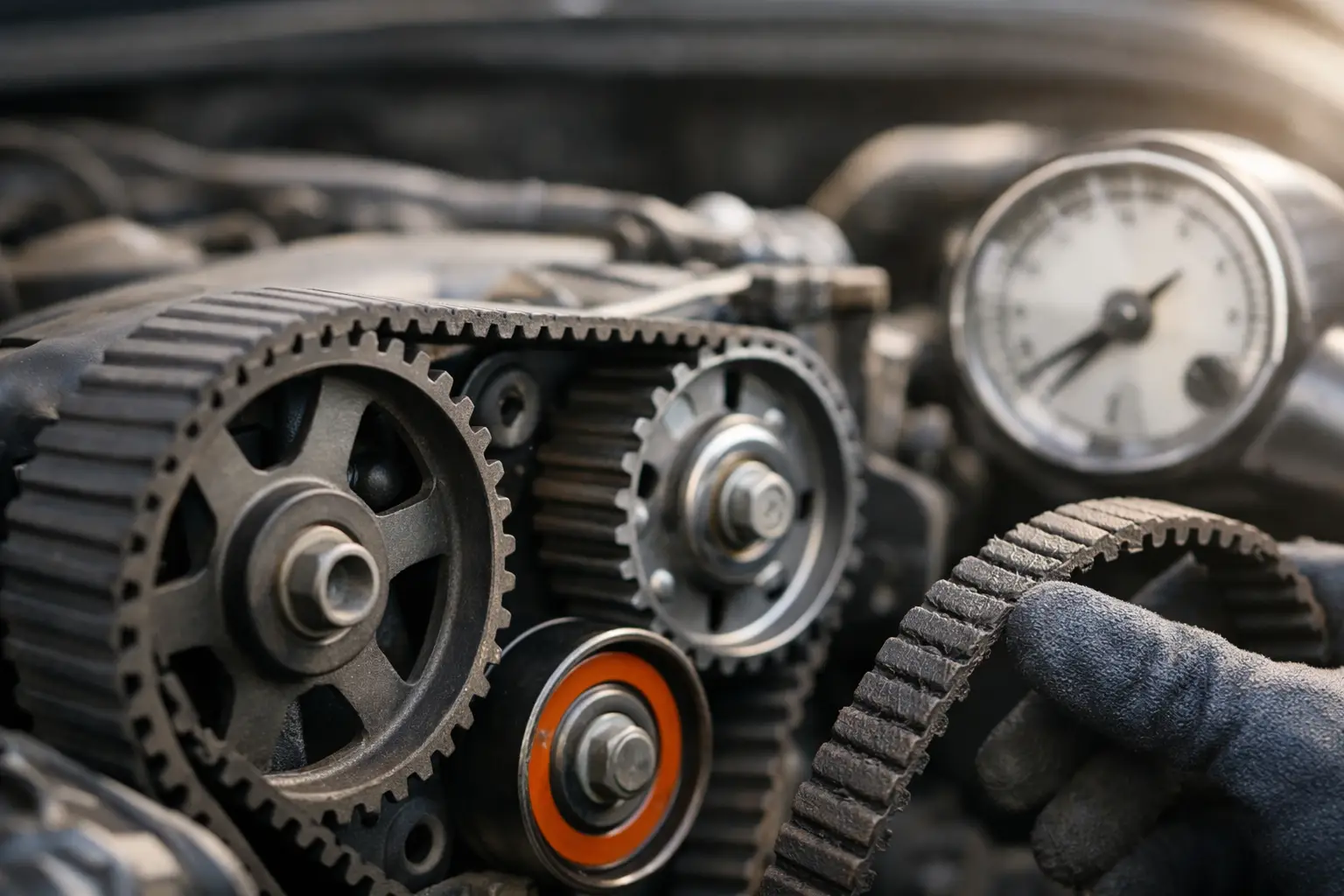
The timing belt keeps the camshaft and crankshaft moving in sync so the engine’s valves and pistons operate at exactly the right time. In many vehicles, it also drives the water pump. Because it is made from reinforced rubber, it wears out over time even if the car seems to be running perfectly.
When people talk about timing belt replacement intervals, they are usually referring to a manufacturer guideline based on kilometres, years, or whichever comes first. You might see something like 100,000 km or 5 years, 150,000 km or 10 years, or a similar range depending on the engine.
That last part matters. A car with low kilometres is not automatically safe. If the belt has aged, hardened, or weakened, time can be just as relevant as distance travelled.
Why there is no one-size-fits-all interval
Many drivers hope for a simple number that applies to every car, but timing belt service is not that straightforward. Different manufacturers use different belt materials, engine designs, tensioners, and water pump arrangements. A small hatchback, a diesel SUV, and a family sedan may all have very different service schedules.
Driving conditions also play a part. Stop-start traffic, heat, long periods of sitting unused, coolant leaks, oil contamination, and poor maintenance can all shorten belt life. A vehicle used for daily commuting through Melbourne traffic may age its components differently to one that mainly does steady country kilometres.
That is why the handbook, service history, and engine type matter more than guesswork. If you have recently bought a used car and there is no clear record of the belt being replaced, it is worth treating that as a risk rather than assuming it has been done.
Typical timing belt replacement intervals by vehicle
As a general guide, many vehicles fall somewhere between 90,000 km and 150,000 km, or around 5 to 10 years. But that range is broad enough to be misleading if you rely on it alone.
Some manufacturers set conservative intervals because the consequences of failure are severe. Others allow longer intervals based on engine design and newer belt technology. There are also vehicles that use a timing chain instead of a timing belt, which changes the maintenance approach completely.
If you are unsure what your car has, that is the first thing to confirm. Belts and chains are often confused, and the service advice for one does not automatically apply to the other.
Kilometres versus years
A lot of owners focus on odometer readings and overlook age. That can be a mistake. If your car has only done 70,000 km in 9 years, but the belt interval is 8 years, it may already be overdue on time.
Rubber components deteriorate with age, heat cycles, and exposure, even when the vehicle is not driven much. Cars that spend long periods parked can still develop timing belt issues simply because the belt has aged out.
Used cars and uncertain service history
This is one of the most common situations where trouble starts. A seller may say the car has been serviced regularly, but unless there is a receipt showing the timing belt was replaced, it is safer not to assume. A stamped logbook is useful, but invoices or clear workshop records are better.
If the replacement date cannot be verified, proactive replacement often makes more financial sense than risking a failure. It is a practical move, especially if you rely on the car for work, school runs, or daily commuting.
What happens if you miss the replacement interval
A worn timing belt may not snap in your driveway where it is convenient. It can fail in traffic, on the way to work, or while you are out with the family. In many engines, especially interference engines, a broken belt can let the pistons and valves collide. That can bend valves, damage the cylinder head, and in severe cases ruin the engine.
This is why timing belt replacement is preventative maintenance rather than a repair you put off until there is a symptom. The cost of replacing a belt on schedule is usually far lower than the cost of fixing an engine after the belt has failed.
There is also the inconvenience factor. A breakdown rarely happens at a good time, and towing, delays, and missed plans can be just as frustrating as the repair cost itself.
Signs your timing belt may need attention sooner
A timing belt does not always advertise that it is near the end of its life. Still, there are cases where a vehicle gives some warning signs. If the engine is running rough, misfiring, making unusual noises from the timing cover area, or struggling to start, it is worth having it checked.
Oil leaks from the front of the engine can also be relevant, because oil contamination can damage the belt. Likewise, coolant leaks matter on vehicles where the water pump is part of the timing belt system. If a tensioner or idler bearing starts to wear, you may hear a whine or chirp, although this is not guaranteed.
The key point is that visible symptoms often arrive late. Waiting for a clear sign is not a reliable maintenance plan.
What should be replaced with the timing belt
A timing belt job is usually more than just the belt itself. Depending on the vehicle, it often makes sense to replace the tensioner, idler pulleys, water pump, and related seals at the same time. That is because these parts wear together, and labour overlaps.
Replacing only the belt to save money can be a false economy if a pulley or water pump fails not long after. Then the same area has to be opened again, and in some cases the new belt can be damaged as well.
A proper quote should make it clear what is included. If one price seems much cheaper than another, it is worth checking whether all the related parts are part of the job or whether only the belt is being changed.
How to stay ahead of timing belt replacement intervals
The easiest way to avoid timing belt surprises is to know three things: your exact vehicle model and engine, the manufacturer’s interval, and whether the last replacement can be proven. Once you have those details, the decision becomes much clearer.
If your car is approaching the interval, planning ahead is better than stretching it. That gives you time to book the work when it suits you rather than dealing with an urgent failure. For busy households and commuters, that sort of planning can save a lot of disruption.
It also helps to keep records once the belt is done. The next time you service the car, sell it, or buy another vehicle, you will know exactly where you stand.
Timing belt replacement intervals and mobile servicing
For many drivers, the hardest part is not understanding the interval. It is finding time to get the work sorted. Taking a car to a workshop, arranging lifts, and reorganising the day can be a hassle, especially when you are already juggling work or family commitments.
That is where practical, on-site support makes life easier. Hazara Mobile Mechanic can inspect your vehicle, confirm what service interval applies, and carry out suitable repairs at your home or workplace where possible. It is a straightforward way to deal with a critical maintenance item without adding more disruption to your week.
If you are not sure whether your vehicle is due, do not wait for the belt to make the decision for you. A quick check now is far easier than dealing with the damage later, and your future self will be glad you handled it before it became a bigger problem.
Need a mobile mechanic?
Hazara Mobile Mechanic comes to you across Wallan and up to 70 km around. Open 7 days, 7am to 10pm, with emergency service 24/7. Call or text 0466 666 945, message us on WhatsApp or book online. See our services and the areas we cover.

Comments are closed