


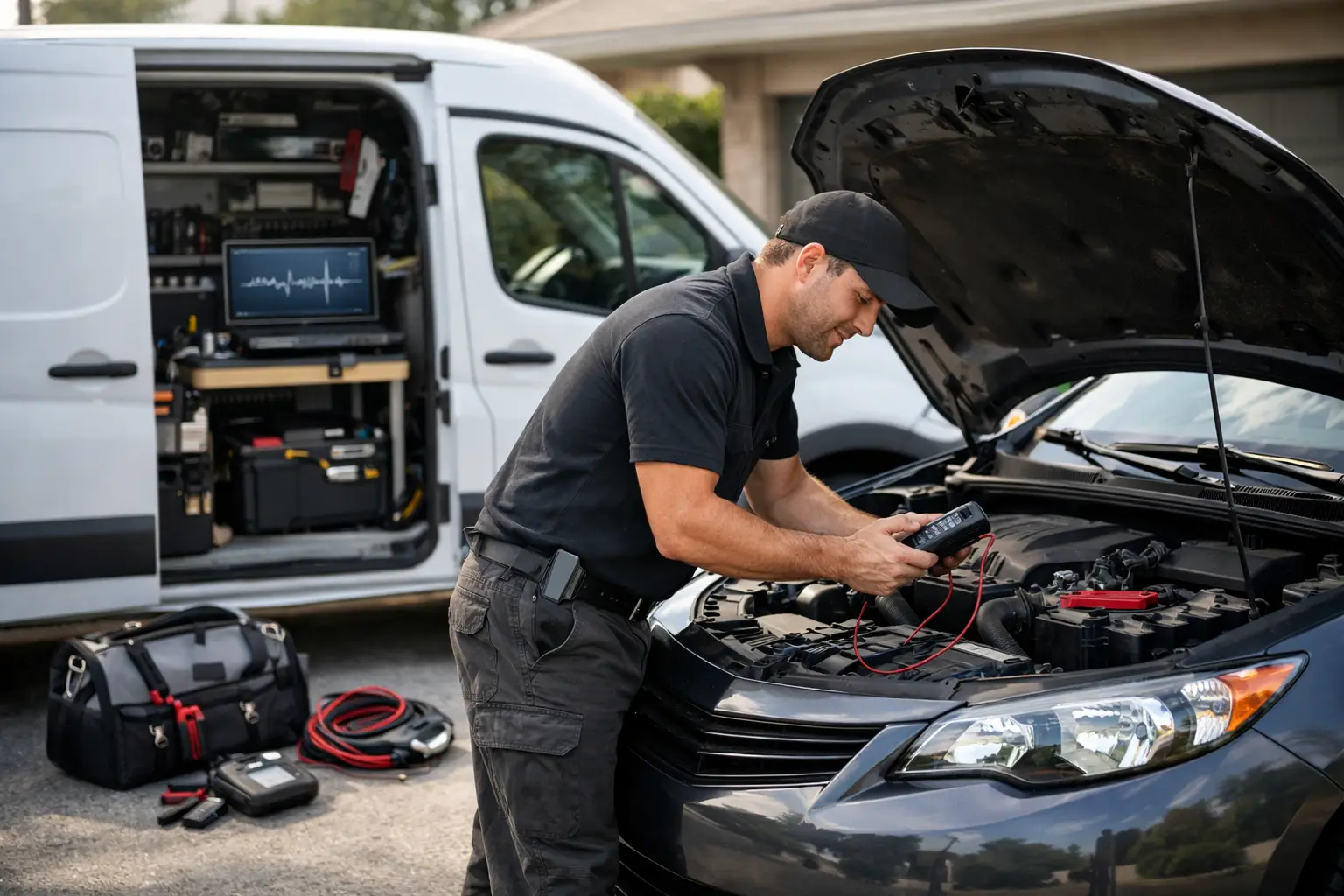
A car that will not start in the driveway, warning lights that appear before work, or a battery that keeps going flat can quickly throw off the whole day. A mobile auto electrician brings the diagnostic tools and practical experience to your home, workplace or roadside location, so you can get answers without organising a tow or spending hours at a workshop.
For drivers across Wallan and Melbourne’s northern suburbs, on-site electrical repairs can be a straightforward way to deal with many common vehicle problems. The key is finding the actual cause rather than replacing parts based on a guess.
What does a mobile auto electrician do?
Modern vehicles rely on a network of electrical components to start, charge, run safely and communicate faults. A mobile auto electrician diagnoses and repairs problems in these systems where your vehicle is parked, where practical.
This can include a flat or failing battery, alternator faults, starter motor issues, blown fuses, damaged wiring, lighting problems, charging faults and electrical issues affecting accessories. Depending on the vehicle and the fault, it may also involve investigating warning lights, sensors, central locking, power windows, dashboard displays or air conditioning electrical controls.
The convenience is clear, but proper diagnosis matters just as much. A vehicle may show a battery warning light, for example, because of a weak battery, a faulty alternator, poor battery terminals, a damaged cable or a connection issue. Replacing the battery alone might get the car going for a short time, but it will not fix an alternator that is no longer charging correctly.
Signs your car may have an electrical fault
Electrical problems do not always look dramatic. Often, they begin with small changes that are easy to put off until the vehicle will not start. Acting early can prevent an inconvenient breakdown and may help avoid further damage.
You may need an auto electrician if your car is slow to crank, regularly needs a jump-start, has dim or flickering headlights, or the battery light stays on while driving. Other warning signs include a burning smell near wiring, fuses that keep blowing, accessories that work intermittently, unusual clicking when starting, or warning lights that return after being cleared.
A flat battery is one of the most common call-outs, but it is not always the battery at fault. Leaving interior lights on, short trips that do not allow enough charging time, an ageing battery, parasitic power drain and charging-system faults can all produce the same outcome. Testing the battery and charging system before fitting parts gives you a better chance of paying for the repair you actually need.
When it is better not to drive
If you notice smoke, melted wiring, a strong burning smell, repeated electrical cut-outs or warning lights alongside loss of steering assistance or overheating, stop in a safe place and avoid driving further. Electrical faults can affect more than convenience features.
Likewise, if the car repeatedly stalls, loses power or will not crank, arranging assistance at your location is usually safer than continuing to try to start it. Repeated start attempts can flatten the battery further and make a diagnosis less clear.
Mobile electrical repairs that suit home or work
Many auto electrical jobs can be assessed and completed on site, particularly when there is safe access to the vehicle and the required parts are available. This is useful for busy commuters, parents managing school runs and anyone whose car is parked at work for most of the day.
Battery testing and replacement, terminal cleaning, alternator and starter motor checks, fuse and relay testing, basic wiring repairs, lighting faults and fault-code scanning are commonly suited to a mobile visit. A technician can inspect the vehicle, explain what the tests show and discuss the next step before work proceeds.
There are limits to mobile work, and being upfront about them is part of good service. Complex wiring faults, major module programming, extensive harness repairs or jobs requiring specialised workshop equipment may need to be completed at a workshop. A reliable technician will tell you when that is the better option rather than attempting a rushed repair in unsuitable conditions.
Why diagnosis comes before parts
Cars are more computer-controlled than they used to be. A warning light may point to a system with a fault, but it does not automatically identify the failed part. Reading fault codes is useful, yet it is only one part of diagnosing the problem.
A proper approach looks at battery condition, charging voltage, connections, wiring condition, fuses, relays and the symptoms reported by the driver. It also considers when the fault happens. Does the car fail to start only when cold? Does the battery go flat overnight? Does a warning light appear after rain or when a particular accessory is used?
These details help narrow down the issue and reduce unnecessary part replacement. They also make it easier for you to understand what work is being recommended. Clear communication is especially valuable with electrical repairs, because the visible symptom and the underlying cause are not always the same thing.
How to prepare for a mobile auto electrician visit
You do not need mechanical knowledge to help make the appointment efficient. If possible, park the car somewhere safe and accessible, with room around the bonnet and doors. Keep the keys available and let the technician know if the vehicle is unable to start, locked, parked in a basement or positioned in a tight area.
It also helps to share a few details when booking: the make, model and year, registration number, what the vehicle is doing, when the issue started and whether any warning lights are on. If the battery has been jump-started recently, mention that too.
Try not to disconnect the battery or clear warning lights immediately before the visit unless necessary. Fault information stored in the vehicle can assist the diagnostic process. If you have had repairs completed recently, keep any invoices or notes handy, as they may provide useful context.
Choosing the right mobile auto electrician
Convenience should not mean cutting corners. Look for a provider who asks sensible questions before arriving, explains the findings in plain language and gives you a clear idea of costs before major work begins.
Experience across different makes and models matters, as does having the right diagnostic equipment for modern vehicles. You should also expect practical advice if the problem needs a workshop repair or if a repair is not worthwhile compared with the vehicle’s age and condition.
Hazara Mobile Mechanic focuses on bringing dependable automotive support to customers where they need it. Whether the issue is a no-start condition, battery concern, charging fault or warning light, the aim is to make the process easier: assess the problem carefully, explain the options and carry out suitable repairs with minimal disruption to your day.
A quicker response to everyday car problems
A mobile service is particularly useful when the vehicle is stranded at home before a commute or sitting in a workplace car park at the end of the day. Instead of arranging transport to a workshop and then finding a way to collect the car, you can have the issue assessed where it is.
That does not mean every repair will be instant. Parts availability, the complexity of the fault and safe working conditions all affect timing. However, an accurate diagnosis on the first visit can save considerable time compared with guessing at the cause or replacing parts one by one.
If your vehicle is showing early signs of an electrical issue, do not wait for a complete no-start to deal with it. Booking an on-site inspection while the car is still accessible can turn a stressful interruption into a manageable repair.
Need a mobile mechanic?
Hazara Mobile Mechanic comes to you across Wallan and up to 70 km around. Open 7 days, 7am to 10pm, with emergency service 24/7. Call or text 0466 666 945, message us on WhatsApp or book online. See our services and the areas we cover.

Comments are closed