


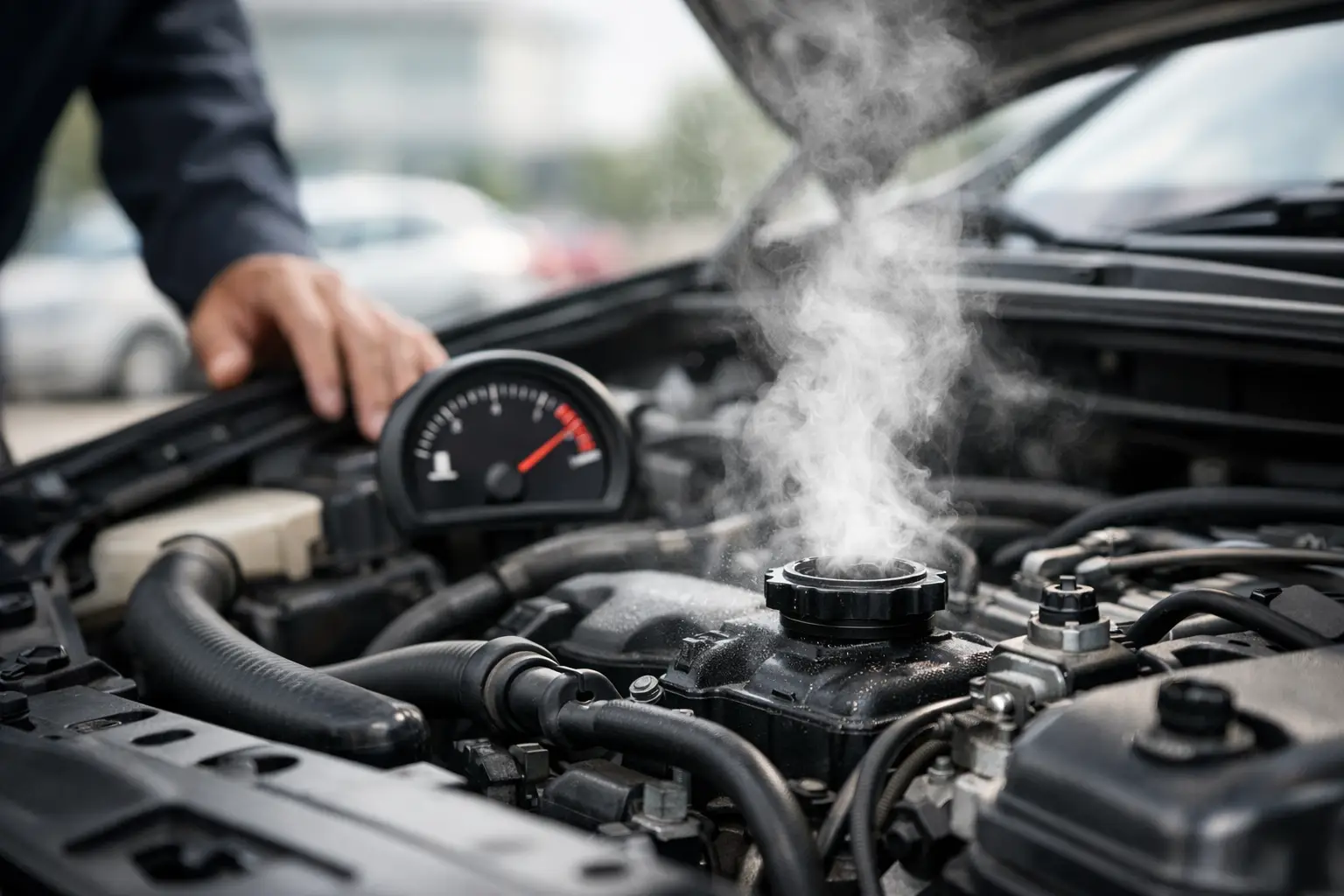
A temperature gauge creeping towards the red while you are stuck in traffic is not a warning to ignore until you reach home. It is your car telling you to act now. Knowing how to recognise engine overheating can protect you from a roadside breakdown, an expensive engine repair, and the stress of being stranded with the family or on the way to work.
An engine naturally produces a lot of heat, particularly during a hot Victorian summer, on a long drive, or while towing. The cooling system is designed to control that heat. When coolant, the radiator, hoses, thermostat, water pump or cooling fan cannot do their job properly, engine temperature can rise quickly. Catching the early signs gives you the best chance of stopping safely before serious damage occurs.
How to recognise engine overheating before it gets worse
The temperature gauge is usually the first place to look. In most cars, the needle should sit around the middle once the engine has warmed up. If it starts moving above its normal position, especially towards the red zone, treat it as an active problem rather than a gauge you can check later. Newer vehicles may use a temperature warning light instead of a gauge. A red coolant temperature warning needs immediate attention.
Steam, smells and coolant leaks
Steam rising from under the bonnet is one of the clearest signs of overheating. It can look like white smoke, but it is often hot coolant escaping and evaporating. Pull over as soon as it is safe. Do not lift the bonnet straight away – escaping steam and hot parts can cause burns.
You may also notice a sweet, chemical smell inside or outside the vehicle. Coolant often has this smell, and it may be leaking from a hose, radiator, water pump or reservoir. Once the engine is fully cold, a green, pink, red, blue or orange puddle under the car can also point to a coolant leak. Coolant colours vary, so the colour alone does not identify the fault.
A loss of power or an unusual engine feel
An overheating engine may feel sluggish, run roughly or lose power, particularly under acceleration or on a hill. Some vehicles enter a reduced-power mode to limit damage. You might also hear pinging, ticking or knocking sounds. These symptoms can have other causes, but when they occur with a high temperature reading, stop driving and arrange an inspection.
The heater can provide another useful clue. If you turn the cabin heater on and it only blows cold air while the engine is hot, there may not be enough coolant circulating through the system. That does not confirm the exact cause, but it is a strong reason not to continue the trip.
Cooling fans running hard or not running at all
It is normal for electric cooling fans to switch on and off, particularly after driving or when the air conditioner is operating. What is not normal is a fan that is constantly roaring while the temperature keeps rising, or a fan that never comes on when the engine is clearly hot. A failed fan, relay, fuse or temperature sensor can make overheating more likely in slow traffic, even if the car seems fine at highway speed.
What to do if your engine starts overheating
Your first priority is getting out of traffic safely. Do not try to nurse the car home if the gauge is in the red, a warning light is on, or steam is visible. A short extra drive can turn a repairable cooling fault into a damaged head gasket, warped cylinder head or major engine work.
If the vehicle is still running normally and there is no steam, switch off the air conditioner and turn the cabin heater to its hottest setting. This can draw a small amount of heat away from the engine while you find a safe place to stop. It is a temporary measure only, not a fix.
Once you have pulled over, use these safe steps:
- Park clear of moving traffic, turn on your hazard lights and switch the engine off.
- Do not open the radiator cap or coolant reservoir cap while the engine is hot. The cooling system is pressurised and can release scalding coolant.
- Do not pour cold water over a hot engine or radiator. Sudden temperature changes can damage hot components.
- Wait until the engine has cooled completely before checking the coolant reservoir level or looking for visible leaks.
- If you see smoke from a fire rather than steam, move away from the vehicle and contact emergency services.
After the engine is cold, you can check whether the coolant in the overflow reservoir is below the minimum mark. If it is empty, or there is obvious coolant on the ground, do not assume topping it up will make the vehicle safe to drive. The system needs to be inspected for the reason it lost coolant in the first place. Never use plain water as a long-term substitute for the correct coolant mixture.
Why an engine overheats
Overheating is a symptom, not a single fault. A slow coolant leak is common and may only show itself after weeks of low coolant levels. Cracked hoses, loose clamps, a leaking radiator or a worn water pump can all allow coolant to escape.
Other faults stop coolant from circulating or cooling properly. A thermostat can stick closed, preventing coolant from reaching the radiator. A blocked radiator may not shed enough heat. A damaged water pump can reduce coolant flow, while a failed cooling fan may only cause trouble at low speeds or when idling.
In some cases, the issue is more serious. A failing head gasket can allow combustion gases into the cooling system or coolant into the engine. Persistent overheating, unexplained coolant loss, milky oil, bubbles in the coolant reservoir, or white exhaust smoke can all require prompt professional diagnosis. None of these signs should be judged in isolation, but together they are a clear reason to stop driving.
Reduce the chance of overheating
Regular servicing is the easiest way to find cooling issues before they leave you on the side of the road. During a proper check, a mechanic can inspect coolant condition and level, radiator hoses, belts, fan operation, leaks and signs of pressure loss. Coolant also needs replacement at the interval recommended for your vehicle. Old or incorrect coolant can reduce corrosion protection and contribute to internal cooling-system damage.
It also helps to pay attention to small changes. A faint sweet smell, a temperature gauge that sits higher than usual, coolant needing regular top-ups, or a heater that works inconsistently are all worth checking early. These jobs are usually simpler and more affordable before the car actually overheats.
For drivers in Wallan and Melbourne’s northern suburbs, Hazara Mobile Mechanic can inspect cooling-system concerns at your home or workplace, helping you get clear answers without adding a workshop visit to an already busy day. A quick response to an unusual temperature reading can be the difference between a straightforward repair and a much bigger engine problem.
Need a mobile mechanic?
Hazara Mobile Mechanic comes to you across Wallan and up to 70 km around. Open 7 days, 7am to 10pm, with emergency service 24/7. Call or text 0466 666 945, message us on WhatsApp or book online. See our services and the areas we cover.

Comments are closed