

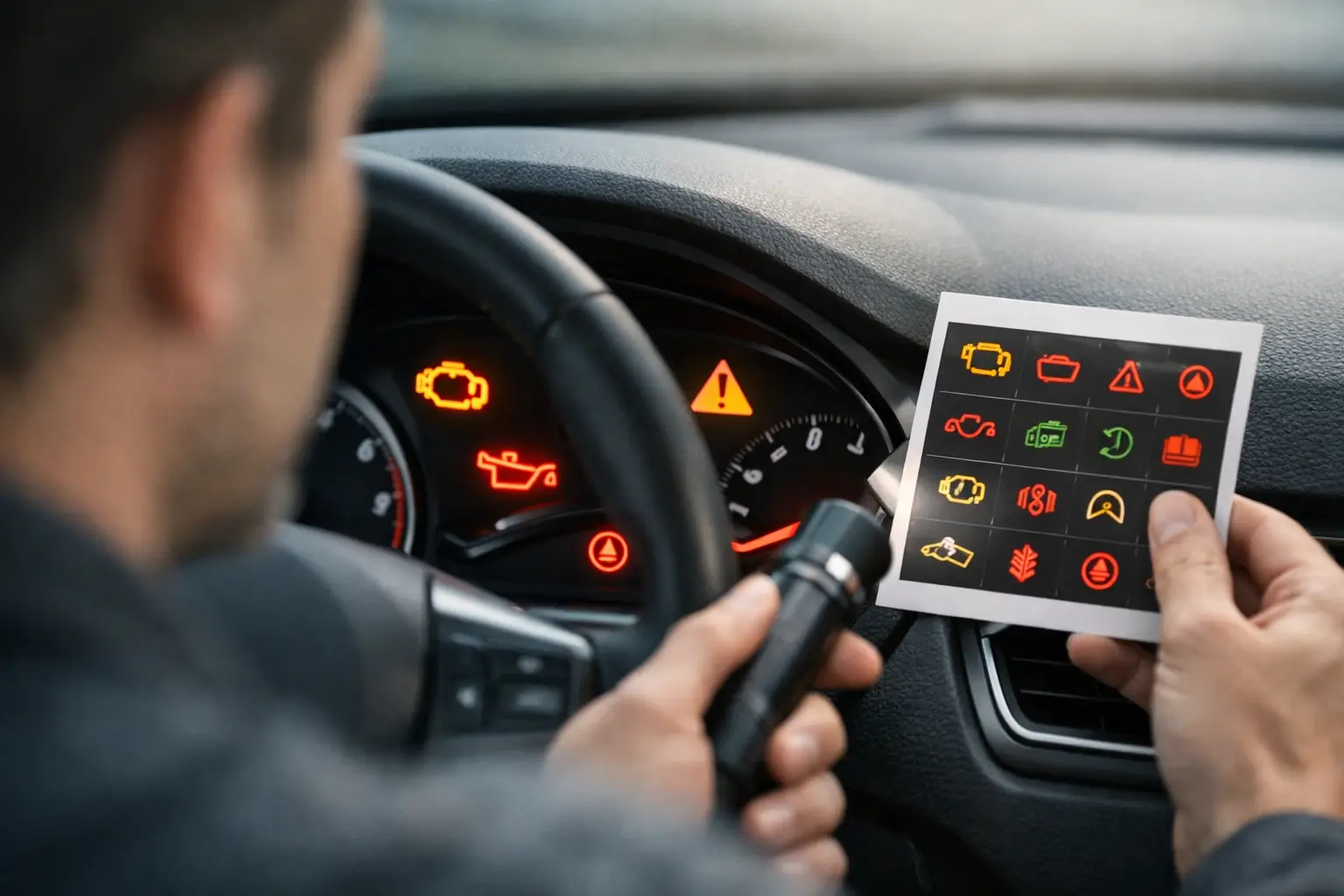
A warning light appearing halfway through the morning school run or on the way to work can quickly turn a normal drive into a worry. Knowing how to read dashboard warnings helps you make the right call: whether you can drive carefully to a safe place, need to arrange a repair soon, or should stop the car immediately.
Your dashboard is designed to get your attention, not give a full diagnosis. The same symbol can mean slightly different things between vehicle makes and models, so your owner’s manual is always the final reference. Still, the light’s colour, whether it stays on or flashes, and how the car feels will tell you a lot about the urgency.
Start with the colour of the warning light
Most modern vehicles use a traffic-light approach. Red warnings usually mean stop and investigate as soon as it is safe. Amber or yellow warnings mean the vehicle needs attention, but it may still be safe to drive a short distance with care. Green, blue and white lights are generally information lights, such as high beam, indicators, cruise control or fog lights being active.
Do not rely on colour alone. A flashing amber engine light can be more urgent than a steady amber light, while a red brake warning light could simply mean the handbrake is on. Look for the symbol, check the message on the instrument display if your vehicle has one, and pay attention to any change in steering, braking, engine sound or temperature.
A warning that comes on briefly when you turn the ignition on is often normal. This is the vehicle running a bulb check. The concern is when a light remains illuminated after the engine starts, returns while driving, or begins flashing.
How to read dashboard warnings in the right order
When a light appears, avoid reacting in panic. Safely assess what is happening around you before looking down at the dash. If the vehicle is still driving normally and there is no red warning, reduce distractions, pull over when practical and identify the symbol.
First, check whether the warning is red, amber or another colour. Next, see whether it is steady or flashing. A flashing light usually signals an active fault that needs faster action. Then notice how the vehicle behaves. Is the engine running roughly? Is there a burning smell? Has the steering become heavy? Are there unusual noises, smoke or a loss of power?
Finally, check simple causes only if it is safe to do so. For example, a tyre pressure warning may mean a tyre is visibly low, while a washer fluid symbol may simply mean the reservoir needs filling. Never open the radiator cap when the engine is hot, and do not keep driving just to see whether a serious warning disappears.
If you are unsure, take a clear photo of the dashboard display while parked. It can help a mechanic identify the issue before attending your home or workplace.
Red lights that mean you should stop driving
A red light does not automatically mean major engine damage, but it does mean you should take the safest option. Pull over in a safe location, switch on your hazard lights if needed and avoid restarting the car until you understand the warning.
The most common red warnings include:
- Engine oil pressure: This looks like an oil can. Low oil pressure can cause severe engine damage very quickly. Stop the engine and do not drive further until the oil level and underlying fault have been checked.
- Engine temperature: Usually shown as a thermometer over waves, this indicates overheating. Turn off the air conditioning, pull over safely and switch the engine off. Let it cool fully before any inspection.
- Battery or charging system: The battery symbol often means the alternator is not charging properly, rather than simply needing a new battery. The car may keep running briefly, but it can stop once the battery charge is depleted.
- Brake system: A red circle with an exclamation mark may indicate the handbrake is applied, low brake fluid or a brake system fault. Check the handbrake first. If it is fully released and the light stays on, do not take chances with braking.
- Airbag or restraint system: Depending on the vehicle, this may be amber or red. The car may still be driveable, but airbags or seatbelt pretensioners may not work as intended in a crash. Arrange an inspection promptly.
If a red warning appears alongside smoke, a strong fuel smell, grinding noises or a major loss of control, keep clear of traffic, turn the engine off and seek roadside assistance. Continuing on can make a manageable repair far more expensive.
Amber dashboard warnings: book a check soon
Amber lights give you a little more room to act, but they should not be ignored until the next service. In some cases, the vehicle may enter reduced-power mode to protect the engine or transmission.
The check engine light is one of the most common examples. A steady amber engine light can relate to many faults, from a loose fuel cap to a sensor, ignition problem or emissions issue. If the car is running smoothly, you can usually drive gently to a safe location and arrange a diagnostic inspection. If the check engine light is flashing, however, stop driving when safe. A flashing light can point to an engine misfire that may damage the catalytic converter.
The ABS light means the anti-lock braking system has detected a fault. Your normal brakes may still work, but the anti-lock function may not be available during hard braking. Drive carefully, allow extra stopping distance and book a check. If the red brake light is on too, treat it as more urgent.
A tyre pressure monitoring warning calls for a visual tyre check as soon as possible. A slow leak can leave you stranded, while driving on a significantly underinflated tyre can damage the tyre and affect handling. Check pressures when tyres are cold and inspect for nails, cuts or a flat tyre.
Diesel vehicles may show a diesel particulate filter warning, particularly after repeated short trips. Some vehicles can complete a regeneration drive under the conditions listed in the owner’s manual. Others need diagnostic attention. If the light is flashing or accompanied by reduced power, arrange help rather than forcing the vehicle through a long drive.
Warning lights are not always the whole story
A dashboard light is a clue, not a repair instruction. For instance, a battery light could be caused by a failing alternator, a loose belt, damaged wiring or a weak connection. Replacing the battery without testing the charging system might not solve the problem.
The same applies to engine, transmission and brake warnings. Modern vehicles store fault codes, but a code identifies the system reporting an issue, not always the failed part. Proper diagnosis includes checking live data, wiring, fluid condition, charging voltage and the vehicle’s symptoms.
This is why clearing a warning light without fixing the cause is rarely a good outcome. It may stay off temporarily, but the fault can return at the worst possible time.
What to do before a mechanic arrives
Once you are safely parked, make a note of when the warning appeared and what the vehicle was doing at the time. Include whether the engine was cold or hot, whether you were accelerating, and whether any warning message appeared on the screen. These details can save time during diagnosis.
Avoid disconnecting the battery to reset the light. On some vehicles this can erase useful fault information and reset electronic systems. Also avoid adding fluids or using additives unless you are confident they are correct for your vehicle. The wrong coolant, oil or brake fluid can create another problem.
For drivers in Wallan and Melbourne’s northern suburbs, a mobile mechanic can inspect many warning-light issues at your home or workplace. Hazara Mobile Mechanic can assess faults, test the relevant systems and explain what needs attention in plain language, so you are not left guessing what the dashboard is trying to tell you.
The best response to a warning light is calm and practical: protect yourself first, protect the vehicle second, and get clear advice before a small alert becomes an inconvenient breakdown.
Need a mobile mechanic?
Hazara Mobile Mechanic comes to you across Wallan and up to 70 km around. Open 7 days, 7am to 10pm, with emergency service 24/7. Call or text 0466 666 945, message us on WhatsApp or book online. See our services and the areas we cover.

Comments are closed