

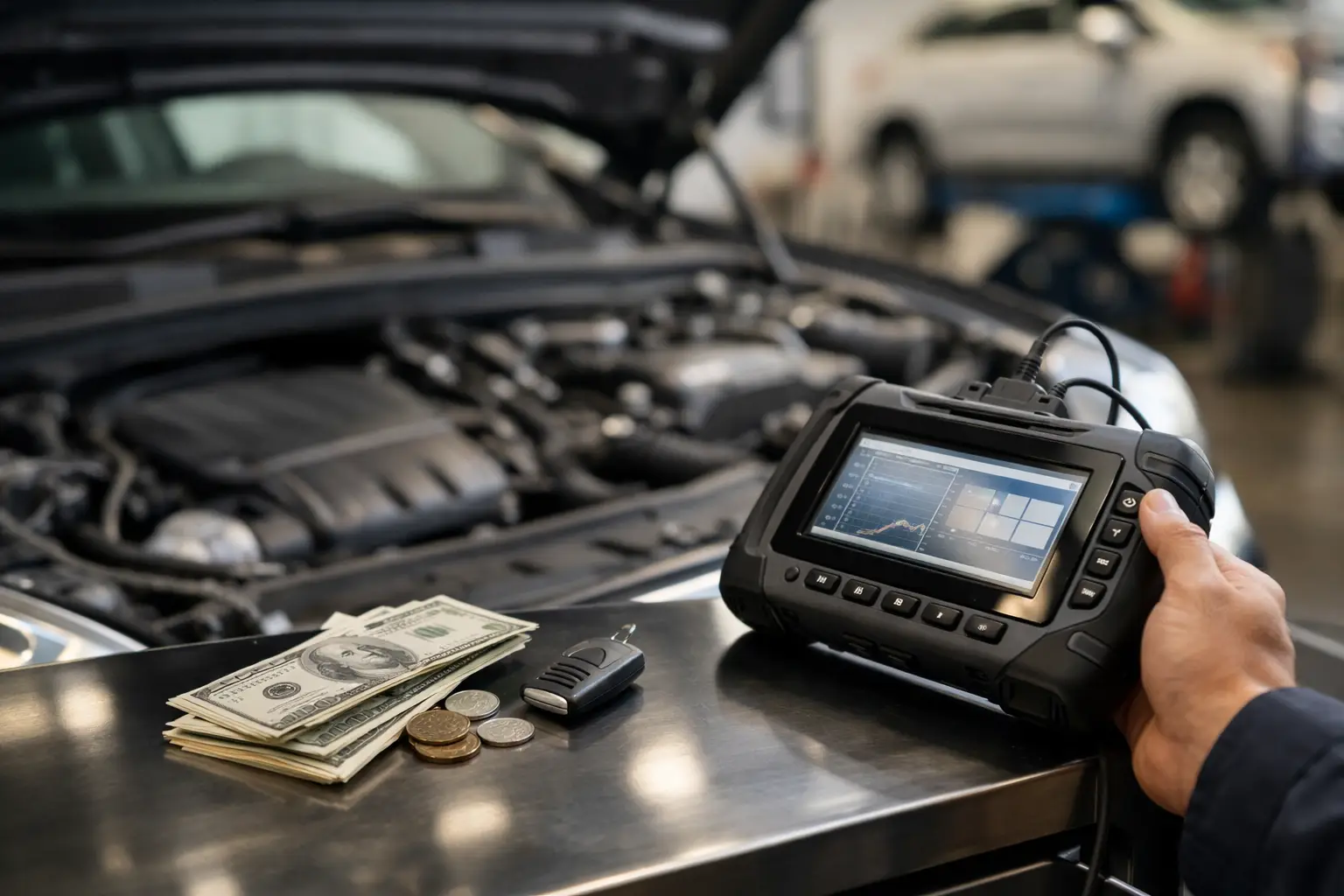
A warning light appears on the dash just before a busy week, the engine starts running roughly, or the car loses power on the way to work. Your first question is usually practical: what is the diagnostic test cost, and will it actually tell you what needs fixing? A proper diagnosis is often the fastest way to avoid paying for parts that do not solve the problem.
For drivers in Wallan and Melbourne’s northern suburbs, the price can vary depending on the vehicle, the fault and the time needed to trace it. What matters most is understanding what you are paying for and what should happen after the test.
What a Car Diagnostic Test Does
Modern vehicles use computers to monitor systems such as the engine, transmission, brakes, airbag system, battery charging and emissions controls. When a fault is detected, the vehicle may store a diagnostic trouble code. A scan tool can read that code and provide a useful starting point.
However, a fault code is not always the final answer. It identifies the system that has noticed a problem, not necessarily the exact part that has failed. For example, an engine light may point to an oxygen sensor reading outside its expected range. The cause could be the sensor itself, damaged wiring, an exhaust leak or an issue affecting the engine’s fuel mixture.
A professional diagnostic test combines the scan result with a visual inspection, live data readings and mechanical checks where needed. That is why the quality of the diagnosis matters as much as the code itself.
What Affects Diagnostic Test Cost?
There is no single price for every vehicle fault. A simple code scan on a common vehicle may take only a short time. An intermittent electrical issue, transmission concern or no-start condition can require more detailed testing.
The main factors behind diagnostic test cost include the type of vehicle, the system involved and how easily the fault can be reproduced. European vehicles, newer models with complex electronics and hybrid systems can require specialised equipment or additional testing time. Older cars may have wiring, connector or wear-related problems that need a more hands-on inspection.
The symptoms also make a difference. A check engine light with clear stored codes is generally more straightforward than a vehicle that only cuts out occasionally or drains its battery overnight. Intermittent faults can take longer because the issue may not be present when the mechanic arrives.
Location and timing can affect the overall call-out as well. Mobile diagnostics save the need to arrange a tow or take time away from work to sit at a workshop, but urgent roadside assistance or after-hours availability may be priced differently. A clear quote before work begins helps you decide what is appropriate for your situation.
A Scan Is Not Always a Full Diagnosis
Low-cost code scans can be useful, but they should not be confused with a complete diagnostic service. Clearing a warning light without finding the cause can leave you with the same fault days later. In some cases, it may also hide a problem that affects safety, fuel use or the vehicle’s ability to pass a roadworthy inspection.
A qualified mechanic should explain what was found, what testing has been carried out and whether further investigation is needed. If a repair is recommended, you should know why that repair is being suggested and whether there are alternative options.
When Paying for Diagnostics Can Save You Money
It can be tempting to replace the most likely part first, especially after reading an error code online. Sometimes that works. Other times, it means paying for a new sensor, battery or ignition component while the original problem remains.
Accurate testing can prevent unnecessary repairs. Consider a car that will not start. The issue could be a flat battery, weak alternator, poor battery terminal connection, faulty starter motor, immobiliser issue or fuel supply fault. Each needs a different repair. A proper test narrows the cause before parts are ordered.
The same applies to overheating. A coolant leak may be obvious, but a temperature problem can also involve a thermostat, radiator fan, water pump, blocked radiator, head gasket concern or an electrical control issue. Acting early usually gives you more repair choices and may reduce the risk of engine damage.
Diagnostics are especially worthwhile when you notice:
- A warning light that stays on or returns after being cleared
- Rough running, stalling, hard starting or poor fuel economy
- Battery, charging or electrical faults
- Strange shifting, slipping or transmission warning messages
- Brake, ABS, traction control or airbag warnings
- Overheating, coolant loss or a noticeable burning smell
For brake, airbag, steering, overheating and major warning-light concerns, avoid treating the car as normal transport until it has been assessed. The cost of a check is small compared with the risk of a breakdown or unsafe driving condition.
Questions to Ask Before Booking a Diagnostic Test
A good service experience starts with a straightforward conversation. When requesting a quote, describe the symptoms rather than only naming the part you think has failed. Mention when the problem occurs, whether any lights are showing, recent repairs, unusual noises and whether the vehicle is still safe to drive.
Ask whether the quoted price covers a basic scan, an initial diagnostic inspection or a set amount of testing time. If further testing is likely, ask how approval will be handled before additional labour is charged. This keeps the process transparent and avoids surprises.
It is also helpful to ask what information you will receive after the inspection. You should leave with a clear explanation of the likely cause, any urgent concerns, recommended repairs and an estimate for the next step. Not every fault can be confirmed in one visit, but you should understand why more time or testing may be required.
Bring the Right Details to the Appointment
You do not need mechanical knowledge to help speed up a diagnosis. Keep a note on your mobile of when the fault began and what was happening at the time. Did it start after heavy rain, a flat battery, a service, a long highway drive or filling up with fuel? Does it happen when the engine is cold, once the car is warm, under acceleration or when using the air conditioning?
Those details can be more useful than a code alone. They help a mechanic test the vehicle under the conditions most likely to reveal the fault.
Why Mobile Diagnostics Suit Busy Drivers
Taking a car to a workshop can be difficult when it will not start, has a warning light you are worried about or needs attention during a workday. Mobile diagnostics bring the inspection to your home, workplace or roadside location where practical.
This approach is particularly useful for battery and charging issues, starting problems, warning-light checks and many engine, cooling or auto electrical concerns. You can speak directly with the mechanic, see the vehicle being assessed and make a decision based on clear information. If the repair can be completed on site, you may avoid a second trip altogether.
There are limits, and an honest mechanic will explain them. Some repairs need a hoist, specialist workshop equipment, extensive dismantling or a controlled testing environment. In those cases, a diagnosis can still identify the likely issue and help you plan the most sensible repair path rather than sending the car to a workshop without direction.
Get Clarity Before Approving Repairs
The best diagnostic service does more than read a code. It gives you confidence about what is wrong, what needs attention now and what can wait. That makes it easier to compare repair options and protect your budget.
Hazara Mobile Mechanic provides practical on-site vehicle diagnostics for drivers who want reliable answers without the usual workshop disruption. If your vehicle is showing a warning light, struggling to start or simply not driving as it should, arrange an assessment early. A timely diagnosis can turn an uncertain problem into a clear next step.
Need a mobile mechanic?
Hazara Mobile Mechanic comes to you across Wallan and up to 70 km around. Open 7 days, 7am to 10pm, with emergency service 24/7. Call or text 0466 666 945, message us on WhatsApp or book online. See our services and the areas we cover.

Comments are closed