


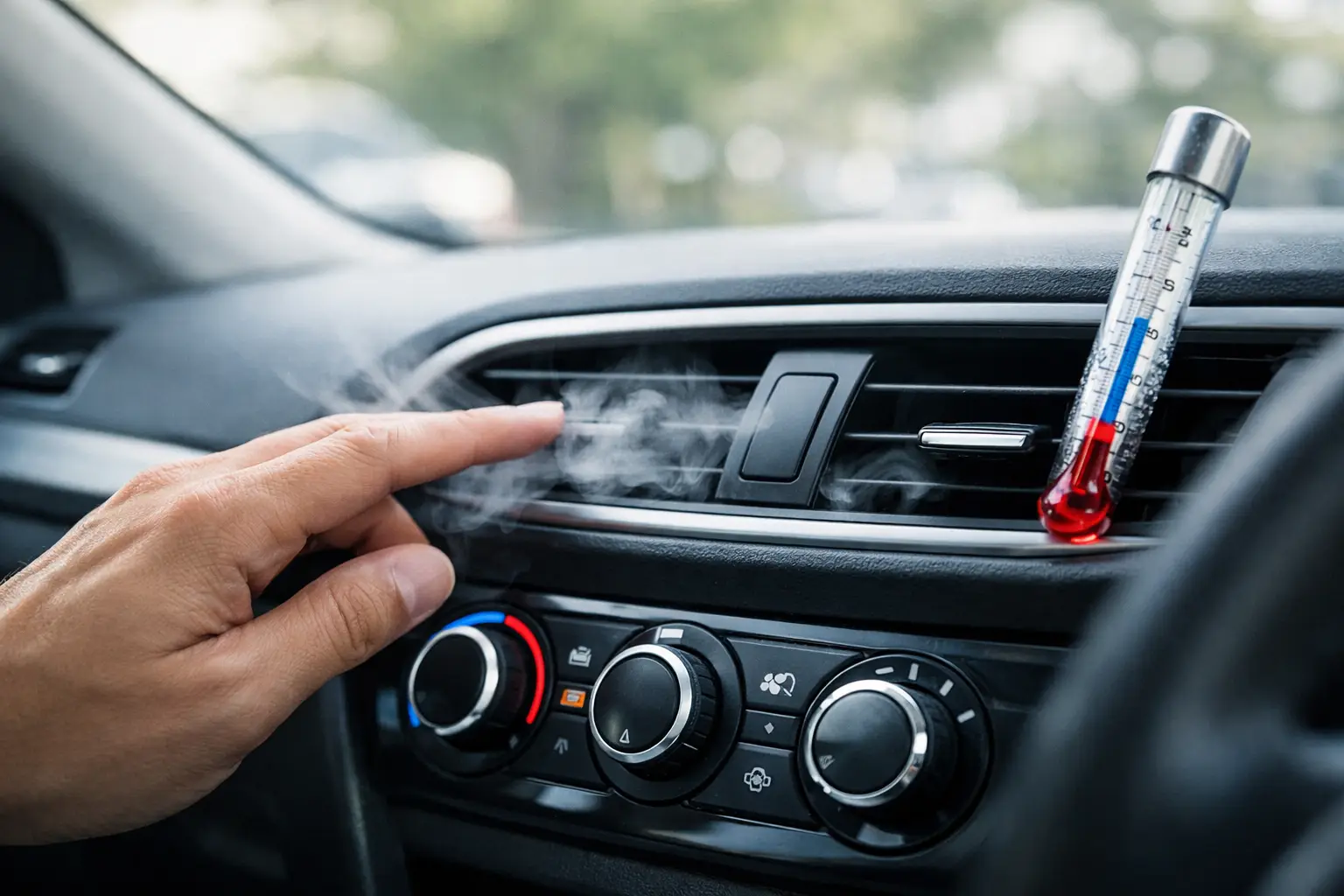
You notice it properly on a warm Wallan afternoon. The fan is blowing, the controls look fine, but the air coming through the vents is barely cooler than outside. If your car aircon not cold problem has appeared out of nowhere, it usually means something in the system is no longer doing its job properly – and the cause is not always as simple as needing a regas.
Air conditioning faults can start small and get worse fast, especially through summer when the system is under more strain. The good news is that many problems can be identified quickly with the right checks. The key is knowing what is worth looking at yourself, what points to a larger fault, and when it makes more sense to get a mechanic out rather than lose half a day at a workshop.
Why your car aircon is not cold
A car AC system works by pressurising refrigerant, removing heat from the cabin air and pushing cool air back through the vents. When the process is working properly, the air should cool down within a few minutes. When it is not, there is usually a fault somewhere in the refrigerant circuit, electrical controls, airflow system or compressor operation.
One common reason is low refrigerant. Refrigerant does not get used up like fuel, so if levels are low, there is usually a leak somewhere in the system. A slow leak can mean the aircon gradually gets weaker over weeks or months. A larger leak can leave you with warm air almost straight away.
Another regular cause is a faulty compressor. The compressor is the part that circulates refrigerant through the system. If it is not engaging, is noisy, or has internal wear, the aircon may blow warm or only cool slightly. In some cases the compressor clutch fails, while in others the issue is electrical and stops the unit from switching on properly.
Blocked or restricted condensers can also play a part. The condenser sits at the front of the vehicle and releases heat from the refrigerant. If it is clogged with dirt, bugs or road grime, or if it has been damaged, the system cannot get rid of heat efficiently. That means less cooling inside the cabin.
There are also faults that have nothing to do with refrigerant quantity. A blower motor issue, a blocked cabin filter, a failed pressure switch, a bad relay, damaged wiring or a stuck blend door can all affect vent temperature. That is why a proper diagnosis matters. Regassing a system without checking for the real cause can waste time and money.
What to check first when car aircon not cold
Before assuming the worst, there are a few basic things worth checking. Start with the controls. Make sure the AC button is switched on, the temperature is set to cold, and the system is not set to fresh air if recirculation would cool the cabin faster. Recirculation is especially helpful on hot days because it cools already-conditioned cabin air instead of constantly trying to cool hot outside air.
Next, pay attention to how the system behaves. If the fan is strong but the air is warm, that points more towards an AC system issue. If the airflow itself is weak, the problem may be with the cabin filter, fan motor or ducting rather than the refrigerant system.
Have a look under the bonnet with the engine running and AC switched on, if you are comfortable doing so. You may notice whether the compressor is engaging or not. You might also hear unusual noises such as rattling, squealing or clicking. Those sounds can help narrow down the fault, but they are not enough on their own to confirm it.
Also check whether the air is cold when driving but not when stopped. That can suggest condenser cooling issues, such as a faulty radiator fan or restricted airflow at the front of the car. If it cools for a short time and then turns warm, pressure problems or compressor overheating may be involved.
Signs it is more than a simple regas
A regas can restore cooling if refrigerant is low, but it is not a fix for every aircon problem. If the system has lost gas, there is usually a reason. If that leak is not found, the cold air may only last a short time before the same issue comes back.
If you notice oily residue around AC hoses or fittings, that can point to a refrigerant leak. If the compressor is making harsh noises, seizing, or failing to engage at all, a regas alone will not solve it. If the AC fuse keeps blowing or the controls behave unpredictably, electrical testing is needed before any refrigerant work is done.
An unpleasant smell through the vents can also tell you something. Sometimes it is just bacteria or moisture build-up in the evaporator area, but it can also come with poor cooling and restricted airflow. In that case, cleaning may help, but it still makes sense to check the rest of the system properly.
Why diagnosis matters more than guessing
When your car aircon is not cold, guessing can get expensive. Replacing the wrong part or topping up refrigerant without pressure testing the system often means paying twice. Aircon faults are one of those areas where symptoms can overlap. Warm air from the vents might be a leak, a compressor, a sensor, a fan issue or a control problem.
A proper diagnosis usually involves checking system pressures, inspecting for leaks, testing electrical circuits and confirming that key components are operating as they should. That gives you a clearer answer on whether the job is straightforward or whether a larger repair is needed.
For everyday drivers, that matters because the difference in cost between a minor repair and a major one can be significant. Catching a leak early may save the compressor. Leaving the system to run poorly for too long can put extra strain on other parts.
Mobile aircon repairs make the process easier
For many people, the biggest frustration is not just the fault itself. It is finding time to get the car to a workshop, waiting around, and trying to juggle work, school runs or other commitments in the middle of it. That is why mobile diagnosis and on-site AC work can make a real difference.
If the issue is something like a low refrigerant level, visible leak signs, electrical fault or compressor problem, having a mechanic come to your home or workplace can take a lot of hassle out of the process. You get an assessment where the car already is, and in many cases the repair or regas can be handled without the usual disruption.
For drivers across Wallan and Melbourne’s northern suburbs, that convenience matters just as much as the repair itself. Hazara Mobile Mechanic focuses on practical, on-site support, which suits exactly this kind of issue – the kind that interrupts your day but still needs proper attention.
When to book a mechanic straight away
Some aircon problems can wait a day or two. Others should be checked sooner. If the system has suddenly stopped cooling, the compressor is making loud noises, the engine bay smells unusual when the AC is on, or the car is overheating at the same time, it is worth booking a mechanic promptly.
It is also smart to act early if the cooling has become weaker over time. That kind of gradual drop often points to a leak or wear issue that is easier to sort out before it turns into a more expensive repair. And if you rely on your car every day for commuting, school drop-offs or work travel, losing aircon in an Australian summer is not something most people want to put up with for long.
A quick word on prevention
Aircon systems tend to last longer when they are used regularly, even in cooler months. Running the AC every so often helps keep seals lubricated and can reduce the chance of parts drying out. Keeping the condenser area clear and replacing a dirty cabin filter also helps the system work more efficiently.
That said, even well-maintained systems can develop leaks or component faults over time. Age, heat, vibration and general wear all play a part. The main thing is not to ignore the early signs.
If your aircon is blowing warm air, weak air, or cooling only some of the time, getting it checked early is usually the simplest way to avoid a bigger repair later. A comfortable car makes a real difference on the road, and sorting the issue sooner means one less thing to work around this week.
Need a mobile mechanic?
Hazara Mobile Mechanic comes to you across Wallan and up to 70 km around. Open 7 days, 7am to 10pm, with emergency service 24/7. Call or text 0466 666 945, message us on WhatsApp or book online. See our services and the areas we cover.

Comments are closed