


A sweet smell after a drive, a damp patch beneath the front of your car, or a temperature gauge climbing higher than usual can all point to the same problem. Knowing how to check coolant leaks early can save you from an overheated engine, an unexpected breakdown, and a much larger repair bill.
Coolant is what keeps your engine operating at a safe temperature. It circulates through the engine, radiator, hoses and heater system, carrying heat away before it can cause damage. Even a small leak can become serious if the coolant level drops far enough, particularly in Melbourne’s warmer weather or during stop-start commuting.
Start With Safety and a Cold Engine
Never remove the radiator cap or coolant reservoir cap while the engine is hot. The cooling system is pressurised when warm, and hot coolant can spray out and cause serious burns. Park on level ground, turn the engine off, and let it cool completely. If you have recently driven the car, waiting several hours is the safest approach.
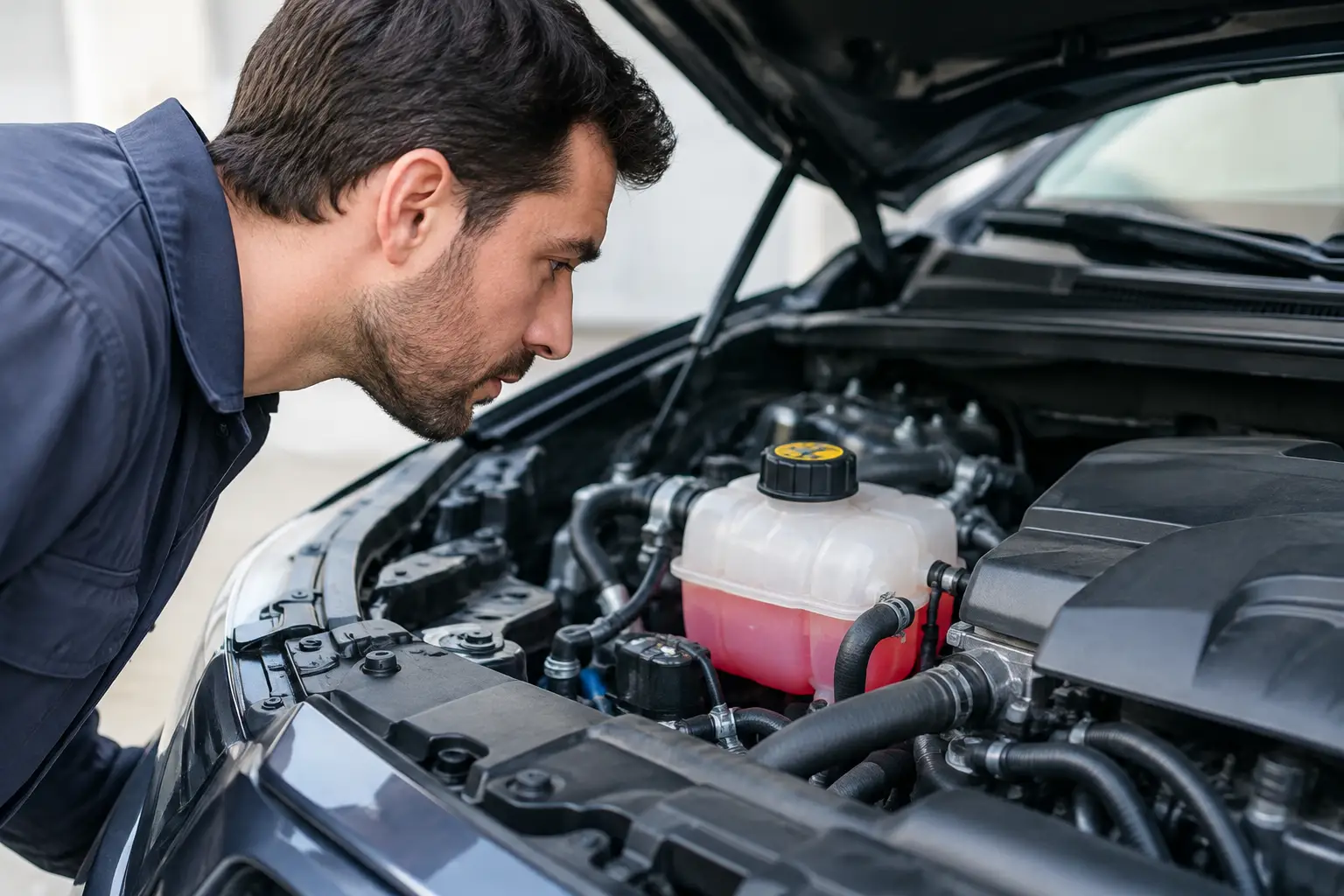
Once the engine is cold, open the bonnet and locate the coolant overflow reservoir. This is usually a translucent plastic tank with minimum and maximum level marks, often near the radiator. Check that the coolant sits between these marks. A level below minimum does not always prove there is a leak, but if you have topped it up recently and it has fallen again, it needs attention.
Use the coolant type specified for your vehicle. Mixing the wrong coolant can reduce corrosion protection and, in some cases, affect the cooling system’s performance. Plain water is only a very short-term emergency measure, not a proper fix.
How to Check Coolant Leaks Around Your Car
With the engine cold, begin with a careful visual inspection. You do not need to dismantle anything to find many common leaks. A torch, clean rag and a piece of cardboard are often enough to identify where to investigate further.
Look beneath the vehicle first. Coolant may leave a puddle or dried residue under the front of the car, but its location can be misleading because driving airflow can move fluid around. Coolant can be green, red, pink, blue, orange or yellow, depending on the product used. It often feels slightly slippery and may have a sweet smell. Do not touch it with bare hands, and keep pets away from any spill. Coolant is highly toxic to animals.
Place clean cardboard under the engine bay overnight if the leak is slow. In the morning, check for drips and note their position. This is useful information for a mechanic, especially when the leak does not appear while the car is parked during the day.
Next, inspect the visible hoses leading to and from the radiator. Check around hose clamps, joins and bends for wetness, crusty coloured deposits, cracks, swelling or soft rubber. Hoses naturally age over time, and a split may only open when the system is hot and under pressure. Do not squeeze or pull hard on old hoses, as that can make a weak one fail.
Check the radiator itself, particularly along the plastic side tanks, seams and lower corners. Road debris can damage radiator fins, while age and heat cycles can lead to cracks around the tanks. Green or white staining around the radiator often indicates coolant has been seeping out and drying there.
Also inspect the coolant reservoir and its cap. A cracked bottle, damaged cap seal or loose cap can allow coolant to escape or prevent the system from holding the correct pressure. A reservoir cap is inexpensive compared with an engine repair, but it should be replaced with the correct part rather than guessed at.
Look for Leaks That Do Not Leave a Puddle
Not every cooling system fault drips visibly onto the driveway. Some coolant leaks evaporate on hot engine parts, while others occur inside the engine or cabin.
After a short drive, with the bonnet closed and the car parked safely, you may notice a sweet coolant smell from the engine bay. Steam from under the bonnet, especially after stopping, is another warning sign. Do not continue driving if the temperature gauge is rising or you can see steam. Pull over safely, switch off the engine and allow it to cool.
Inside the cabin, a sweet smell through the vents, misting windows, damp front carpets or weak heater performance can indicate a leaking heater core or heater hose. This repair is not always visible from the engine bay and may require proper diagnosis.
Pay attention to the exhaust as well. Persistent thick white smoke after the engine is fully warm, unexplained coolant loss and rough running can point to an internal problem such as a head gasket failure. White vapour on a cold morning can be normal condensation, so the difference is whether it continues after the car has warmed up and is accompanied by coolant loss or overheating.
Check the Engine Oil and Temperature Behaviour
Pull out the engine oil dipstick when the engine is cool and parked on level ground. Normal oil ranges from honey-coloured to dark brown or black, depending on its age. Oil that looks creamy, milky or frothy can mean coolant has mixed with it. Check under the oil filler cap for a similar creamy residue.
This sign does not automatically confirm a major engine fault. Short trips can sometimes create light condensation under the cap. However, milky oil together with coolant loss, overheating or ongoing white exhaust smoke needs urgent mechanical attention. Continuing to drive can cause severe engine damage.
Watch the temperature gauge over several trips. Most cars settle around their normal operating temperature and remain steady. A gauge that fluctuates, rises in traffic, runs hotter with the air conditioning on, or suddenly heads towards hot may mean the cooling system is low on coolant or unable to maintain pressure. The cause could be a leak, but it could also be a thermostat, radiator fan, water pump or electrical issue. Diagnosis matters because topping up coolant will not fix every overheating problem.
When a Pressure Test Is the Right Next Step
A professional cooling-system pressure test is one of the most reliable ways to find a leak. The system is pressurised while the engine is cold, allowing a mechanic to spot coolant escaping from a hose, radiator, water pump, thermostat housing or other component. This can reveal leaks that only occur under pressure and never leave obvious puddles.
A mechanic may also use UV dye or inspect for combustion gases if an internal leak is suspected. These checks help avoid replacing parts based on guesswork. For example, a wet hose connection may need a clamp or hose, while coolant collecting near the water pump could indicate a failing pump seal. The repair approach depends on the source, the vehicle’s age and the condition of related components.
Do Not Ignore These Warning Signs
Stop driving and arrange assistance if your temperature warning light comes on, the gauge reaches the hot zone, steam comes from under the bonnet, or coolant is pouring out. Driving an overheating vehicle can warp the cylinder head, damage the head gasket and turn a manageable cooling repair into a costly engine job.
For a minor leak with no overheating, it may be possible to drive a short distance after checking and topping up with the correct coolant. Still, this is only a temporary measure. Check the level before each trip and book an inspection as soon as possible. Avoid long drives, towing, heavy loads and sitting in traffic until the cause is repaired.
Get the Leak Diagnosed Where Your Car Is
Cooling issues are inconvenient because they rarely happen at a convenient time. If your car is parked at home or work, Hazara Mobile Mechanic can inspect many coolant leaks on site across Wallan and Melbourne’s northern suburbs, helping you avoid the hassle of getting an overheating car to a workshop.
A small stain, a low coolant reservoir or an occasional sweet smell is your car asking for attention before it becomes a roadside problem. Checking it while the engine is cold and arranging a proper diagnosis early is the simplest way to protect your engine and keep your day moving.
Need a mobile mechanic?
Hazara Mobile Mechanic comes to you across Wallan and up to 70 km around. Open 7 days, 7am to 10pm, with emergency service 24/7. Call or text 0466 666 945, message us on WhatsApp or book online. See our services and the areas we cover.
