

A steering wheel that suddenly feels loose, heavy or unsettled can turn an ordinary drive through Wallan or Melbourne’s northern suburbs into something far more stressful. Steering rack repair symptoms are not always dramatic at first, but they should never be treated as a normal part of owning an older car. Your steering system is what keeps the vehicle responding accurately to your inputs, so changes in feel, noise or control deserve a prompt inspection.
The good news is that steering problems often give you warning signs before they become a major safety issue. Knowing what to look and listen for can help you arrange repairs early, avoid added damage and make a clearer decision about whether the vehicle is safe to drive.
Common steering rack repair symptoms
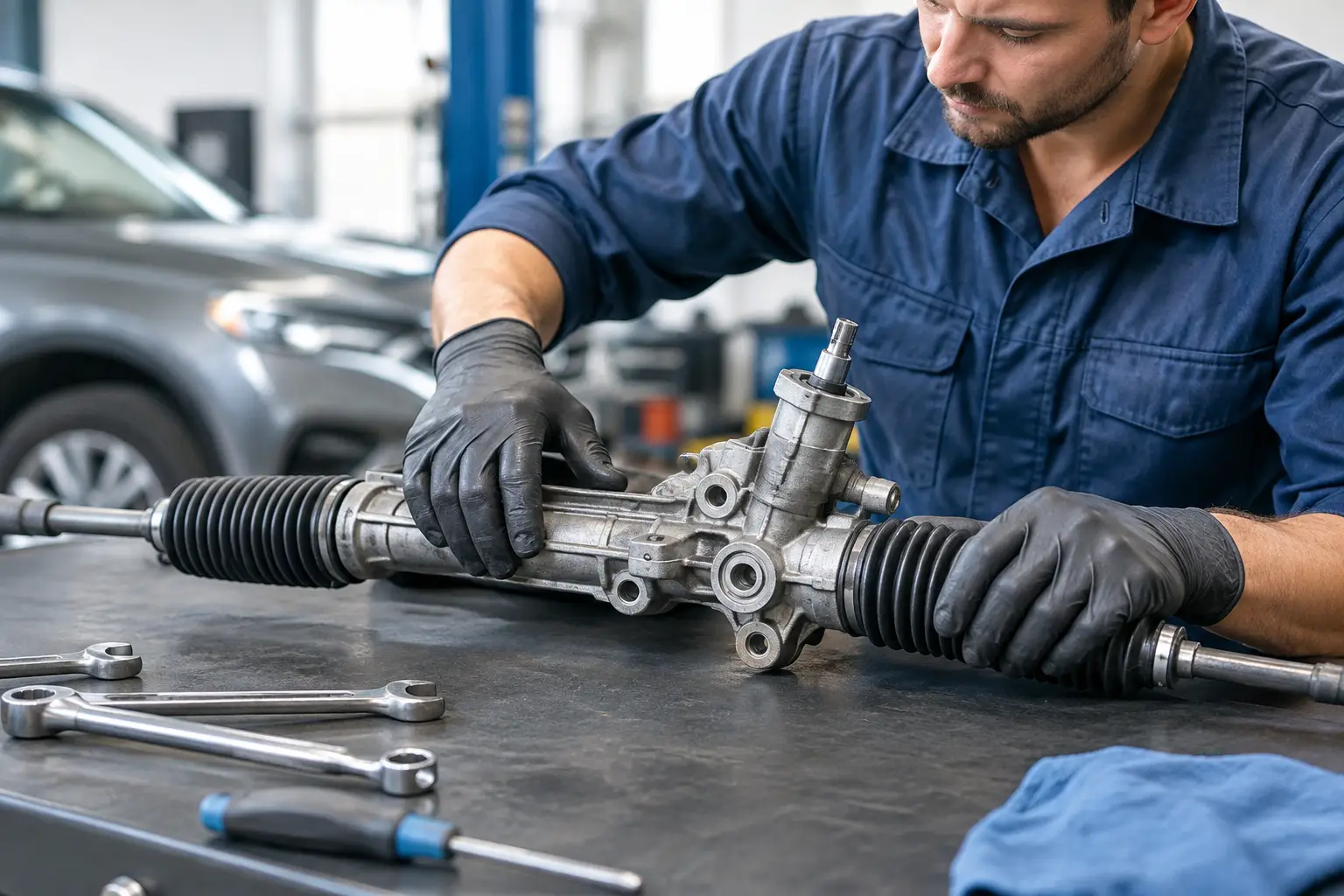
The steering rack converts the movement of your steering wheel into the side-to-side movement that turns the front wheels. It works alongside tie rods, steering joints, the power steering system and suspension components. Because these parts operate together, a symptom that feels like a failed steering rack can sometimes have another cause. Accurate diagnosis matters.
Loose or wandering steering
If you turn the wheel and the car does not respond straight away, or it needs regular small corrections to stay in its lane, there may be excessive play in the steering system. Drivers often describe this as a vague, loose or wandering feeling, particularly at highway speeds.
A worn steering rack can create this free play internally. However, worn tie-rod ends, ball joints, suspension bushes or incorrect wheel alignment can produce similar behaviour. Do not assume an alignment alone will fix it. If there is a worn component underneath, the alignment may not hold and the handling concern will remain.
Heavy steering or uneven assistance
Power steering should make low-speed manoeuvres, parking and turning into a driveway reasonably easy. If the steering becomes noticeably heavier than usual, especially when parking, the system needs attention. With hydraulic steering, low fluid, a leaking hose, a weak pump or an internal rack fault may be responsible.
Some vehicles have electric power steering rather than hydraulic fluid. In those cars, a heavy wheel may relate to an electrical fault, motor, sensor or steering column issue instead. This is why the vehicle model and type of steering system make a real difference to diagnosis.
Uneven assistance is another warning sign. The wheel may feel light in one part of the turn and heavy in another, or resist turning one way more than the other. That is not something to put off, even if the vehicle still drives.
Power steering fluid leaks
On vehicles with hydraulic power steering, fresh red, pink, amber or brown fluid underneath the front of the vehicle can point to a leak. Steering rack seals can wear over time, allowing fluid to escape into the rack boots or onto surrounding components. A low reservoir level, oily fluid around the rack or wet patches near the front wheels all warrant inspection.
Fluid colour alone is not a perfect diagnosis. Engine oil, transmission fluid and coolant can also leak in nearby areas. Checking the source properly prevents unnecessary repairs and identifies whether the leak is active.
Do not keep topping up power steering fluid and hope the problem goes away. Running low can damage the power steering pump, while a worsening leak can reduce steering assistance when you need it most.
Clunking, knocking or clicking while turning
A clunk through the steering wheel or front end when changing direction can be unsettling. It may be more noticeable while parking, going over a driveway lip or turning at low speed. Internal rack wear, loose rack mounting bushes or worn tie rods are possible causes.
Clicking noises on full lock are often linked to CV joints rather than the steering rack, particularly on front-wheel-drive cars. Knocking over bumps may also come from sway bar links, strut mounts or suspension bushes. The sound alone does not confirm the fault, but it is a useful clue for a mechanic during an inspection.
Steering wheel vibration or shudder
A steering wheel that shakes at certain speeds is commonly caused by wheel balance, tyre damage or wheel alignment. But shuddering while turning, especially at low speed, can indicate a power steering problem, rack issue or worn front-end component.
Pay attention to when it happens. Vibration at 90 to 100 km/h is different from a shudder when turning into a parking space. Noting the speed, road surface and steering position helps narrow down the cause and can save time during diagnosis.
A steering wheel that will not self-centre
After completing a normal turn, the steering wheel should naturally move back towards centre as the vehicle straightens. If it stays turned, feels sticky or needs help returning, there could be binding in the steering rack, column, suspension joints or steering linkage.
Poor wheel alignment can also affect self-centring, particularly if the caster angle is out of specification. This symptom should be checked soon because it can affect control and accelerate tyre wear.
When should you stop driving?
Some steering concerns can be booked in promptly while the car remains manageable for a short trip. Others call for roadside assistance or an urgent assessment. Avoid driving the vehicle if the steering is suddenly very heavy, there is major free play in the wheel, the car pulls sharply without warning, you hear severe grinding, or power steering fluid is pouring out.
You should also stop if the steering wheel movement does not match the direction of the front wheels, or if a clunk is followed by a clear loss of control. These are not issues to test on the road. Park safely, keep the wheels straight where possible and arrange help.
Even a less severe symptom should not be ignored for weeks. A small leak can become a failed pump, and minor play can lead to uneven tyre wear or additional damage in the steering linkage. Early repairs are usually less disruptive than dealing with a breakdown.
What a proper steering inspection involves
A reliable diagnosis starts with listening to the driver. Details such as whether the problem started after hitting a pothole, occurs only when cold, or gets worse on full lock are valuable. The mechanic will then inspect the steering rack, boots, tie rods, mounts, fluid condition, hoses and related suspension components.
The vehicle may need to be raised so movement in the wheels and steering linkage can be checked safely. On hydraulic systems, the power steering fluid level and signs of pressure leaks are assessed. A road test may also be required to confirm wandering, noise, vibration or uneven steering assistance.
If the rack is the confirmed issue, the repair could range from replacing a seal or related external component to fitting a replacement rack. The best option depends on the vehicle, the extent of internal damage, parts availability and whether a quality rebuilt or new unit is suitable. After steering work, a wheel alignment is often necessary to ensure the car tracks correctly and does not wear tyres prematurely.
Can steering rack repairs be done at home or work?
Many steering and suspension faults can be inspected and repaired on site, which is useful when you are busy with work, family or commuting. A mobile mechanic can assess the symptoms at your home or workplace and explain the likely cause before work begins.
That said, some steering rack replacements require specialised equipment, access beneath the vehicle or a follow-up wheel alignment that is best completed at a workshop. A straightforward assessment should be honest about what can be completed on site and what needs workshop support. Convenience matters, but correct and safe repairs matter more.
Hazara Mobile Mechanic provides practical on-site diagnostics and steering repairs across Wallan and Melbourne’s northern suburbs, helping take the hassle out of finding out what is wrong with your vehicle.
If your steering no longer feels predictable, trust that instinct. Arrange an inspection before the next long commute or weekend trip, and give yourself the confidence that every turn of the wheel is being properly answered.
Need a mobile mechanic?
Hazara Mobile Mechanic comes to you across Wallan and up to 70 km around. Open 7 days, 7am to 10pm, with emergency service 24/7. Call or text 0466 666 945, message us on WhatsApp or book online. See our services and the areas we cover.

Comments are closed