

A transmission problem can turn an ordinary drive into a stressful one fast. If your car is slipping between gears, shuddering at low speed, refusing to select a gear or showing a warning light, the question is often transmission repair or rebuild. The right answer depends on what has failed, how far the damage has progressed and whether repairing the vehicle makes financial sense.
For drivers in Wallan and Melbourne’s northern suburbs, the goal is usually straightforward: get a clear diagnosis, understand the options and avoid paying for work that the vehicle does not need. A good mechanic should explain the fault in plain language before recommending the next step.
Transmission Repair or Rebuild: What Is the Difference?
A transmission repair is targeted work on a specific fault. This may involve replacing a leaking seal, worn solenoid, damaged sensor, valve body component, clutch cable, mount or another accessible part causing the issue. In some cases, a fluid and filter service can help where old or contaminated transmission fluid is contributing to poor shifting.
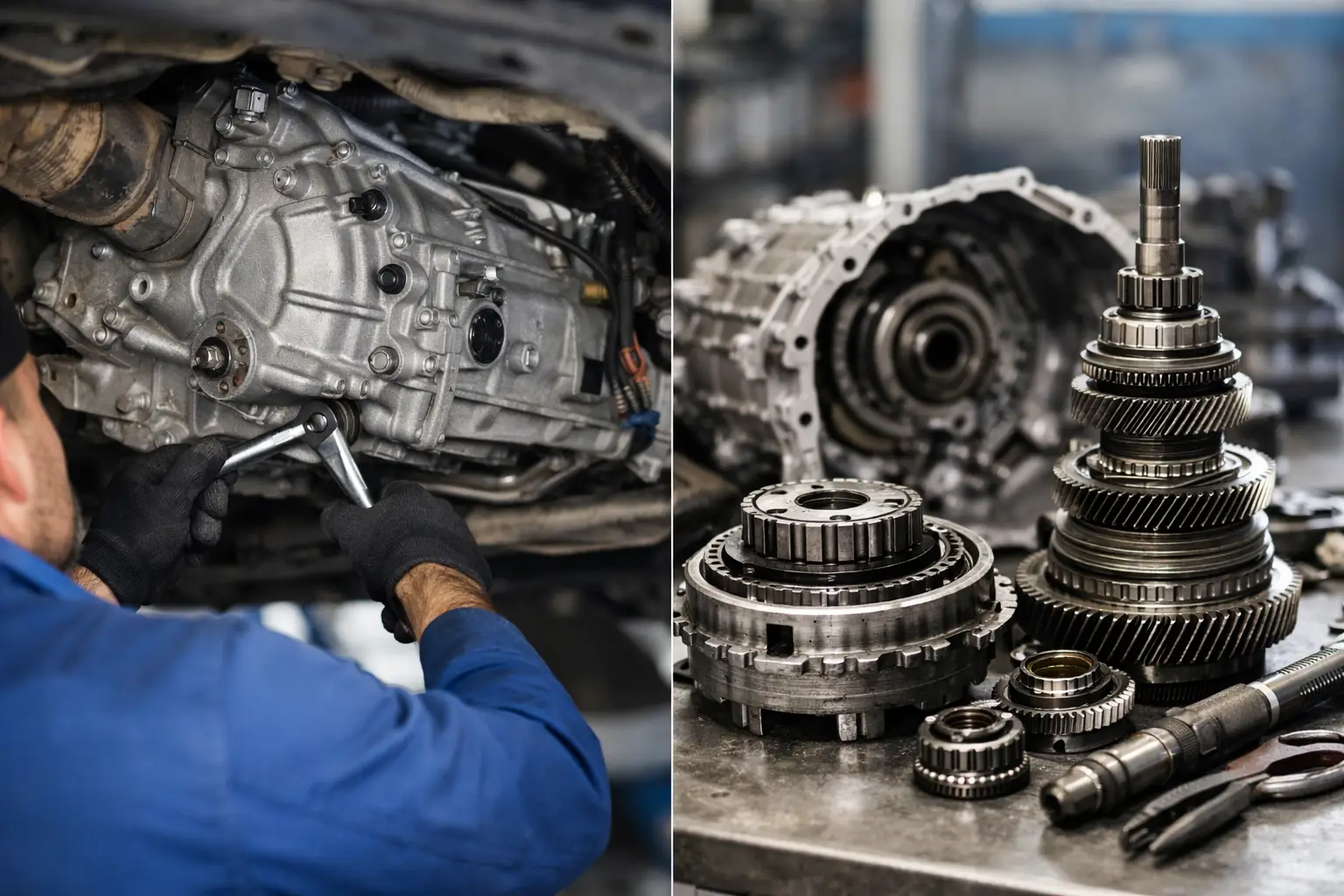
A rebuild is more extensive. The transmission is removed, dismantled and inspected internally. Worn or damaged components such as clutch packs, bearings, seals, bands and gears are replaced or reconditioned as needed, then the unit is reassembled and tested. It is a major job because much of the transmission is being renewed, not simply one faulty item.
Neither option is automatically better. A repair can be the sensible and affordable solution when the fault is isolated early. A rebuild may be the safer long-term option when internal wear or damage is widespread. Replacing the entire transmission with a reconditioned or used unit can also be considered in some situations, particularly where parts availability, vehicle age and budget affect the decision.
Signs Your Transmission Needs Attention
Transmission faults rarely improve by themselves. Catching a problem early can sometimes prevent a smaller repair from becoming a rebuild. Pay attention if you notice delayed engagement when shifting from park into drive or reverse, slipping or flaring revs between gears, harsh changes, shuddering, whining noises, a burning smell, fluid leaks beneath the vehicle, or a transmission or engine warning light.
Manual vehicles can show different symptoms. Difficulty selecting gears, a clutch pedal that feels unusual, grinding while changing gear or a vehicle that creeps despite the clutch being pressed may point to a clutch, hydraulic or gearbox issue rather than a complete transmission failure.
These symptoms can overlap with engine, electrical, driveline and differential faults. That is why guessing from one symptom alone is risky. For example, a shudder may come from transmission fluid, but it can also be related to engine misfires, worn mounts or other mechanical issues. Proper diagnosis comes first.
Don’t keep driving through severe symptoms
If the vehicle will not engage a gear, loses drive, makes loud mechanical noises or leaks a significant amount of red, brown or dark fluid, it is best not to keep driving it. Continuing to drive with low fluid or internal damage can spread debris through the transmission and increase the repair bill. Arranging roadside help or an inspection is usually the smarter move.
When a Repair Is Usually the Better Choice
A targeted repair makes sense when testing identifies one clear cause and the internal condition of the transmission is otherwise sound. An electrical fault, a failed sensor, a solenoid issue, a minor leak or a valve body problem can often be repaired without fully rebuilding the unit.
Service history matters here. A transmission that has been maintained, has clean fluid and began showing symptoms recently may have a better chance of responding well to a specific repair. The vehicle’s overall condition also matters. If the engine, cooling system and driveline are in good shape, investing in a repair may give you plenty of reliable kilometres.
A repair is not simply the cheapest option. It should be the option supported by the diagnosis. Replacing one part without checking why it failed can lead to repeat issues, especially if overheating, incorrect fluid, wiring damage or a cooling problem has contributed to the fault.
When a Rebuild May Be Worth It
A rebuild is generally recommended when there is broad internal wear, metal contamination in the fluid, repeated slipping, damaged clutch packs or failed hard parts inside the transmission. It may also be appropriate when a transmission has been driven for too long with a serious fault and the damage is no longer limited to one component.
The upfront cost is higher because the work is labour-intensive and requires specialist inspection and assembly. However, a properly rebuilt transmission can offer better confidence than repeatedly repairing individual internal problems. It is often the more practical choice for a vehicle you intend to keep, particularly if the rest of the car is well maintained.
That said, a rebuild is not always the right financial decision. On an older car with high kilometres, several other major issues and a low market value, owners may choose a different option. A used transmission can cost less initially, but its history and remaining life may be unknown. A reconditioned replacement may offer a middle ground, depending on availability and warranty terms.
What Affects the Cost?
There is no useful one-price answer for transmission work. The make and model of the vehicle, type of transmission, accessibility, parts required and extent of damage all affect the cost. Modern automatic and dual-clutch transmissions often rely heavily on electronics and specialised components, while some older units may have more straightforward mechanical faults.
Labour is another major factor. A simple external repair or diagnostic procedure may be completed far more quickly than removing and stripping a transmission. If the transmission must be removed, costs can rise because related components, fluid, seals and other items may also need attention while access is available.
The best way to avoid surprises is to ask what the diagnosis has found, what work is included, whether there are likely additional costs and what warranty applies to the parts and labour. Clear communication matters as much as the quote itself.
How a Proper Diagnosis Saves Money
Before recommending major transmission work, a mechanic should assess the vehicle’s symptoms, scan for fault codes where relevant, inspect fluid condition and leaks, and check related electrical and mechanical systems. A road test may also be needed when it is safe to do so.
For many faults, initial inspection and diagnosis can be carried out at your home or workplace. Hazara Mobile Mechanic can help assess transmission-related concerns on site, explain the likely cause and advise on the most practical repair path. Where a full internal rebuild requires specialist workshop equipment, you should be told clearly rather than promised a quick fix that cannot be completed properly.
This approach saves time and helps you make a decision based on evidence. It also gives you the chance to weigh the repair against the vehicle’s age, condition and your plans for keeping it.
Looking After Your Transmission After Repairs
Once the fault is fixed, ongoing care can make a real difference. Use the correct transmission fluid for your vehicle, follow the manufacturer’s service recommendations and deal with leaks promptly. Towing beyond the vehicle’s rated capacity, overheating and ignoring warning lights can place extra strain on the transmission.
If your vehicle has started shifting differently, do not wait for a total loss of drive before getting it checked. A timely inspection can provide a simpler answer, protect your car from further damage and get you back to your normal routine with less disruption.
Need a mobile mechanic?
Hazara Mobile Mechanic comes to you across Wallan and up to 70 km around. Open 7 days, 7am to 10pm, with emergency service 24/7. Call or text 0466 666 945, message us on WhatsApp or book online. See our services and the areas we cover.

Comments are closed