


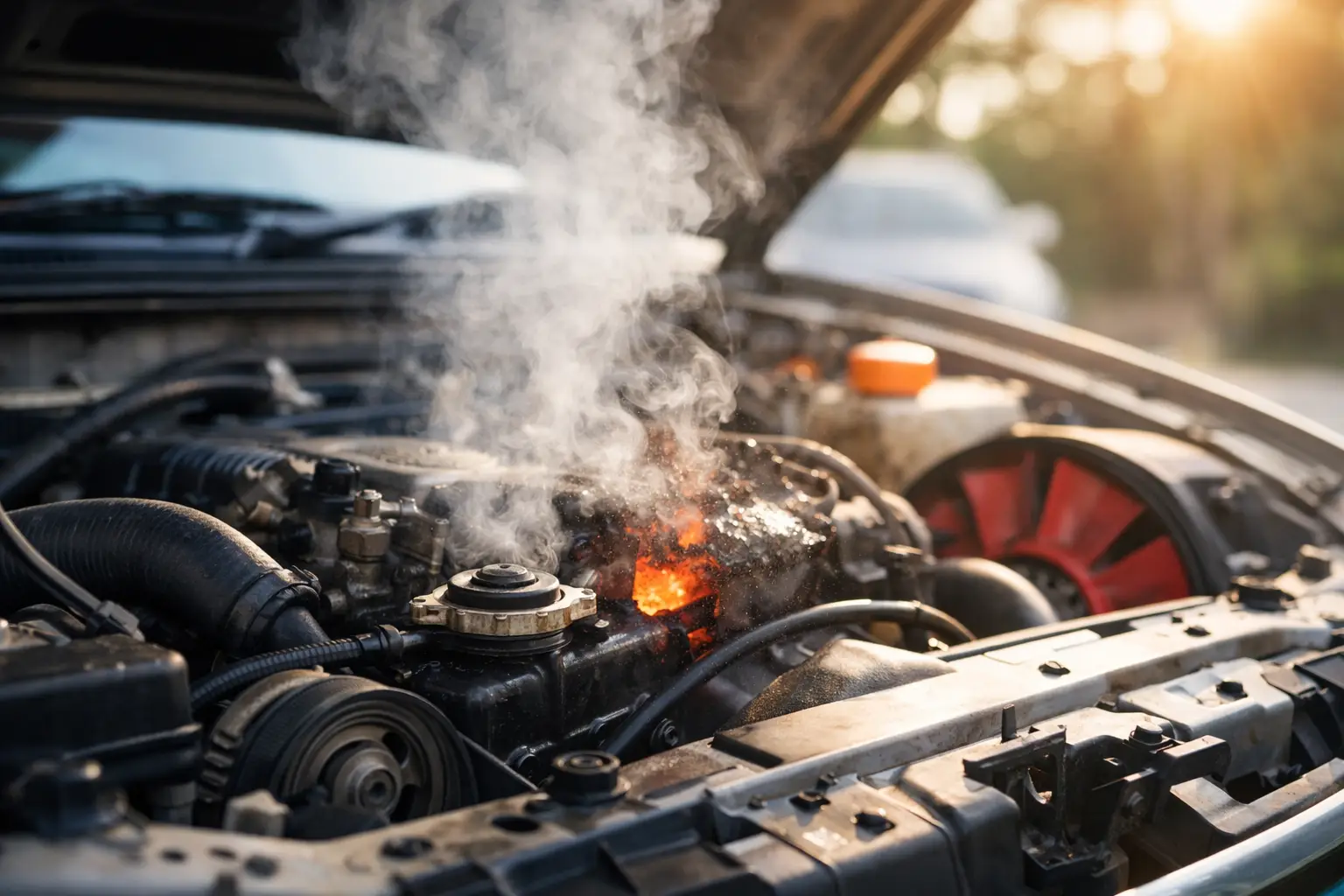
You are driving to work, picking up the kids, or heading home after a long day, and suddenly the temperature gauge climbs higher than normal. That is usually the first sign of one of the top causes engine overheating problems that can leave you stranded fast. An overheating engine is not just inconvenient – if you keep driving, it can turn a manageable repair into serious engine damage.
For most drivers, the challenge is not knowing what is happening under the bonnet or whether the car is safe to keep moving. The good news is that overheating usually comes down to a handful of common faults. Once you understand what causes it, you can act quickly, avoid bigger repair bills, and get the right help sooner.
Why engine overheating should never be ignored
Modern engines run hot by design, but they need a cooling system that can control that heat properly. When part of that system stops doing its job, temperatures rise quickly. If the engine gets too hot, it can damage the head gasket, warp the cylinder head, affect seals and hoses, and in severe cases lead to complete engine failure.
That is why overheating is not something to put off until next week. Even if the vehicle seems to cool down again, the underlying issue is still there. Sometimes the fault is minor, like low coolant. Other times it is a failed water pump or a blocked radiator. Either way, the earlier it is diagnosed, the better.
Top causes of engine overheating in everyday vehicles
Low coolant levels
Low coolant is one of the most common reasons an engine overheats. Coolant circulates through the engine and radiator to remove heat. If the level drops too far, the system cannot carry heat away effectively.
Coolant does not usually disappear on its own. Low levels often point to a leak somewhere in the system, such as a split hose, radiator issue, leaking water pump, or even an internal engine problem. Topping it up may help temporarily, but it does not solve the cause. If you need to add coolant more than once, the car needs attention.
Coolant leaks
A leak can start small and become a much bigger problem over time. You might notice coolant under the car, a sweet smell after driving, or the level in the reservoir dropping regularly. Some leaks are obvious, while others only appear when the engine is hot and the system is under pressure.
Leaks commonly come from cracked hoses, loose clamps, a worn radiator, a faulty expansion tank, or damaged seals. The tricky part is that even a slow leak can eventually cause major overheating, especially in stop-start traffic or on warmer days.
Faulty thermostat
The thermostat controls coolant flow through the engine. When the engine is cold, it stays closed to help the engine warm up. Once the engine reaches operating temperature, it opens to let coolant circulate properly.
If the thermostat sticks closed, coolant cannot move through the system as it should, and the engine overheats quickly. This can happen with little warning. Sometimes the gauge climbs rapidly within minutes of driving. In other cases, the temperature may fluctuate before the problem becomes more obvious.
Failed water pump
The water pump is responsible for moving coolant through the engine and radiator. If it fails, the whole cooling process is compromised. A worn or damaged water pump can cause overheating, coolant leaks, unusual noises, or poor circulation.
This is one of those faults that can go from manageable to urgent very quickly. In some vehicles, water pump wear develops gradually. In others, failure can be more sudden. If overheating is paired with coolant loss or a whining noise from the engine bay, the water pump is worth checking.
Blocked or damaged radiator
The radiator releases heat from the coolant. If it is blocked internally by old coolant deposits or contaminated fluid, it cannot cool efficiently. If it is blocked externally by dirt, debris, or bent fins, airflow is reduced and heat builds up.
A damaged radiator can also leak or restrict coolant movement. This is common in older vehicles or cars that have missed regular servicing. Radiator problems often show up more clearly in heavy traffic, where airflow is already reduced.
Cooling fan problems
When you are driving at speed, air naturally moves through the radiator. But in traffic, at idle, or when parked with the engine running, the cooling fan becomes essential. If the fan motor, relay, fuse, sensor, or control module fails, the radiator may not get enough airflow.
This often creates a pattern where the car runs hotter in slow traffic but seems more stable on open roads. Many drivers notice the gauge climbing while waiting at lights or sitting in a queue, then dropping again once the vehicle gets moving.
Blown head gasket
A blown head gasket is one of the more serious top causes of engine overheating. It can allow coolant to leak internally, combustion gases to enter the cooling system, or oil and coolant to mix. Once that happens, the cooling system struggles to control temperature properly.
Signs can include repeated overheating, white smoke from the exhaust, milky residue in the oil, pressure building in the cooling system, or unexplained coolant loss. Not every overheating issue means a head gasket problem, but when this fault is present, delaying repairs usually makes things worse.
Collapsed or worn hoses
Cooling system hoses carry coolant between key components. Over time, they can become brittle, soft, swollen, or cracked. A hose may leak, collapse under pressure, or restrict coolant flow enough to create overheating issues.
This is a good example of why regular inspections matter. Hoses are not the most expensive part of the cooling system, but if one fails at the wrong time, the result can be a breakdown on the side of the road.
Warning signs before the engine overheats completely
Sometimes overheating arrives without much warning, but often there are earlier signs drivers notice first. The temperature gauge sitting higher than usual is an obvious one. You might also see steam from under the bonnet, smell coolant, notice the heater blowing cold air, or spot coolant on the ground where the car has been parked.
Another sign is needing to top up coolant more often than normal. That is not routine maintenance if it keeps happening. It is usually a signal that something in the system is leaking, failing, or not circulating properly.
If the engine warning light appears along with temperature issues, it is best to stop treating it as a maybe and get the vehicle checked properly.
What to do if your engine starts overheating
The first priority is to reduce the risk of engine damage. If it is safe, pull over and switch the engine off. Do not keep driving in the hope that it will settle down. A short trip with an overheating engine can do far more damage than most drivers expect.
Do not open the radiator cap while the engine is hot. The cooling system is pressurised, and hot coolant can cause serious burns. Let the vehicle cool down fully before anyone inspects it.
If you are stuck at home, at work, or roadside in Melbourne’s northern suburbs, this is the kind of problem where a mobile mechanic makes life much easier. Instead of risking further damage by driving to a workshop, you can have the issue diagnosed where the car already is.
Why overheating is not always a simple fix
Some overheating faults are straightforward. A split hose or faulty thermostat can often be identified fairly quickly. But overheating can also be a symptom rather than the root cause.
For example, low coolant may be caused by a radiator leak, water pump failure, or head gasket issue. A fan not running could be a failed fan motor, but it could also be an electrical problem, a sensor fault, or a relay issue. That is why guessing rarely saves money. Accurate diagnosis matters.
At Hazara Mobile Mechanic, this is the kind of issue we see regularly – a driver notices the gauge rising, assumes it just needs coolant, and then finds out there is a deeper fault in the system. The right repair starts with finding the actual cause, not just treating the symptom.
How to reduce the risk of overheating
The best prevention is regular servicing and paying attention to small changes before they become major ones. Cooling systems do not usually fail all at once without some warning. Old coolant, worn hoses, minor leaks, and weak components often leave clues first.
If your vehicle is due for a service, has been losing coolant, or has shown any temperature changes, it is worth having it inspected sooner rather than later. This is especially true before longer drives, during hotter weather, or if the vehicle has higher kilometres on it.
A reliable car should not leave you wondering whether you will make it through traffic without the gauge creeping up. If something feels off, it usually is. Acting early gives you more repair options, less stress, and a better chance of avoiding major engine damage.
Need a mobile mechanic?
Hazara Mobile Mechanic comes to you across Wallan and up to 70 km around. Open 7 days, 7am to 10pm, with emergency service 24/7. Call or text 0466 666 945, message us on WhatsApp or book online. See our services and the areas we cover.

Comments are closed