


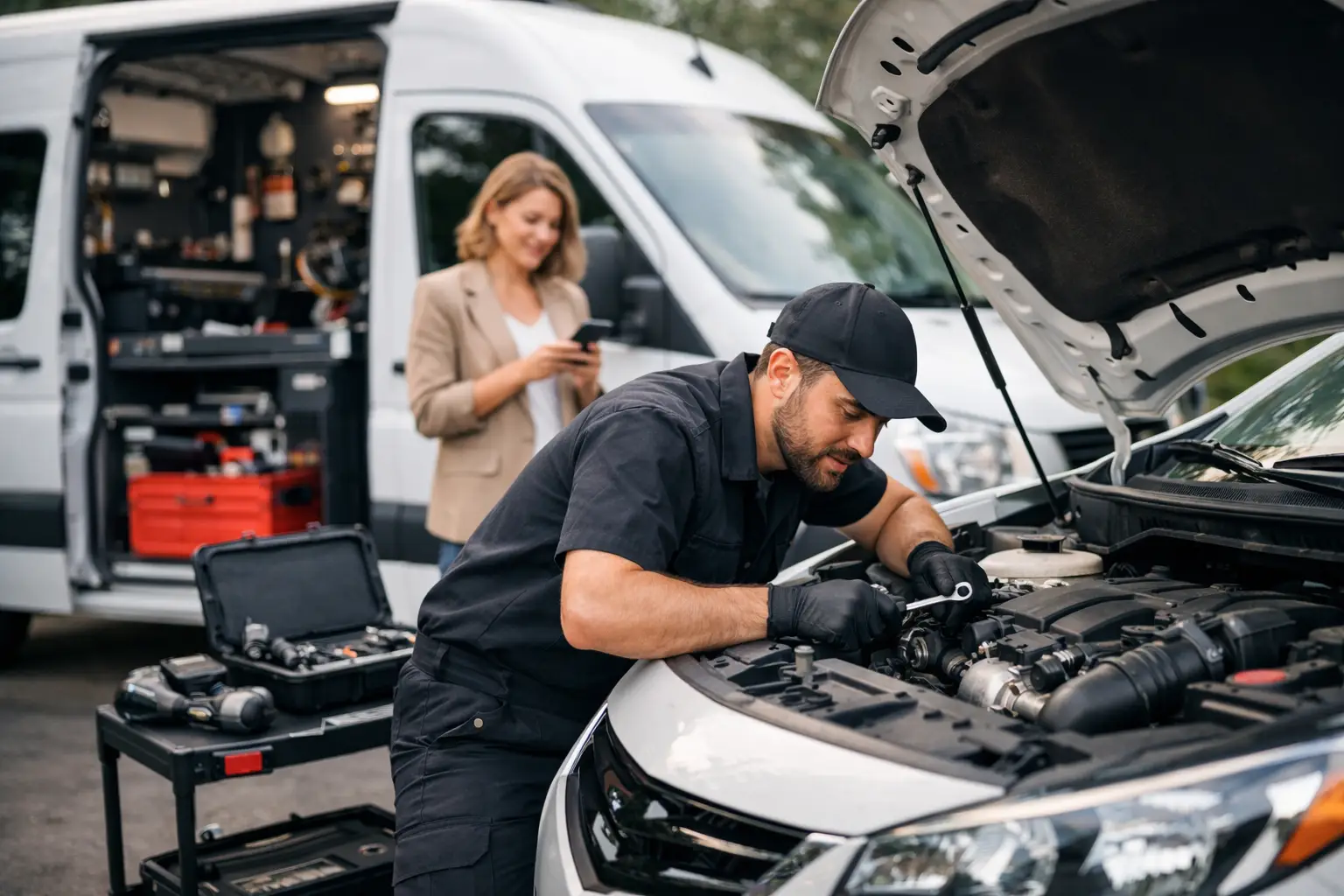
When your car needs attention, the hardest part is often not the repair itself – it’s finding the time to get to a workshop, wait around, and reshuffle your day. That’s exactly why more drivers want to know how mobile mechanics work. The short answer is simple: a qualified mechanic comes to your home, workplace, or roadside location with the tools, parts access, and diagnostic equipment needed to inspect, service, and repair your vehicle on-site.
For busy families, commuters, and anyone trying to keep life moving in Wallan and Melbourne’s northern suburbs, that convenience matters. But mobile mechanical work is not just about showing up in a van. It’s a professional service model designed to handle a wide range of vehicle issues efficiently, without asking you to lose half a day at a workshop.
How mobile mechanics work in practice
A mobile mechanic service usually starts with a booking, an enquiry, or an urgent roadside call. You describe the issue as best you can – maybe the car won’t start, the brakes are making noise, the battery keeps going flat, or it’s simply due for a service. Based on that information, the mechanic brings the likely tools and prepares for the job before arriving.
Once on-site, the first step is assessment. That might mean a visual inspection, a scan with diagnostic equipment, a battery and charging test, or checking fluid levels, belts, hoses, brakes, suspension components, or electrical systems. If the issue is straightforward, the repair may be completed there and then. If more parts are needed, the mechanic can often confirm the fault on-site, source the right components, and return promptly to finish the work.
This is where mobile servicing differs from the old assumption that a mechanic needs a workshop for everything. Many jobs do not require a hoist or a full garage setup. Routine servicing, battery replacement, brake work, diagnostics, cooling system repairs, auto electrical fault finding, pre-purchase inspections, and plenty of other tasks can often be done wherever the car is parked, provided the location is safe and accessible.
What a mobile mechanic can usually do on-site
Most people are surprised by how much can be handled outside a traditional workshop. Regular servicing is one of the most common callouts. Oil and filter changes, logbook servicing, fluid top-ups, checks on wear items, and general maintenance can all be done at your home or while you’re at work.
Repairs are also a big part of the job. Batteries, brakes, starter motor issues, alternator faults, some suspension and steering work, cooling problems, minor electrical repairs, and a range of engine-related issues can often be diagnosed and repaired on-site. If your car has broken down and won’t start, a mobile mechanic may be able to get it going without the need for a tow.
Then there are inspection services, which are especially useful when you are buying a used car. Having a mechanic come to the seller’s location for a pre-purchase inspection can save you from taking on expensive problems later. It also makes the process easier if the vehicle is not close to a workshop.
That said, there are limits. Some major repairs still need a workshop environment. If a job requires extensive dismantling, specialist heavy equipment, a hoist, machining, or a controlled workshop setup, a mobile mechanic will usually tell you clearly. Good service is not about pretending every problem can be fixed on the spot. It’s about solving what can be solved on-site and being upfront when something needs another approach.
Why people choose mobile mechanics
The biggest reason is time. Taking a car to a workshop can mean arranging lifts, waiting for updates, juggling school drop-offs, or losing work hours. A mobile mechanic removes much of that disruption. Your car can be serviced in the driveway while you work from home, or at your workplace while your day continues.
There’s also a comfort factor. Many customers prefer seeing the mechanic with the vehicle in front of them, hearing what’s been found, and asking questions directly. It can make the process feel more transparent. You’re not left wondering what’s happening behind a workshop door.
Cost can be another advantage, depending on the job. Mobile services often reduce the hidden costs around a repair – towing, time off work, extra travel, and the general inconvenience that comes with workshop visits. That doesn’t mean every mobile repair is automatically cheaper, because labour, parts, and the nature of the fault still matter. But for many everyday jobs, the overall value is strong because the service fits around your life instead of interrupting it.
How pricing and quotes usually work
One of the common questions around how mobile mechanics work is whether the pricing is different from a workshop. The answer depends on the service. Some jobs are straightforward and can be quoted in advance, such as battery replacement, brake pad changes, scheduled servicing, or inspections. Others need diagnosis first.
A reliable mobile mechanic will usually explain whether you’re receiving a callout fee, a diagnostic fee, a fixed service price, or a repair estimate based on expected labour and parts. Transparency matters here. Car repairs are stressful enough without vague pricing.
It’s also worth understanding that on-site work can involve variables. If a problem turns out to be more complex than first described, the quote may need to be updated once the fault has been confirmed. That is normal, and honest communication is what counts. A good mechanic won’t push ahead with extra work without discussing it with you.
What to expect on the day
If you’ve never booked a mobile mechanic before, the process is usually very straightforward. The mechanic arrives with tools, test equipment, and commonly needed supplies. You’ll need to provide safe access to the vehicle and enough room to work around it. For some repairs, a flat surface is important. If the car is at your workplace, access arrangements may need to be confirmed in advance.
In many cases, you don’t need to hover nearby the whole time. You can often carry on with your day and be updated as needed. If the job includes diagnosis, the mechanic may talk you through what they’ve found, what needs urgent attention, and what can wait. That helps you make practical decisions rather than feeling pressured.
This is one of the biggest benefits of mobile mechanical service done properly. It should feel efficient, clear, and respectful of your time.
When mobile mechanics are the better option
Mobile mechanics make the most sense when the vehicle issue is stopping you from getting to a workshop, when your schedule is tight, or when the repair is well suited to on-site work. They are especially useful for flat batteries, no-start issues, routine servicing, brake concerns, used car inspections, and many mechanical faults that can be assessed where the car sits.
They are also a strong option if you have more than one vehicle at home or want to minimise disruption for a family member who relies on the car daily. For businesses with work vehicles, mobile servicing can reduce downtime in a very practical way.
There are times when a workshop will still be the better fit. If the repair is large, highly specialised, or likely to involve significant underbody access and major component removal, a workshop may be necessary. The right mechanic will tell you that early, rather than waste your time.
Choosing a mobile mechanic you can trust
Not all mobile services are equal, so it pays to look for a mechanic who is clear, responsive, and experienced across a broad range of repairs. Communication is often the first sign. If someone takes the time to understand the problem, explains what they can do on-site, and gives realistic expectations, that’s usually a good start.
It also helps to choose a local operator who understands the area and can respond promptly when you need support. For drivers in Wallan and the northern suburbs, that local knowledge can make booking easier and turnaround faster. Hazara Mobile Mechanic is built around that kind of practical support – bringing dependable repairs and servicing to customers who want the job done properly without the runaround.
At its best, mobile mechanical service is simple. You book the job, the mechanic comes to you, the problem is diagnosed properly, and the repair or service is completed with as little disruption as possible. For most drivers, that is not just convenient. It’s a smarter way to look after a car when time is tight and reliability matters.
If your vehicle needs attention, the best next step is often the easiest one – get the mechanic to come to you and let your day keep moving.
Need a mobile mechanic?
Hazara Mobile Mechanic comes to you across Wallan and up to 70 km around. Open 7 days, 7am to 10pm, with emergency service 24/7. Call or text 0466 666 945, message us on WhatsApp or book online. See our services and the areas we cover.

Comments are closed