


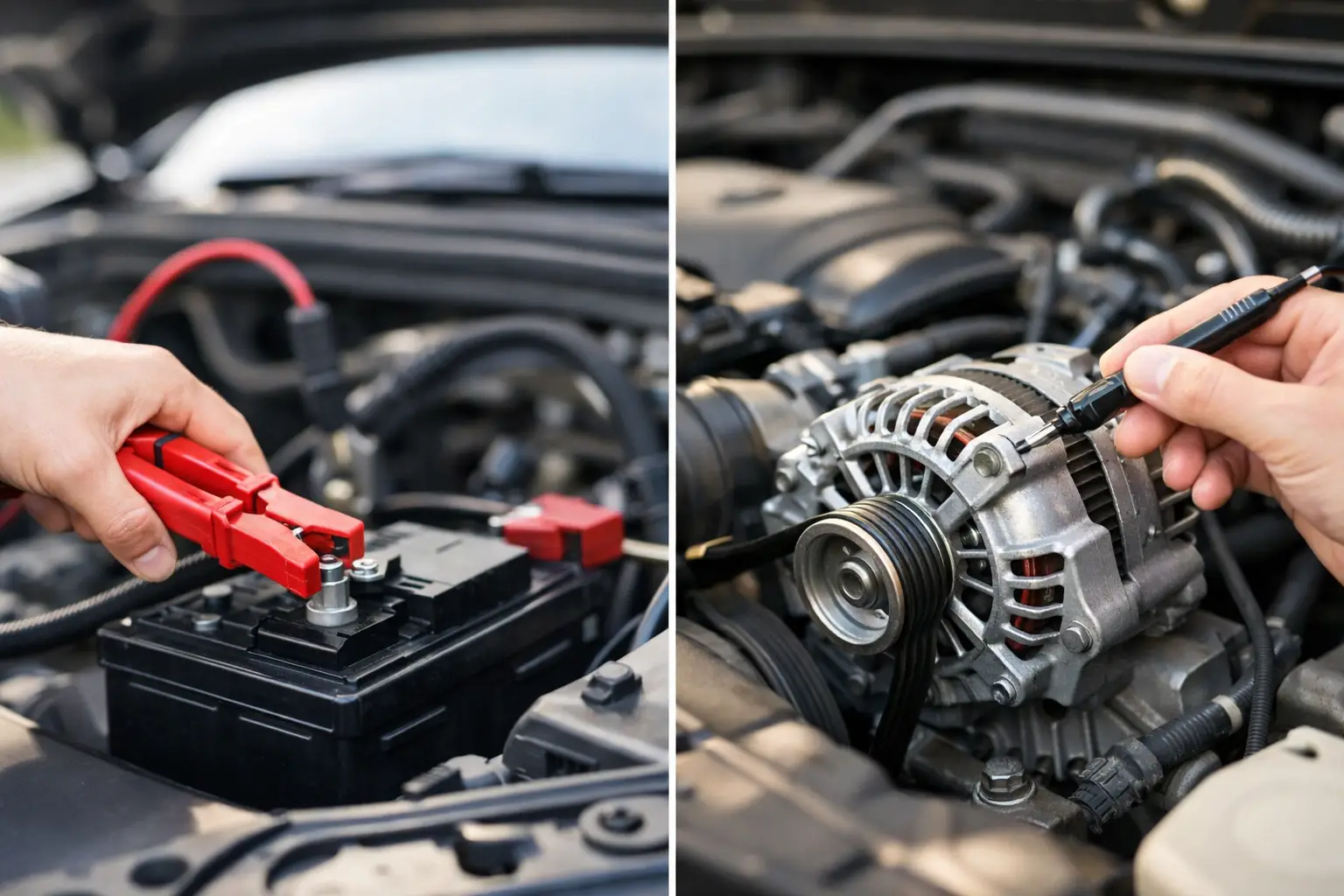
You turn the key or press the start button, and instead of the engine firing up, you get a click, a slow crank, or nothing at all. When people search car won’t start battery or alternator, they are usually trying to work out one urgent thing – can this be fixed quickly, or are they stuck where they are?
The good news is that a flat battery and a faulty alternator often leave different clues. The tricky part is that they can overlap. A worn battery can fail on its own, but an alternator can also stop charging properly and leave you with a battery that appears to be the problem. If you know what to look for, you can narrow it down before you arrange help.
Car won’t start battery or alternator – how to tell the difference
A battery’s job is to provide the power needed to start the engine. The alternator’s job is to recharge the battery and run electrical systems once the engine is going. If the battery is weak, the car may struggle to crank or not crank at all. If the alternator is failing, the car may start one day and then suddenly go flat again soon after, even if the battery was charged.
A battery issue is more likely if the car has been slow to start over a few days, especially on cold mornings, after short trips, or if the vehicle has been sitting unused. You might notice dim interior lights, a weak crank, or rapid clicking when you try to start it. In many cases, jump-starting gets the car going.
An alternator issue is more likely if the battery keeps going flat, the battery warning light appears on the dash, or electrical systems start behaving oddly while driving. Headlights may dim, the radio may cut in and out, power windows may slow down, or the engine may stall once the battery charge drops too low. If the car starts with a jump but dies again not long after, the alternator moves higher up the suspect list.
What the symptoms usually mean
If you hear a single click and nothing else, that can point to a flat battery, poor battery terminals, or a starter motor issue. If the engine cranks very slowly, the battery is often weak, but high resistance at the terminals or an ageing starter can create similar symptoms.
If there is no sound at all, it could still be the battery, but it may also be an electrical fault, blown fuse, gear selector issue, or immobiliser problem. That is where a quick assumption can cost you time. Not every no-start problem is battery or alternator related.
If the engine starts after a jump-start and then runs normally for a while, many drivers assume the battery was the only issue. Sometimes that is true. Sometimes the battery was only flat because the alternator is not charging it properly. The difference usually shows up when the car is switched off and struggles again, or when charging voltage is tested properly.
Simple checks you can do safely
Before you replace anything, there are a few straightforward things worth checking. Start with the battery terminals. If they are loose, corroded, or covered in white or green residue, the battery may not be delivering power properly even if it still has some charge.
Next, turn on the headlights before you try to start the car. If they are very dim or go nearly dead when you crank the engine, the battery is likely low. If they seem bright but the car still will not crank, the fault may be elsewhere.
Look at the dash as well. If the battery warning light came on while driving before the car stopped starting, that is a strong sign the charging system needs attention. Also listen for how the car behaved in the days leading up to the failure. Repeated jump-starts, flickering lights, or electrical glitches often point beyond the battery itself.
If you have a multimeter and know how to use it, battery voltage can help. Around 12.6 volts with the engine off usually indicates a fully charged battery. Anything much lower suggests the battery is discharged. With the engine running, most vehicles should show roughly 13.7 to 14.7 volts if the alternator is charging correctly. Voltage outside that range can indicate a charging fault. That said, voltage tests do not always tell the full story. A battery can show decent voltage and still fail under load.
When the battery is the real problem
Car batteries wear out over time. Heat, short trips, long periods without driving, and age all shorten battery life. In many vehicles, three to five years is a typical range, though some last longer and some do not.
If your battery is older, the car has been slower to start lately, and a jump-start solves the problem without any further warning lights or charging issues, a battery replacement may be all that is needed. This is often the simplest outcome.
Still, it is worth checking why the battery went flat. Leaving an interior light on is one thing. A parasitic drain, poor cable connection, or weak charging system is another. Replacing the battery without checking the cause can leave you with the same problem again next week.
When the alternator is more likely to blame
Alternators usually fail gradually, not instantly. You may notice the battery light on the dash, headlights that dim at idle, or accessories losing strength while the engine is running. In some cases, there may be a burning smell, unusual whining, or a squeal from the belt area.
If the alternator is not charging, the car will keep running only until the battery is drained. That means a vehicle can seem fine at first, then stall in traffic, refuse to restart at the shops, or die in the driveway after making it home. This is why alternator faults often catch people out.
A failed alternator can also damage a battery over time. If the battery has been repeatedly discharged because the alternator was weak, you may end up needing both repaired and replaced. That is why proper diagnosis matters more than guessing.
Why jump-starting is not always the answer
A jump-start is useful if the battery is flat, but it is not a repair. If the battery is badly worn, it may not hold charge once the engine is turned off. If the alternator is faulty, the battery may not recharge at all. And if the issue is something else, like the starter motor or a wiring fault, jumping the car may do nothing.
There is also a safety side to this. Incorrect jump-starting can damage electrical systems, especially in newer vehicles with sensitive electronics. If you are not confident, it is better to have the fault tested properly where the car is parked.
Car won’t start battery or alternator – when to call a mobile mechanic
If you are at home, at work, or stranded in a car park, a mobile mechanic can often save you the trouble of organising a tow just to find out what is wrong. Instead of replacing a battery on a guess or hoping a jump-start gets you through the day, onsite diagnosis can confirm whether the fault is the battery, alternator, starter, terminal connection, or another electrical issue.
That matters because the symptoms can look similar from the driver’s seat. A professional check usually includes battery condition, charging voltage, cable connections, and starting system performance. If the battery is the issue, it can often be replaced on the spot. If the alternator or another component is at fault, you get a clear answer and the next step without wasting time or money.
For drivers around Wallan and Melbourne’s northern suburbs, this is often the quickest way to get moving again. Hazara Mobile Mechanic works the way most people need help now – practical, prompt, and at your location.
Don’t ignore the warning signs
Cars rarely choose a convenient time to stop starting. If your engine has been cranking slowly, the battery light has appeared, or your lights have been dimming, it is worth acting before you end up stranded. What starts as a minor charging issue can become a breakdown in a supermarket car park or outside work when you least need the hassle.
A no-start fault is not always dramatic, but it is always disruptive. The sooner the cause is identified, the easier it is to avoid repeat problems, unnecessary part replacements, and lost time.
If your car will not start and you are weighing up battery or alternator, trust the symptoms – but trust proper testing more. A clear diagnosis beats guesswork every time, especially when the fix can come to you.
Need a mobile mechanic?
Hazara Mobile Mechanic comes to you across Wallan and up to 70 km around. Open 7 days, 7am to 10pm, with emergency service 24/7. Call or text 0466 666 945, message us on WhatsApp or book online. See our services and the areas we cover.

Comments are closed