


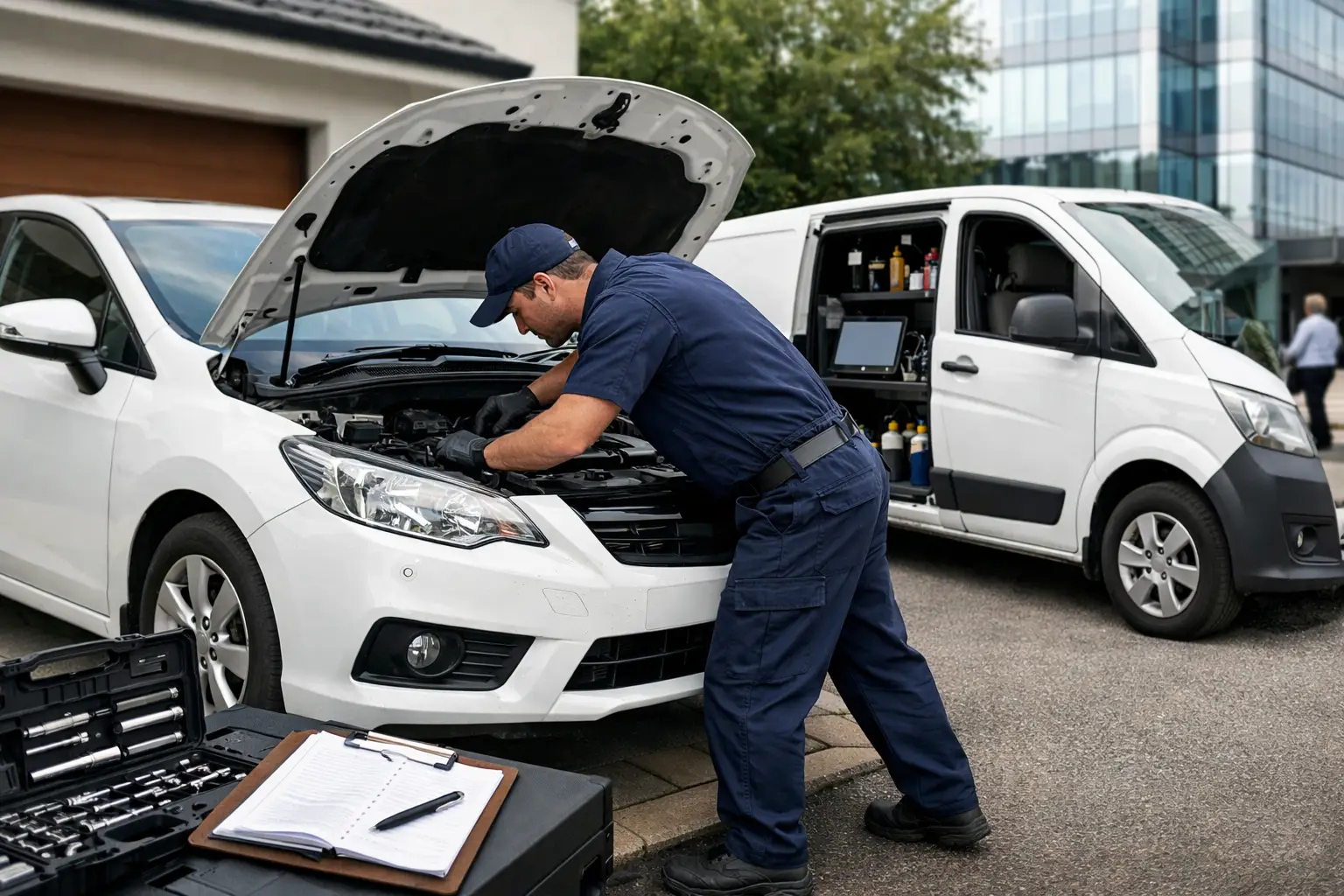
Missing a service because you cannot spare half a day at a workshop is more common than most drivers admit. A mobile logbook service solves that problem by bringing qualified servicing to your home or workplace, so your car gets the attention it needs without turning your schedule upside down.
For busy families, tradies, commuters and office workers, that convenience is not a small bonus. It is often the difference between staying on top of vehicle maintenance and putting it off until a warning light appears, the brakes feel rough, or a small issue becomes an expensive one. When the mechanic comes to you, regular servicing becomes easier to keep up with.
What a mobile logbook service actually means
A logbook service follows the manufacturer’s recommended service schedule for your vehicle. That schedule is based on time, kilometres travelled, or both, and it sets out what should be inspected, adjusted, replaced or tested at each interval.
A mobile logbook service means those scheduled checks and servicing tasks are completed at your location instead of in a traditional workshop. In many cases, that includes oil and filter changes, fluid checks, brake inspections, battery checks, tyre condition checks, suspension and steering inspections, and a review of the vehicle’s overall condition.
The key point is that convenience should not come at the cost of proper servicing. If the work is carried out correctly, with suitable parts, oils and processes, mobile servicing can be a practical option for many everyday vehicles.
Why local drivers are choosing mobile logbook service
Most people do not avoid servicing because they do not care about their car. They avoid it because fitting a workshop visit into a normal week is hard. You may need to rearrange work, sort school drop-off, wait around in a reception area, or organise a lift while the car is off the road.
That is where a mobile logbook service makes sense. Your car can be serviced while you are at home, working from home, or parked at your workplace. You keep moving through your day while the vehicle gets checked and maintained.
For customers across Wallan and Melbourne’s northern suburbs, that practical time saving is a major reason mobile servicing is becoming the first choice rather than the backup option. It suits modern life better. If your mechanic is reliable, well-equipped and clear about the work being done, there is no need for servicing to be a drawn-out job.
Is a mobile logbook service right for every vehicle?
Often, yes – but not always.
Routine scheduled servicing is well suited to a mobile setup, especially when the job involves standard inspections, oil and filter replacement, fluid top-ups, basic wear checks and straightforward parts replacement. Many common passenger vehicles, SUVs and utes can be serviced this way without issue.
There are times, though, when a workshop is still the better setting. If a vehicle has a major fault, requires heavy dismantling, needs specialised hoist access, or has a complex issue that calls for workshop-only equipment, that should be explained upfront. A good mobile mechanic will not pretend every problem can be handled on the spot. Honest advice matters just as much as convenience.
That balance is important. The best service is not about forcing every repair into a mobile format. It is about doing what can be done efficiently at your location and being transparent when something more involved is needed.
What to expect during a mobile logbook service
The process should feel straightforward from start to finish. You book a suitable time, provide your vehicle details, and confirm the service location. Once on site, the mechanic carries out the scheduled service based on your vehicle’s logbook requirements.
You should expect clear communication about what is included, what has been checked, and whether anything else needs attention. If a component shows wear, such as brake pads, a battery or belts, that should be explained in plain language rather than dressed up with jargon.
This matters because most drivers are not looking for a technical lecture. They want to know whether the car is safe, whether the scheduled service has been completed properly, and whether there are any issues that need planning for soon.
The value goes beyond convenience
It is easy to think of mobile servicing as just a time-saver, but there is more to it than that. When servicing is easier to book and easier to attend, people are more likely to keep their vehicle properly maintained. That helps with reliability, safety and long-term running costs.
Regular logbook servicing can also help pick up wear before it becomes a breakdown. A minor cooling issue, worn brake components or a weak battery may not stop the car today, but they can become bigger and costlier problems if ignored. Catching those early can save both money and stress.
There is also the benefit of direct contact. With a mobile service, you are often speaking directly with the person doing the work on your vehicle. That makes it easier to ask questions and understand what is happening, rather than feeling like your car has disappeared behind workshop doors.
Choosing the right mobile logbook service
Not all mobile mechanics offer the same level of service, and this is where drivers should be selective. Convenience is only worthwhile if the work itself is dependable.
Look for a service that is clear about pricing, communicates well, arrives when expected, and has the capability to carry out the work properly. Experience matters, but so does attitude. A mechanic who takes the time to explain things, treats your car with care and gives honest recommendations is usually the one customers call again.
It also helps to choose someone local. A mobile service business working regularly across Wallan and Melbourne’s northern suburbs understands the area, travel times and the need for prompt support. That local knowledge can make bookings easier and response times more practical.
Hazara Mobile Mechanic is built around that idea – professional servicing and repairs delivered where customers actually need them, with straightforward advice and a strong focus on making car care less disruptive.
Common concerns about mobile logbook service
One of the most common questions is whether mobile servicing is taken as seriously as workshop servicing. The answer depends on the provider. A properly run mobile service should follow the manufacturer schedule, use suitable parts and fluids, and document the work appropriately.
Another concern is space. In most cases, if the vehicle is parked safely with enough room to work around it, that is enough. A driveway, garage access area or workplace car park can often do the job. If access is limited, that should be discussed before the booking so there are no surprises on the day.
Some drivers also assume mobile servicing must cost more. Sometimes the pricing is comparable to a workshop, sometimes it varies depending on the vehicle and service type. What many customers find, though, is that the value is not just in the invoice amount. It is also in avoiding lost work hours, extra travel and the hassle of arranging transport while the car is in the shop.
A smarter way to stay on top of servicing
Cars do not wait for a convenient moment to need attention. Service intervals come around while you are juggling work, school runs, appointments and everything else that fills a week. That is exactly why mobile servicing works so well for everyday drivers.
A mobile logbook service gives you a practical way to keep your car maintained without the usual disruption. It suits people who want the job done properly, want clear advice, and do not want to waste time sitting around a workshop when the same service can often be carried out at home or at work.
If your vehicle is due for a service, the simplest option is often the one you are most likely to act on. And when servicing becomes easier to book, easier to understand and easier to fit into real life, looking after your car stops feeling like a chore and starts feeling manageable again.
Need a mobile mechanic?
Hazara Mobile Mechanic comes to you across Wallan and up to 70 km around. Open 7 days, 7am to 10pm, with emergency service 24/7. Call or text 0466 666 945, message us on WhatsApp or book online. See our services and the areas we cover.

Comments are closed