


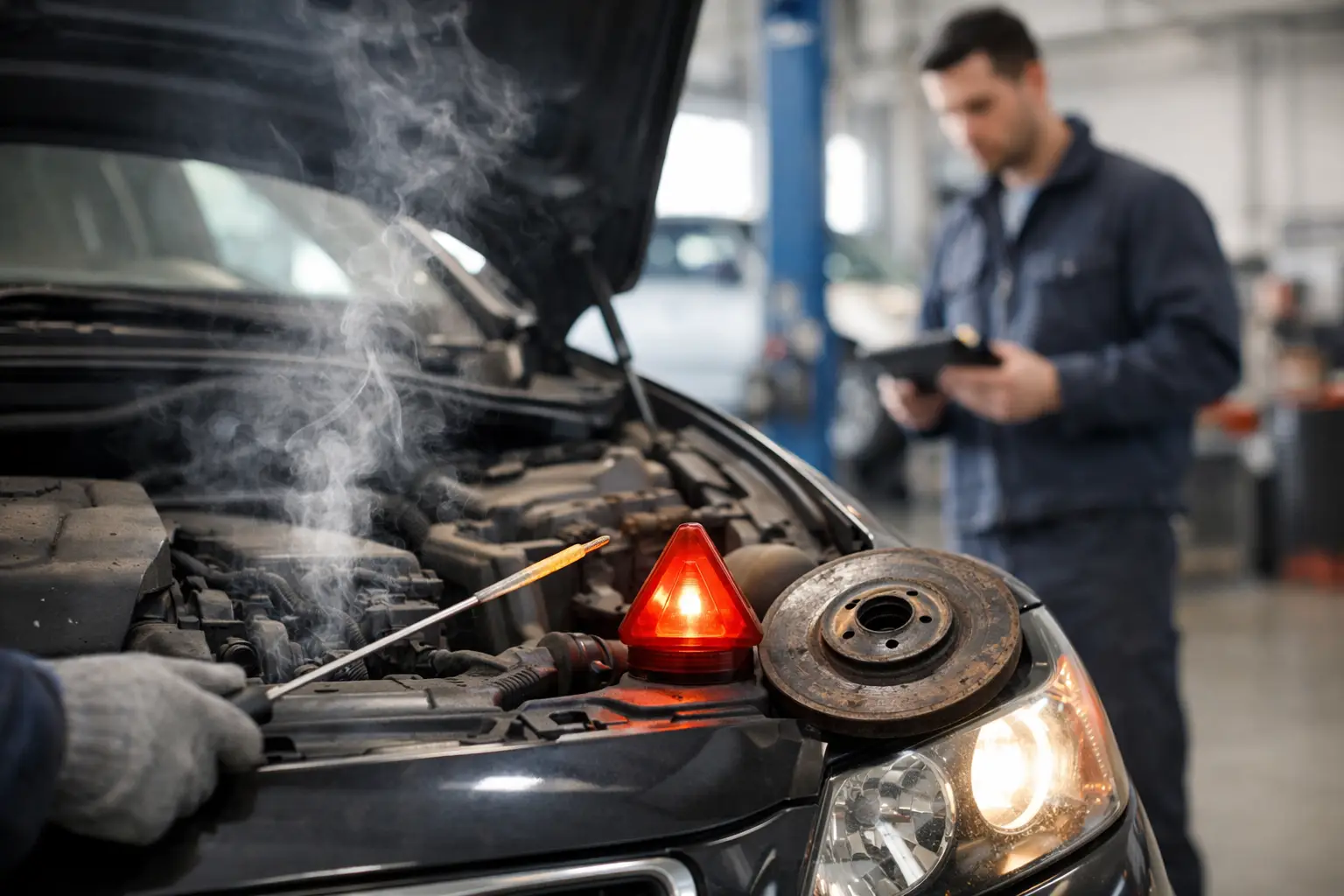
That slight shudder at the lights, the squeal when you brake, the warning light you keep meaning to check – these are often the top signs car needs servicing, and they rarely get better on their own. For most drivers in Wallan and Melbourne’s northern suburbs, the real issue is not spotting the problem. It is finding the time to deal with it before a small fault turns into a costly repair or an unexpected breakdown.
A car usually gives you some warning before something major fails. The signs can be obvious, like smoke or trouble starting, or more subtle, like higher fuel use or a rougher drive than usual. Knowing what to watch for helps you act early, protect your vehicle, and avoid losing time off your day.
Top signs car needs servicing sooner rather than later
One of the clearest signs is a dashboard warning light. If your engine light, oil light, battery light, brake warning light, or temperature warning comes on, your car is telling you something needs attention. Not every warning means the vehicle is about to stop, but none of them should be ignored. Some lights point to simple issues, while others relate to safety or engine damage.
Unusual noises are another common clue. Cars make normal operating sounds, but new noises are different. A squealing sound when braking can mean worn brake pads. Knocking from the engine can suggest internal wear or poor combustion. A whining noise when turning may be linked to steering or power steering issues. If the sound appears suddenly, gets worse, or happens under braking, acceleration, or cornering, it is worth having it checked promptly.
You should also pay attention to how the car feels on the road. If it pulls to one side, vibrates at certain speeds, feels unstable over bumps, or becomes harder to steer, there may be an issue with tyres, suspension, steering, or wheel alignment. Sometimes the fix is straightforward. Other times it can point to worn components that will continue to deteriorate if left alone.
A change in braking performance is never something to put off. If the brake pedal feels soft, the car takes longer to stop, or you notice grinding, squeaking, or pulsing through the pedal, book a service as soon as possible. Brake problems can move from minor wear to a safety risk very quickly.
Signs your car needs servicing under the bonnet
Fluid leaks often tell you more than drivers realise. A small patch under the car could be harmless condensation from the air conditioning, but it could also be engine oil, coolant, transmission fluid, or brake fluid. The colour, smell, and location matter, but most people will not want to diagnose that on the driveway. What matters is noticing the leak and getting it assessed before fluid loss causes overheating, poor lubrication, or component damage.
If the engine is running rough, hesitating, or struggling to idle smoothly, servicing is usually overdue or a fault has developed. This could be linked to spark plugs, fuel delivery, air intake issues, ignition components, or sensors. In some cases the car still drives, but fuel economy drops and performance suffers. In other cases, it may be the early stage of a breakdown.
Overheating is one of the more serious signs. If the temperature gauge climbs higher than normal, steam comes from the bonnet, or coolant levels keep dropping, stop driving if it is safe to do so. Cooling system issues can involve hoses, radiators, thermostats, water pumps, or leaks. Continuing to drive an overheating vehicle can turn a manageable repair into major engine damage.
A battery issue can also show up before complete failure. Slow cranking, dim headlights, electrical glitches, or needing a jump start are all signs the battery or charging system may need attention. Sometimes it is just an ageing battery. Other times the alternator or another electrical component is involved. Either way, it is better to deal with it before you are stranded at home, at work, or in a car park.
When your car feels more expensive to run
Not every service warning is dramatic. Sometimes the top signs your car needs servicing show up in your weekly costs. If you are filling up more often without changing your driving habits, your vehicle may not be running efficiently. Poor fuel economy can be caused by dirty filters, worn spark plugs, low tyre pressure, sensor issues, or engine problems.
You may also notice the car does not accelerate as cleanly as it used to. A sluggish response, reduced power on hills, or delayed gear changes can point to engine or transmission concerns. That does not always mean a major repair is coming, but it does mean the car is no longer operating as it should.
Tyre wear is another easy one to miss because it happens gradually. If your tyres are wearing unevenly, it can suggest alignment, suspension, or tyre pressure issues. Replacing tyres without addressing the cause can become an expensive cycle. A proper service helps identify what is behind the wear rather than just treating the symptom.
Smells can also be an early warning. A burning smell may mean oil is leaking onto a hot component, brakes are overheating, or the clutch is wearing. A sweet smell can suggest coolant loss. A strong petrol smell is never one to ignore, especially if it appears regularly. Odd smells do not always mean danger, but they nearly always mean something needs checking.
The signs are different for every car
Servicing is not only about faults. Sometimes the issue is simply timing. If your car has reached its service interval by kilometres or time, it is due even if it seems to be driving fine. Modern vehicles can hide wear well until the problem becomes more advanced. Logbook servicing exists for a reason – it helps catch deterioration before it affects reliability.
Driving conditions also matter. A car used mostly for short trips, stop-start traffic, heavy commuting, towing, or carrying family loads every day may need closer attention than one driven lightly on open roads. Dust, heat, and long periods between runs can all affect batteries, fluids, tyres, and seals. So while one driver may stretch to the next service date without trouble, another may notice issues earlier.
Older vehicles often speak a bit louder when they need care. New noises, extra vibration, oil consumption, and cooling issues become more common with age. That does not mean an older car is unreliable. It simply means regular servicing becomes even more valuable if you want to keep it dependable.
What to do when you notice the top signs car needs servicing
The first step is simple – do not wait for the problem to become undeniable. Many drivers put off booking a service because the car still starts, still moves, and life is busy. That is understandable, but it is often the delay that turns a manageable job into a larger repair bill.
It helps to make a note of what you are noticing. When does the noise happen? Is the warning light constant or intermittent? Has the leak appeared more than once? Details like these can make diagnosis faster and more accurate.
If the issue affects braking, steering, overheating, or any major warning light, stop using the vehicle until it has been assessed. For less urgent signs, arrange a service as soon as practical. A mobile mechanic can make this much easier because the car can be checked at home or work without the hassle of rearranging your day around a workshop visit.
For local drivers, that convenience matters. Hazara Mobile Mechanic helps customers deal with service issues on-site, which means less disruption and a faster path from problem to solution. When your car is giving you signs, the easier it is to get it checked, the less likely you are to leave it too long.
Cars rarely fail without warning. More often, they drop hints – a light, a sound, a smell, a change in the way they drive. Paying attention to those early signs can save you money, stress, and time off the road. If something feels off, trust that instinct and get it looked at before it turns into a bigger job.
Need a mobile mechanic?
Hazara Mobile Mechanic comes to you across Wallan and up to 70 km around. Open 7 days, 7am to 10pm, with emergency service 24/7. Call or text 0466 666 945, message us on WhatsApp or book online. See our services and the areas we cover.

Comments are closed